Clean Energy Tax Credits Split as ITC Risks Push Prices Lower
PTCs Hold Firm While ITC Buyers Demand Deeper Discounts

WASHINGTON — Tens of billions of dollars in transferable clean energy tax credits are projected to trade annually as the U.S. secondary market expands. The market is providing liquidity for solar, utility-scale battery storage, wind, standalone energy storage, and nuclear power projects across the United States.
The market was created under Section 6418 of the Internal Revenue Code, enacted as part of the Inflation Reduction Act of 2022. For the first time, the provision allowed clean energy project developers to sell federal tax credits directly to third-party corporate buyers for cash, bypassing traditional and complex tax equity partnership structures.
According to market data and tax equity advisors, Production Tax Credits (PTCs) are maintaining firm pricing near the top of the market. PTCs are earned based on the volume of zero-carbon electricity generated by a project, while Investment Tax Credits (ITCs) are calculated as a percentage of an asset’s upfront capital build cost.

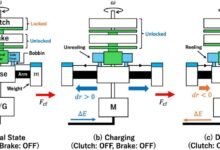
PTCs, governed primarily by Section 45 and Section 45Y, are generated incrementally over a 10-year period as facilities produce kilowatt-hours of electricity. Their claims are tied directly to metered power output sold to third parties, leaving tax authorities with minimal opportunity to challenge the underlying monetary basis of the credit. Corporate buyers seeking predictable offsets against their corporate income tax liabilities generally pay between 92 and 96 cents on the dollar for PTCs.
ITCs are claimed entirely in the year a facility is placed in service. Under Sections 48 and 48E, the credit is based on eligible capital expenditures, and its size depends heavily on the project’s recognized tax basis, including construction costs, fair market value step-ups, and developer fees.
The Internal Revenue Service (IRS) can audit and adjust an asset’s cost basis for up to three years after filing, creating greater structural risks for ITC buyers. ITCs also face a five-year recapture provision under Section 50 of the Internal Revenue Code. If an asset ceases to qualify or undergoes an unapproved change in ownership within five years of commercial operation, the IRS can reclaim a pro-rated percentage of the tax credit from the taxpayer who claimed it.
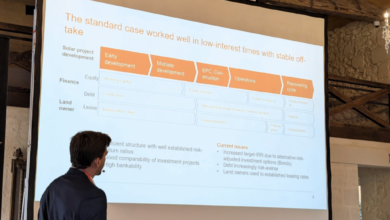
Those risks have contributed to downward price pressure on ITCs, as buyers demand higher discount rates to compensate for federal regulatory uncertainty and potential tax audits. The price split reflects the evolving mechanics of the corporate tax credit transfer market, with PTCs holding firm while ITC discounts widen compared with PTC deals.
Treasury Department and IRS guidance on statutory “bonus” credit add-ons has added complexity. Under the 2022 law, the baseline ITC rate is 6 percent of eligible costs and rises to 30 percent when developers comply with federal prevailing wage and apprenticeship (PWA) requirements. Projects can obtain additional 10 percentage point bonuses by meeting domestic content standards for American-made steel, iron, and manufactured components, or by siting assets in designated “Energy Communities” with historic ties to fossil fuel extraction or coal plant closures.
Evaluating those multi-tiered requirements has increased corporate due diligence. ITC buyers increasingly require project developers to provide tax credit insurance policies or strict corporate indemnifications against IRS disallowance, cost basis write-downs, or Foreign Entity of Concern (FEOC) supply chain violations. The resulting transaction costs and legal uncertainty have forced ITC sellers to accept lower prices on transferability platforms.
Overall transferability market volume has grown substantially since Treasury issued initial guidance in mid-2023 and finalized Section 6418 rules in early 2024. Corporate buyers continue to weigh the different risks attached to credits generated from electricity production and those calculated from asset construction costs.