Bitcoin Hits $86,700 as Weak Jobs Data Reshapes Fed Outlook
Spot Bitcoin ETFs pulled in $6.34 billion during the third quarter despite the 10-year Treasury yield hovering near 2002 highs.

A September nonfarm payrolls report that landed far below expectations has injected fresh momentum into Bitcoin, pushing the cryptocurrency to $86,757 on Friday. The 29,000 jobs added last month — against forecasts of roughly 90,000 and following downward revisions that wiped out 60,000 prior positions — abruptly altered the macroeconomic calculus for risk assets just days before the Federal Reserve’s next policy meeting.
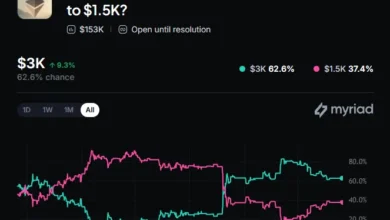
The labor market deterioration arrives precisely as traders were digesting a surprisingly cool inflation print. August core PCE registered at 3.0%, undercutting the 3.3% consensus. Together, the two data points have collapsed expectations for another interest rate increase when the FOMC convenes on October 28. CME FedWatch futures now assign a 74% probability to a hold, a dramatic reversal from the 35.8% odds recorded a week earlier. Prediction markets tracked by Myriad mirror that shift at 75%.
Bitcoin, which remains approximately 31% below its all-time high established in late 2025, gained 3% over the past 24 hours and 2% for the week. The rally defied historical precedent: September is traditionally the weakest calendar month for digital assets, yet the token closed it with gains. Short covering accelerated the move once prices broke above their recent trading range, according to HashKey analyst Tim Sun, who noted that elevated Treasury yields had previously capped upside.


The 10-year Treasury yield continues to hover near levels unseen since 2002, creating a persistent headwind for non-yielding assets. Yet institutional capital has flowed into Bitcoin regardless of borrowing costs. spot Bitcoin ETFs absorbed $2.65 billion in September alone, trailing only August’s $3.52 billion haul since October 2025. Third-quarter inflows totaled $6.34 billion, largely erasing the $4.97 billion in outflows suffered during the second quarter and a $490 million deficit in the first. Despite that Q3 recovery, net inflows across 2026 remain under $1 billion, underscoring how severely the spring selloff damaged year-to-date accumulation. Total net assets in the spot ETF complex now stand at $109.3 billion.
Morgan Stanley’s spot Bitcoin ETF captured more than $200 million in September, signaling that wirehouse wealth management platforms are integrating crypto exposure directly into client allocation models rather than treating it as a speculative satellite holding. This structural shift differentiates the current cycle from the retail-driven rallies of 2021, suggesting that inflows are allocation-driven rather than purely chasing liquidity.
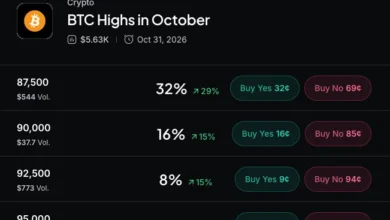
Derivatives positioning reflects a divided market. Nexo analyst Iliya Kalchev pointed to futures open interest sitting in the bottom decile of its one-year range, down roughly 12% from its September 22 peak, indicating the current advance lacks heavy leverage. Conversely, Sun observed open interest rising alongside price. Options chains reveal hedging concentrated at $80,000 and below, while call activity clusters between $89,000 and $92,000, suggesting traders are protecting against drawdowns while maintaining upside exposure.
The timing aligns with what market participants term “Uptober.” Over the past decade, Bitcoin has averaged an 18% gain in October and a 46% return across the fourth quarter. Algoz’s Stephen Wundke estimates significant sideline capital is waiting for macroeconomic confirmation before deploying. However, he places the probability of an October rate hike at 40%, substantially higher than the 26% implied by current futures pricing, warning that a hot September CPI reading on October 14 could immediately revive tightening fears.
Owen Yang, chief executive of payments platform UPay, cautioned that institutions building positions at current valuations may limit future upside momentum compared to earlier entry points. Regulatory developments, including ongoing SEC work on custody frameworks, continue to provide foundational support for broader adoption.
Average monthly job gains over the trailing twelve months have now compressed to 45,000, while the unemployment rate ticked up to 4.2%. Initial jobless claims for the week ending September 26 fell to 197,000, and continuing claims dropped to 1.7 million — their lowest since March 2023 — leaving a contradictory labor picture where weekly filings remain historically tight even as headline hiring stalls. New York Fed President John Williams stated earlier this week there was “no need for urgency” following September’s rate hike, while Vice Chair Philip Jefferson emphasized on Thursday that future adjustments must follow incoming data.