

Amazon Kills Fire Tablets, Launches Alexa Lineup With Android
New premium Android slates start at $229 and feature deep OS-level AI integration, ending Amazon's 15-year reliance on its closed Fire OS ecosystem.
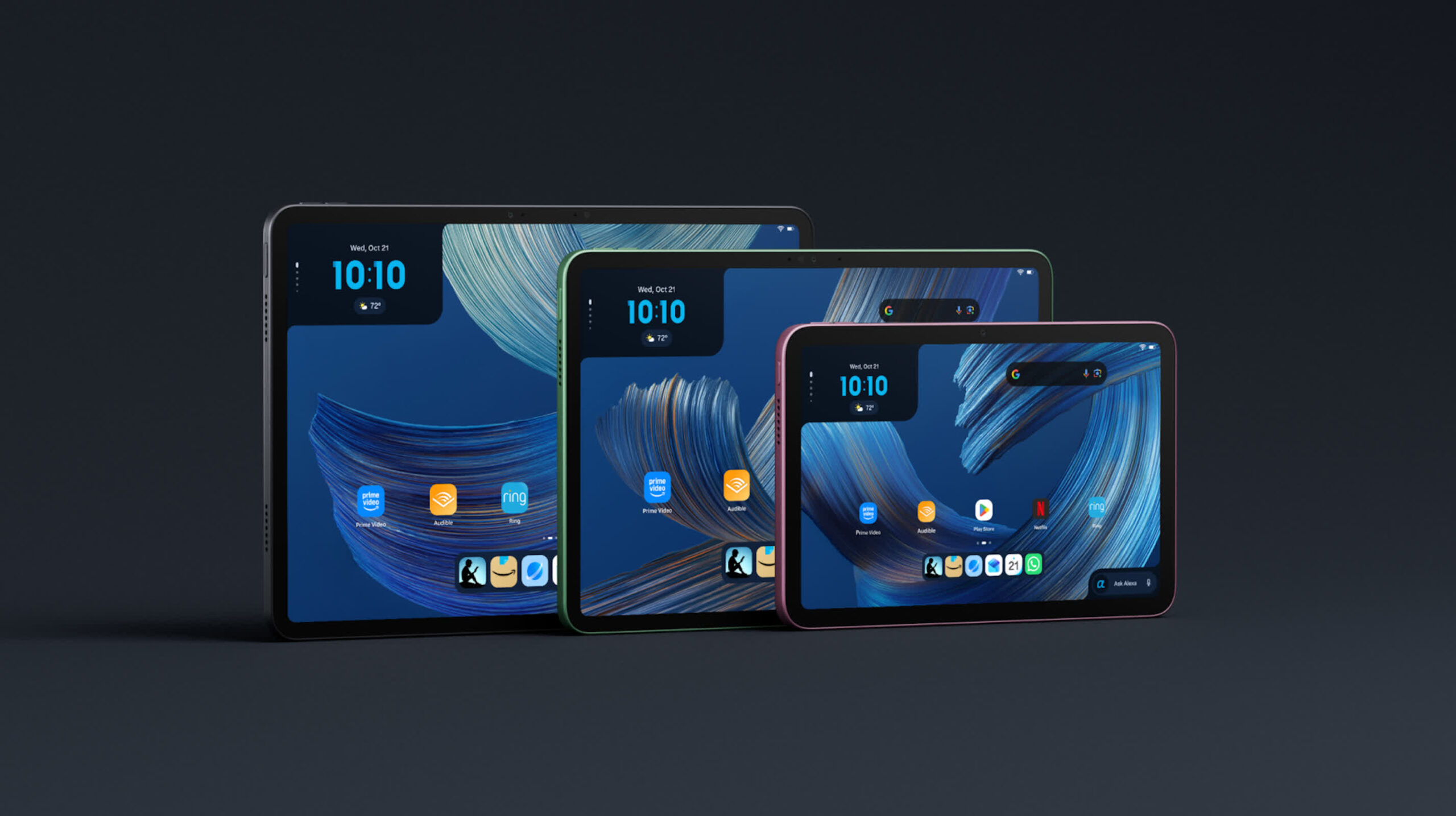
Amazon is abandoning its 15-year-old Fire tablet brand, replacing the budget-oriented devices with a new line of premium tablets running standard Android and centered around its Alexa+ artificial intelligence assistant. The shift marks the end of Amazon’s attempt to build a walled-garden mobile ecosystem and signals a direct challenge to Apple’s iPad dominance in the productivity and media consumption markets.
The first devices ship this month in the United States, Canada and Mexico. Pricing starts at $229 for the Alexa Tablet 8, $329 for the Tablet 11 and $499 for the Tablet 12 Pro. A specialized version of the 12 Pro featuring a glare-reducing Nanomatte display costs $549.
For more than a decade, Amazon’s tablets ran Fire OS, a heavily modified version of Android that locked users into the Amazon Appstore. That restriction kept mainstream applications like Gmail, YouTube and the broader suite of Google services off the devices, a limitation that devices chief Panos Panay acknowledged failed to meet customer expectations. By adopting standard Android, the new Alexa tablets natively support the Google Play Store while retaining deep integration with Amazon’s own Kindle, Prime Video, Audible and Music platforms.


The pivot away from Fire OS reflects a broader industry reality. Amazon originally launched the Kindle Fire in 2011 as a $199 portal to its digital storefront, deliberately undercutting Apple and Samsung to drive e-commerce and content subscriptions. As the tablet market matured, consumers increasingly demanded full application compatibility, making proprietary app stores a liability rather than an asset. Microsoft faced a similar reckoning when it eventually opened Windows to broader Android app support, and Amazon’s concession effectively closes the book on major U.S. tech companies attempting to sustain closed mobile software ecosystems outside of Apple.
Alexa+ serves as the defining feature of the new hardware. Rather than functioning as a separate voice-activated utility, the AI assistant operates persistently across the operating system. Users can invoke it via voice or an on-screen button without interrupting their current application. An optional feature called On-Screen Intelligence allows the assistant to analyze whatever is currently displayed, enabling tasks such as parsing dates from a document to create calendar events or summarizing web pages during live conversations without requiring repeated wake words. Amazon states the screen-analysis tool is disabled by default, requires explicit user opt-in and displays a visual indicator when active.
This deep OS-level AI integration differentiates Amazon’s approach from competitors. While Samsung and Lenovo have introduced generative AI features on their Android tablets, those tools generally operate within specific apps or require manual prompting. Amazon is positioning Alexa+ as a continuous ambient layer over the entire interface, leveraging the multimodal capabilities it has developed since introducing the upgraded Alexa+ service earlier this year.
Hardware specifications push the lineup firmly out of the budget category. The flagship 12 Pro utilizes an 8-core processor built on a 4-nanometer manufacturing process, paired with up to 16GB of RAM and a base storage configuration of 128GB. Amazon claims the silicon delivers roughly three times the processing performance and nine times the graphics output of its previous generation, though independent benchmark testing has not yet verified these figures. The 12-inch screen uses a 3:2 aspect ratio—a format favored for document editing and web browsing over the wider 16:10 ratio found on the mid-tier Tablet 11—and supports a 120Hz refresh rate at 280 pixels per inch. Battery life for video playback reaches 16 hours, supported by Wi-Fi 6E connectivity and four Dolby Atmos speakers.
The nanomatte display option represents a notable hardware innovation. Developed in partnership with Corning, the glass treatment uses photolithography to etch a texture aligned with the screen’s pixels at the subpixel level. Unlike traditional matte screen protectors that often diffuse light and wash out colors, this manufacturing process aims to eliminate glare while preserving image sharpness and color accuracy.
To compete directly with the iPad Pro and high-end Android slates in professional environments, Amazon introduced dedicated accessories for the 12 Pro. A $149 magnetic keyboard attaches without Bluetooth pairing, while an $89 USI 2.0 stylus offers 4,096 levels of pressure sensitivity, tilt detection, magnetic docking and wireless charging. Both are engineered exclusively for the top-tier model.
The entry-level Tablet 8 features an 8.7-inch display, 4GB of RAM, 64GB of storage and a weight of 329 grams. All models in the new lineup use aluminum chassis construction, departing from the plastic builds historically associated with the Fire brand.
Panay clarified that despite the significant hardware upgrade, Amazon has no current plans to expand the Alexa brand into full-fledged PCs or laptops. The company intends to focus entirely on redefining its tablet portfolio.
Pre-orders for the Alexa Tablet 8, Tablet 11 and Tablet 12 Pro are open now ahead of initial shipments scheduled for late October.




