
AMD Radeon RX 7900 XTX Meltdown Exposes Risk Beyond Nvidia’s 16-Pin
An AMD graphics card failure shows why contact resistance remains a threat beyond Nvidia’s 16-pin standard
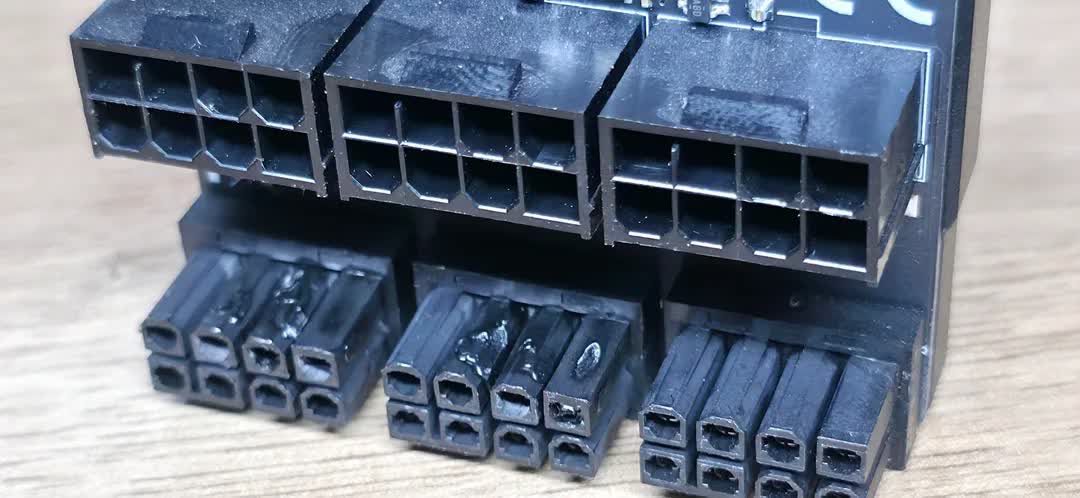
Intermittent black screens, sudden reboots, and stability problems under load can have a physical cause that software diagnostics fail to detect. For everyday PC builders, technicians and users are encouraged to visually inspect all power junctions when diagnosing these symptoms.
A PC user operating under the Reddit username AwarenessHour9192 documented a severe thermal failure involving an AMD Radeon RX 7900 XTX. The system had experienced unexplained black screens and stability issues for several months. A professional repair workshop reinstalled the operating system and ran diagnostic benchmarks, but the underlying cause remained undetected.
The Radeon RX 7900 XTX uses traditional 8-pin PCIe power connectors, rated for 150 watts each and used as an industry standard for more than a decade. Yet the failure occurred after the user installed a Thermal Grizzly WireView power monitor between the power supply cables and the graphics card.


Electrical current flowing through a connection produces heat according to Joule’s first law: the heat generated in a conductor is proportional to the square of the current multiplied by the resistance, or P = I^2R. Any gap, misalignment, or loose fit can increase contact resistance, and under high electrical loads, even a microscopic increase at a pin contact point can create extreme localized heat and melt the surrounding plastic housing.
The problem was found only after the owner disassembled the PC tower and discovered severe burn marks on the graphics card’s power interface. The WireView itself had suffered a meltdown, but its position between the power supply and GPU acted as a buffer, absorbing the thermal damage and preventing the burn from reaching the $1,000-plus Radeon RX 7900 XTX graphics card.
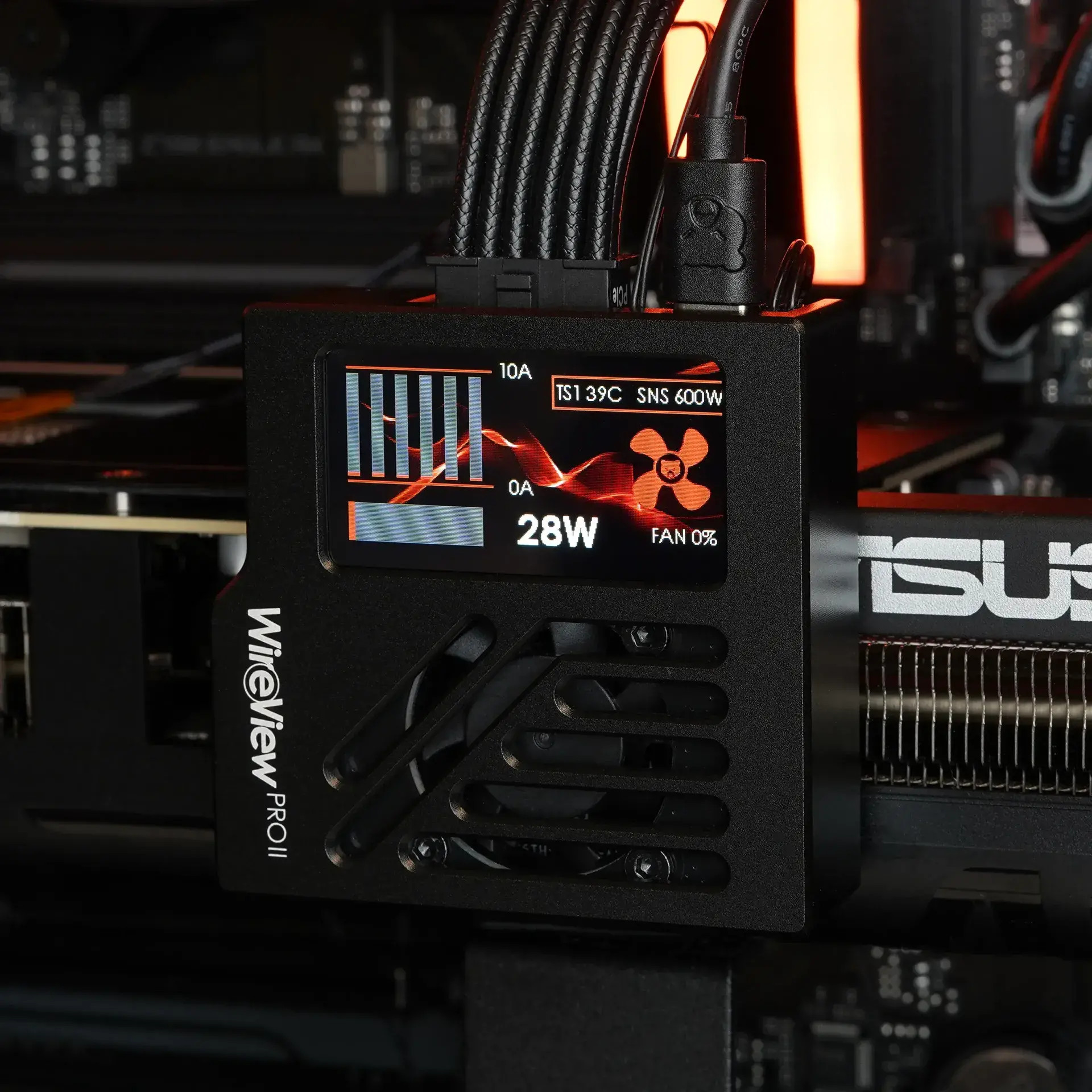
Designed in collaboration with hardware enthusiasts, the Thermal Grizzly WireView plugs directly into a GPU to measure and display real-time power consumption, current, and voltage. Adding it also introduced an extra set of physical contact points between the power supply and the graphics card. Thermal Grizzly has since replaced the damaged WireView and the affected power connector, although the exact trigger for the increased resistance remains undetermined.
Power-connection failures became a major subject of discussion in the PC hardware industry after Nvidia launched the GeForce RTX 4090 with the 12VHPWR, or 12+4 pin, connector design. The standard could deliver up to 600 watts over a single cable, but it became infamous for melting under heavy loads. Nvidia initially attributed the failures to user error, citing cases in which builders had not pushed the connector fully into the socket.
The issue was not limited to Nvidia’s latest high-end hardware. The AMD-based failure involving the older legacy 8-pin standard demonstrated that thermal meltdowns can also affect intermediate power-monitoring hardware and other connections when resistance rises at a contact point.
The PCI-SIG standards group revised the specification as the “12V-2×6” connector. Its four signal, or sense, pins are shorter, so a cable that is not fully seated prevents the graphics card from receiving high-power levels from the power supply.
Reports of melting connectors continued into later hardware generations, including the GeForce RTX 5090, whose power draw approaches 600 watts. Some customized or highly overclocked versions of these cards now sell for upwards of $5,000, making a connector failure an expensive risk for consumers.
Hardware enthusiasts have responded with more extreme workarounds. The Brazilian extreme overclocking group TecLab recently demonstrated ways to bypass the physical limitations of the 12V-2×6 interface on a GeForce RTX 5090.
In one test, TecLab completely bypassed the stock socket by soldering the power supply lines directly to the graphics card’s printed circuit board, or PCB. The connection point then operated at significantly lower temperatures.
In a second demonstration, TecLab replaced the single 16-pin connector with three standard 8-pin PCIe sockets. The modified card maintained its full performance profile while operating at lower temperatures than the stock configuration, and the legacy 8-pin design remained a viable, thermally stable alternative for ultra-high-end GPUs.
Power cables should be completely flush with their sockets, and tight bends near the connector plug should be avoided. Minimizing unnecessary adapters can also reduce the risk of contact resistance and localized thermal failures.