
Houthis Seize Perim Island, Putting a Global Shipping Chokepoint in Their Hands
Houthi control of the strategic island intensifies pressure on Washington and threatens a major global shipping route
WASHINGTON — The seizure of Perim Island by Yemen’s Iran-backed Houthi rebels has placed a vital maritime chokepoint under rebel control, escalating threats to global commerce and prompting urgent diplomatic appeals for military intervention.
Also known as Mayun, the island was captured on Sept. 11 after a fierce, month-long offensive along Yemen’s western Red Sea coast. Official reports and statements from the Yemeni government said the campaign killed more than 1,500 government soldiers, forcing military leaders to acknowledge a “painful” defeat in their effort to secure the strategic coastline.
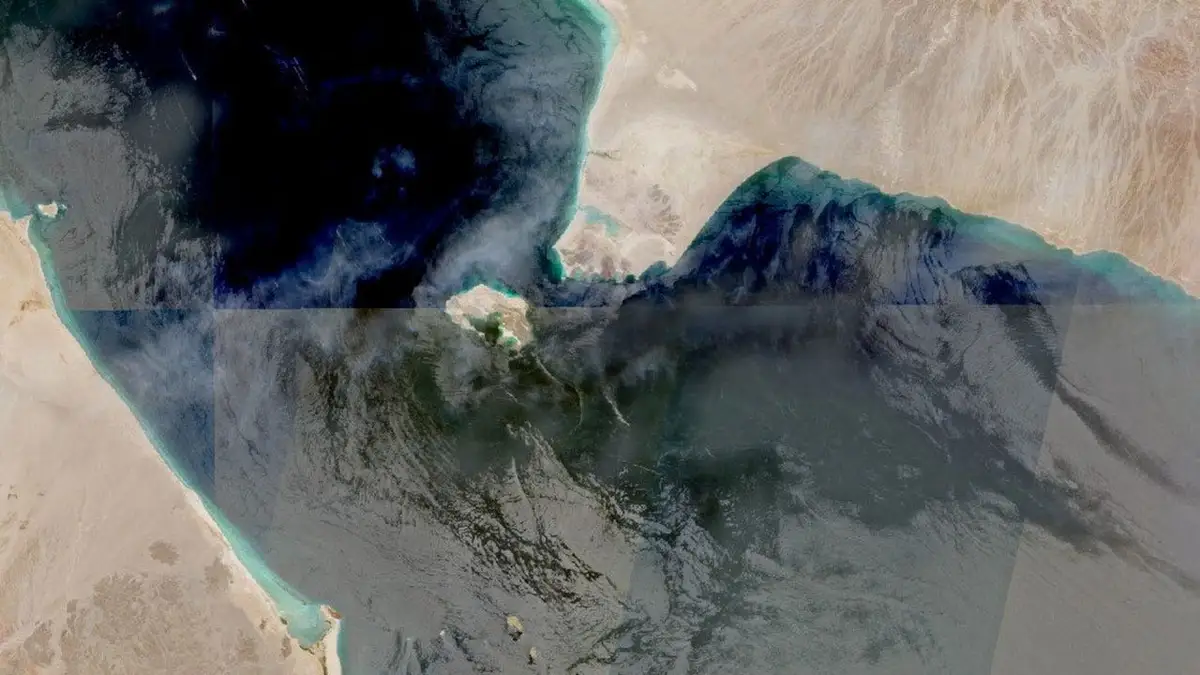
Perim lies directly in the Bab el-Mandeb Strait, an 18-mile-wide channel linking the Red Sea with the Gulf of Aden. The name translates from Arabic as the “Gate of Tears.” An estimated 4.5 to 8.8 million barrels of petroleum and liquefied natural gas pass through the corridor each day toward Europe and North America via the Suez Canal.


The island’s location effectively divides the shipping channel in half, drawing intense attention from global defense analysts and regional powers. It sits roughly 20 miles off the Horn of Africa and near Camp Lemonnier in Djibouti, the primary U.S. military installation on the African continent.
Camp Lemonnier hosts the Combined Joint Task Force – Horn of Africa (CJTF-HOA), houses approximately 4,000 military personnel, and supports aerial, drone, and counterterrorism operations in the region. The U.S. Navy’s Fifth Fleet, based in nearby Bahrain, also maintains a continuous presence in surrounding waters to protect freedom of navigation.
Control of Perim has long been contested by powers seeking to secure trade routes. French forces targeted it during the Napoleonic era, while the British Empire occupied it permanently from 1857 until 1967. Britain used the island’s volcanic harbor as a coaling station for steamships navigating the Red Sea after the Suez Canal opened in 1869.
After the British withdrawal, Perim became part of South Yemen and was eventually incorporated into unified Yemen. During the current conflict, which began when Houthi forces seized Sana’a in late 2014, the island changed hands again. Coalition forces led by Saudi Arabia and the United Arab Emirates recaptured it from the Houthis in 2015.
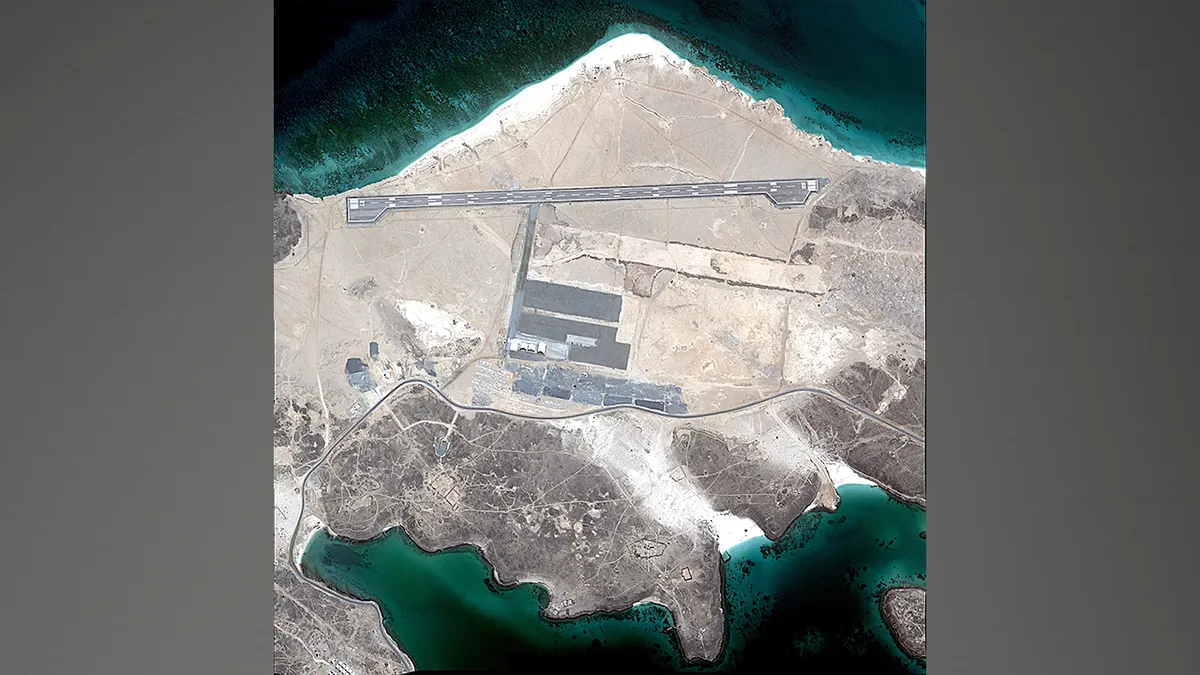
Satellite imagery shows a 1.85-kilometer (6,070-foot) runway and three military hangars on the island. The UAE constructed the facilities during its tenure there to monitor maritime traffic. Morgan Murphy, a former Pentagon press secretary and retired Navy captain, said the runway’s current operational condition remains uncertain.
“There’s a 6,000-foot airstrip on that island,” Murphy said. “They certainly don’t have the sophisticated air power that the United States and its allies have to project power from that runway.”
Military experts have warned that the Houthis may have exposed themselves to significant tactical vulnerabilities. Murphy described Perim as “the cork in the Red Sea bottle,” but said the group had also placed itself in a vulnerable position.
“With Perim, they have gained what we could call the cork in the Red Sea bottle,” Murphy said. “But they’ve put themselves into a kill box. They’re nowhere near the capability of the United States and if the president so chooses, he can wipe them off the face of that rock pretty easily.”
In military terminology, a “kill box” is a three-dimensional target area designed to facilitate the integration of joint weapons effects. Perim is a desolate, volcanic landmass with no natural water sources, minimal vegetation, and an uninhabited landscape, leaving any military force stationed there highly exposed to aerial and naval bombardment.
“We have incredible firepower in that region, and that’s a little rock in the middle of that strait,” Murphy said. He added that the U.S. military could neutralize fortifications on the island. “We could wipe that rock into glass, just blast it into a smooth glass surface… That’s why the Houthis have kind of played coy with the president, and they know that even if they fortify that rock they’re not going to be able to hold it in the face of the United States Navy.”
The capture prompted diplomatic maneuvering among Washington, Riyadh, and Houthi leaders. Sources confirmed that Saudi Crown Prince Mohammed bin Salman made two urgent phone calls to President Donald Trump on Sept. 10, lobbying for direct U.S. military strikes against advancing Houthi positions.
Trump declined to authorize direct U.S. combat involvement. Instead, he limited U.S. support to intelligence sharing and logistics assistance for regional allies. Speaking to reporters in Dublin on Sept. 12, he said the rebel group wanted to avoid a direct confrontation with the United States.
“The Houthis called us, and they don’t want to fight with us,” Trump said. “They let us know, they don’t want to fight with us… they don’t want us to go after them.”
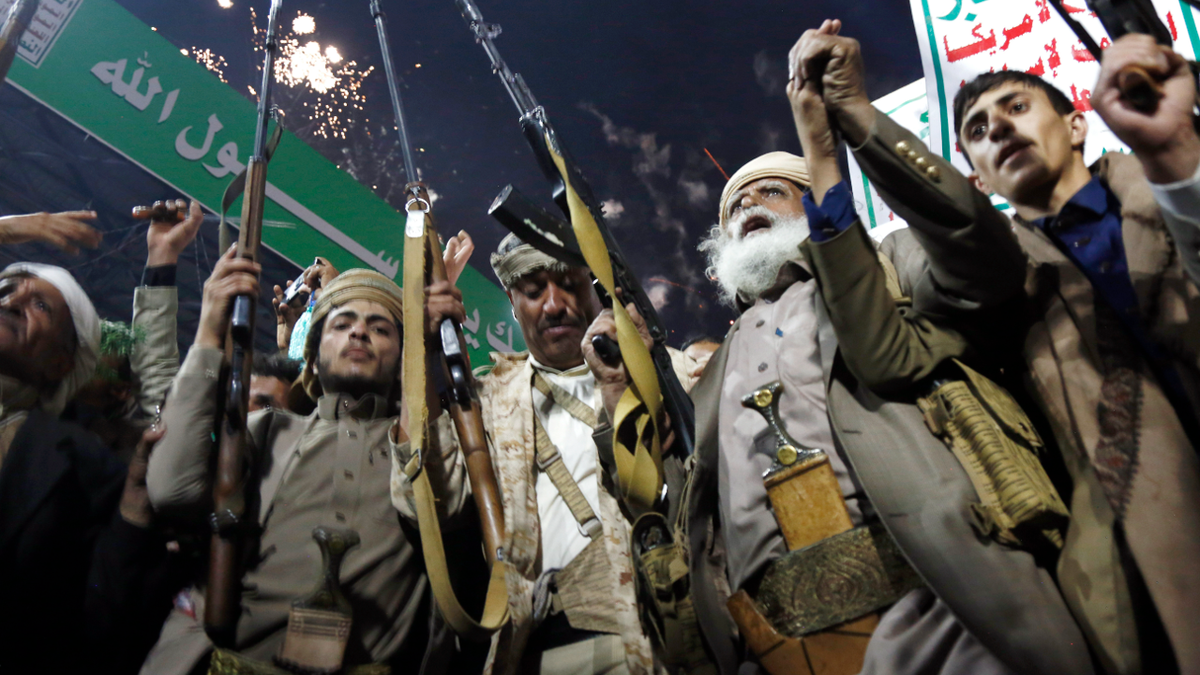
Yemeni government, regional, and Iranian sources told Reuters that the offensive is sustained by Iranian-supplied weaponry and direct tactical guidance from the Islamic Revolutionary Guard Corps (IRGC). U.S. intelligence estimates indicate that hundreds of IRGC officers remain active in Yemen, helping Houthi forces with drone technologies, ballistic missiles, and intelligence operations.
Defense analysts say Tehran’s strategic objective is to gain leverage over global energy markets by demonstrating an ability to disrupt major maritime chokepoints, including the Strait of Hormuz and the Bab el-Mandeb Strait. Threats to those shipping lanes can introduce volatility into global fuel prices.
Murphy said Washington’s restraint should not be interpreted as a lack of military resolve. “I can’t speak for the president. But this administration has not shown a lack of resolve to use force,” he said, suggesting that further disruptions to commercial shipping could trigger a robust response.
“I wouldn’t doubt at all if the president took steps to pound some of these folks into the sand if they continue to really disrupt the global energy supply,” Murphy said.
Murphy compared Houthi tactics with historic naval conflicts and characterized them as outdated against modern naval doctrine. “We’re in a different era. They are nowhere near the sophistication of the world’s major powers,” he said. “The Houthis are using a 19th-century playbook. They are not using 21st-century warfare. So, yes, they’ve caught a critical cork in the Red Sea bottle, but how they use it remains to be seen.”
He also pointed to the historical maritime policing roles of Great Britain and the United States. “This is an example of why great powers really have to have a strong Navy… because there’s so many regional powers who want to try to bottle up shipping, whether it is in the Strait of Malacca, whether it is in the Strait of Hormuz, and here, in this case, in the Red Sea.”
Murphy predicted that the United States would focus on building international consensus to secure the waterway. “I think what we’re going to see in the next several days and weeks is a coordinated effort by the Trump administration to make sure our allies are on board in helping us keep these critical waterways open, free, and clear for freedom of navigation,” he said.