China Builds a High-Tech Spy Hub Beside America’s Djibouti Base
New Chinese surveillance systems overlook the Bab el-Mandeb and a nearby U.S. military base
Djibouti, a nation roughly the size of New Jersey on the Bab el-Mandeb Strait, has become one of the world’s most unusual geopolitical crossroads. The narrow waterway is the southern gateway to the Red Sea and the Suez Canal, funneling approximately 16 percent of total global maritime commerce, including substantial shares of international container traffic and seaborne petroleum shipments from the Persian Gulf.

Commercial satellite imagery analyzed by the Washington-based Center for Strategic and International Studies (CSIS) shows that the People’s Liberation Army (PLA) has expanded its electronic intelligence and surveillance infrastructure at its strategic outpost in Djibouti. The installation now includes advanced signals intelligence assets, satellite communications equipment, and communications intercept towers overlooking critical shipping lanes and Western military facilities.

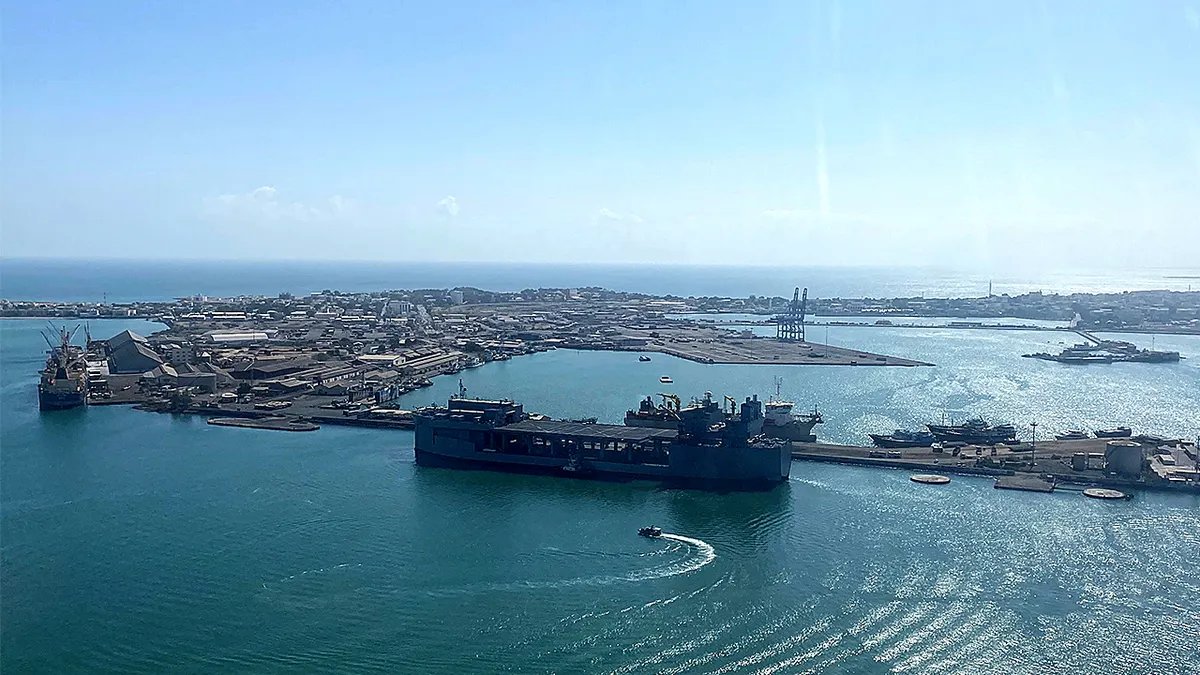
The Chinese base is less than six miles from Camp Lemonnier, the primary United States military hub on the African continent. The proximity has produced an unprecedented concentration of rival strategic monitoring systems at the mouth of the Red Sea.
Foreign military facilities are concentrated in Djibouti because of the strait’s strategic value. France maintains its long-standing presence at Base Aérienne 188, while the Japan Self-Defense Forces and the Italian military operate dedicated operational support bases nearby. The United States leases Camp Lemonnier under a bilateral agreement valued at approximately $66 million annually.
According to the CSIS findings, two newly identified communications facilities have emerged at the Chinese site since 2024. The assets appear designed to integrate into China’s broader Command, Control, Communications, Computers, Intelligence, Surveillance, and Reconnaissance (C4ISR) operational network.
The primary southeastern complex contains a central operations building, three 30-meter high-frequency dipole antennas, two smaller high-frequency and very-high-frequency antennas, three mobile satellite terminals, four presumed 5G communications masts, and a specialized protective radome enclosing sensitive electronic equipment.
Camp Lemonnier houses roughly 4,000 U.S. and allied personnel under the Combined Joint Task Force – Horn of Africa (CJTF-HOA). It serves as a staging ground for regional counterterrorism missions and maritime security operations.
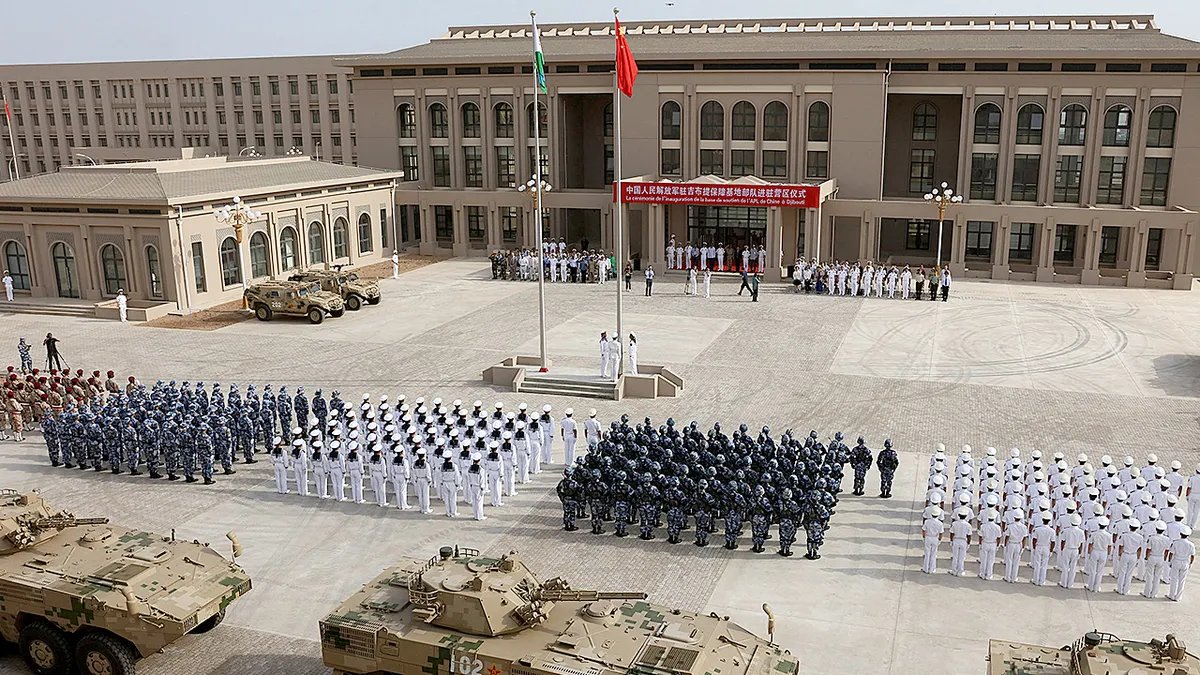
China established its installation in 2017 adjacent to the Doraleh Multipurpose Port. Beijing formally classified the facility as a logistics support base for resupplying PLA Navy vessels conducting United Nations-sanctioned counter-piracy escort missions in the Gulf of Aden.
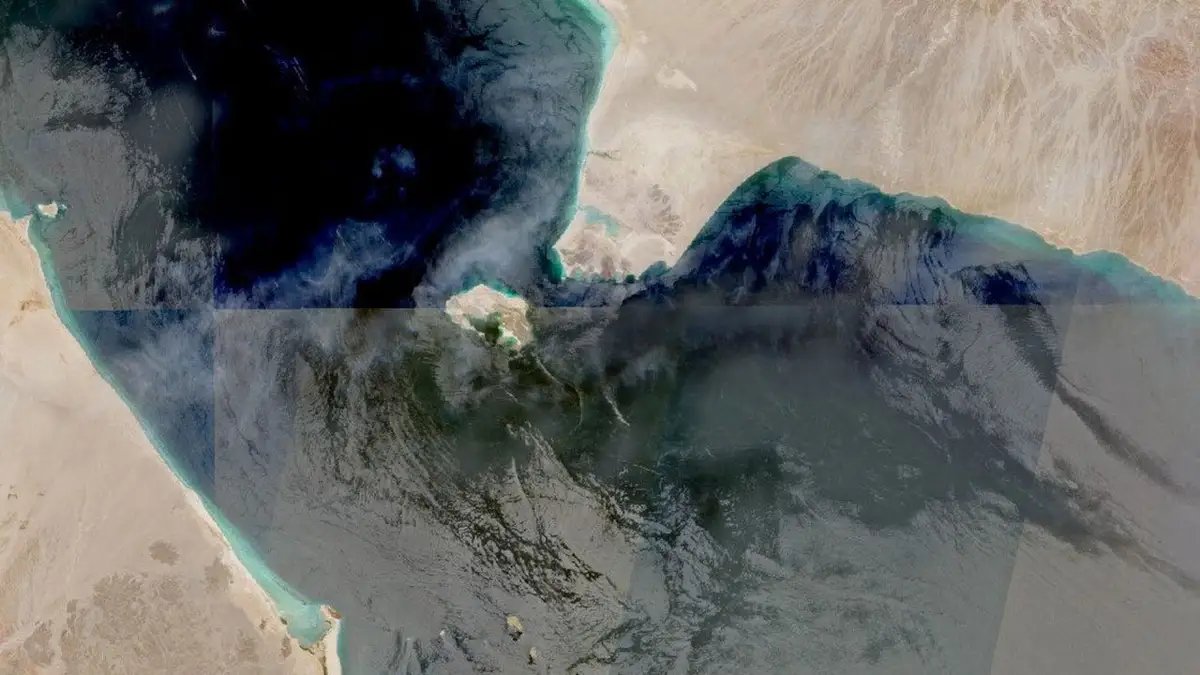
The site has progressively expanded into a fortified compound with deep-water naval berths capable of docking aircraft carriers, reinforced perimeter defenses, and advanced electronic warfare infrastructure.
The technical buildup gives the PLA expanded capacity to intercept regional communications, track naval transit through the Bab el-Mandeb Strait, and route operational data back to mainland command centers. CSIS noted that satellite imagery alone cannot confirm active transmission intercepts, but researchers assessed that the infrastructure offers Beijing an enhanced, real-time operating picture of air, naval, and military activities across the Horn of Africa and the Middle East.
The close placement of the PLA facility beside Camp Lemonnier has been a persistent source of operational friction. In May 2018, the Pentagon issued a formal diplomatic protest after high-grade military lasers originating from the Chinese base were aimed at U.S. Air Force C-130 Hercules transport aircraft attempting to land at the adjacent international runway. Two American aviators suffered eye injuries. China’s Defense Ministry denied involvement and described the U.S. allegations as groundless.
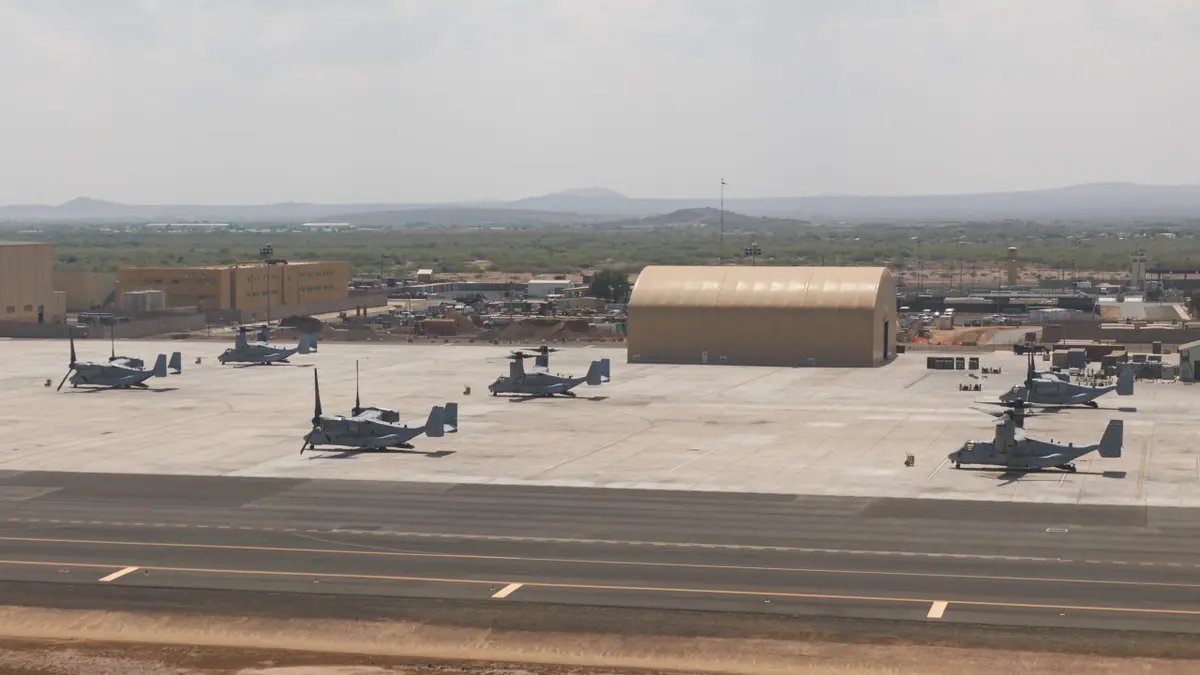
Former Trump administration defense official Morgan Murphy, who served as press secretary to former Defense Secretary Mark Esper, said the recent technical upgrades confirm that the outpost extends far beyond routine naval logistics.
“What China is clearly doing is building eavesdropping capabilities,” Murphy said. “When you build a 30-meter satellite dish and cover it with a dome, so nobody can see where it’s pointing, it’s pretty clear you’re up to no good. This isn’t a supply depot — it’s a 50-yard line seat over America’s power projection and the U.S. Navy.”
Murphy also linked the base’s physical placement to historical strategies used by maritime powers to control critical geographic chokepoints.
“Britain held Gibraltar to see who entered the Med while Japan’s island radios came before the runways,” Murphy said. “The Soviets’ overseas sites were never just about fuel and Beijing is running that playbook on the Red Sea.”
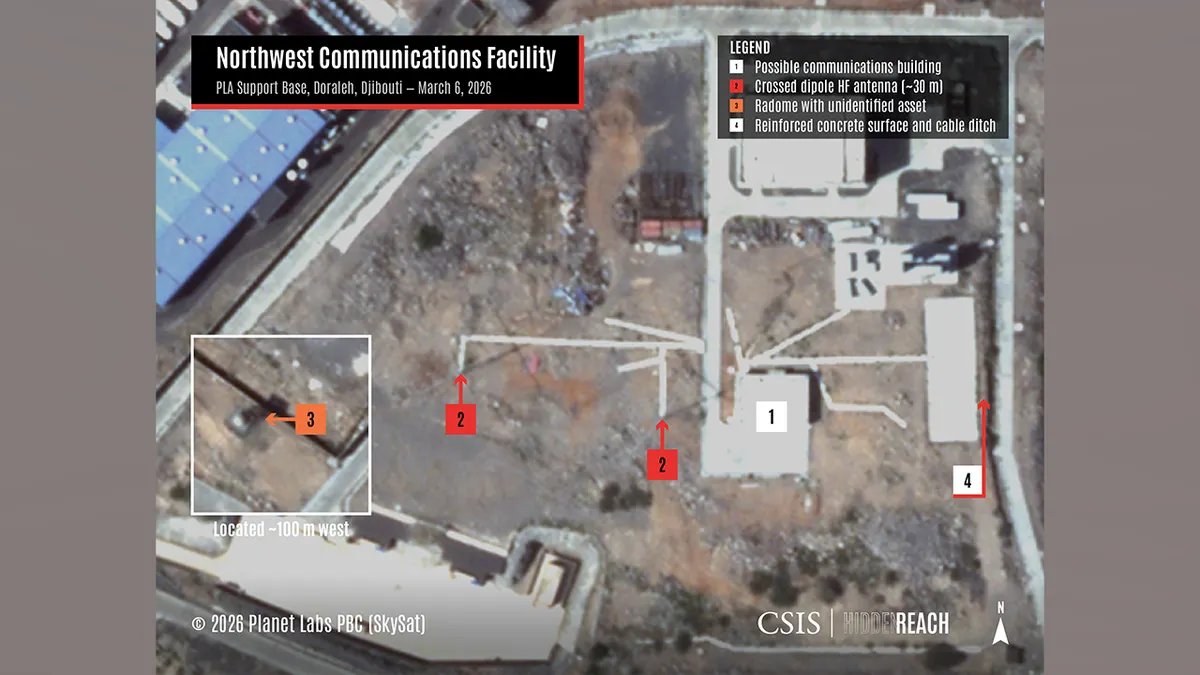
The surveillance developments in the Red Sea corridor come as Houthi missile and drone strikes targeting commercial vessels have caused prolonged disruption to maritime supply chains in the Bab el-Mandeb.
Energy security is a primary driver of Beijing’s regional strategy. China relies on maritime imports for roughly 70 percent of its crude oil consumption, and more than 33 percent of its daily petroleum supplies come from the Middle East through regional maritime channels. A persistent military and intelligence footprint allows the PLA to monitor vital energy routes independently of Western security architecture.
The disclosure of the expanded intelligence installation came ahead of scheduled bilateral talks between President Donald Trump and Chinese President Xi Jinping at the White House on Sept. 24.
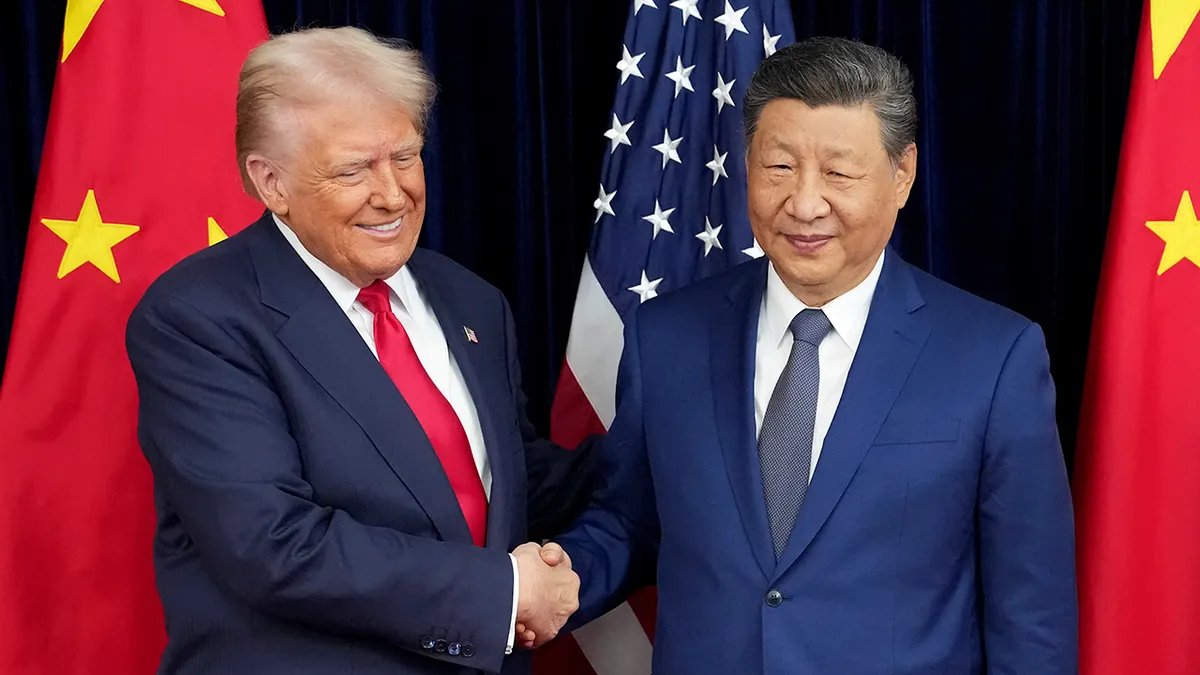
Trump recently addressed reciprocal global surveillance efforts during remarks aboard Air Force One. He said espionage operations are standard practice between major powers while referring to recent reports about foreign satellite support utilized in Middle Eastern conflicts.
“They basically do what we do,” Trump said. “Xi has behaved reasonably well, and we behave reasonably well. You know what they say? That China spies on us. I say you’re right, and we spy on them, too.”
Chinese Foreign Ministry spokesperson Guo Jian responded to questions about the Djibouti facility by saying the ministry was “unaware of the specific situation.” He reiterated Beijing’s official position that its overseas armed forces serve as a “builder of international peace” and regional stability.
Military analysts assess that the United States maintains more than 120 major military installations across dozens of nations, while China’s lone declared overseas base in Djibouti provides the PLA with a vital operational testing ground as it develops the ability to sustain naval and intelligence operations far beyond the First Island Chain.