
Prediction Markets Face Insider-Trading Warning as Political Stakes and Valuations Surge
Regulators challenge the rise of Polymarket and election betting
BRUSSELS and WASHINGTON — Prediction markets are gaining political influence, investment, and trading volume while facing escalating scrutiny from regulators in the United States and Europe.
The European Securities and Markets Authority (ESMA), in a biannual Trends, Risks and Vulnerabilities report, warned that platforms where users wager on real-world outcomes—from elections to central bank policy shifts—are highly vulnerable to exploitation by insiders. “A growing number of incidents illustrates that prediction markets are rife with insider trading,” the report stated.
ESMA said people with advanced knowledge of regulatory decisions, corporate actions, or political developments could use their positions to profit at the expense of ordinary retail traders. The warning comes as operators and high-profile promoters market these platforms as decentralized “pipelines to the truth.”


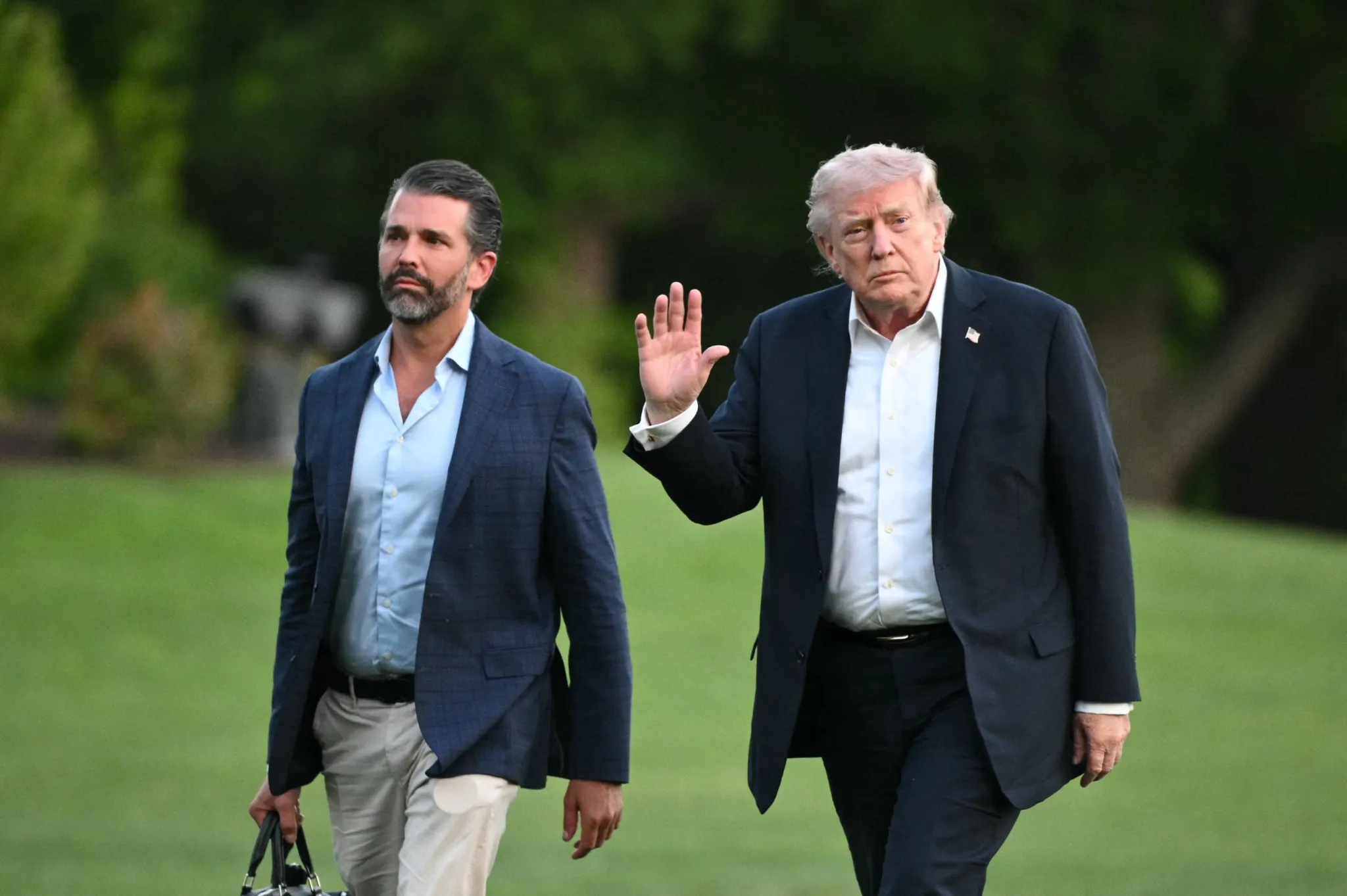
President Donald Trump and his son Donald Trump Jr. frequently cited prediction market odds during the 2024 campaign trail. They argued that market-driven pricing provides a more accurate, real-time probability of future events than traditional polling or expert analysis.
Economists and market theorists have challenged that premise when traders can influence the events on which they are betting. Steve Hanke, a professor of applied economics at Johns Hopkins University and former member of President Ronald Reagan’s Council of Economic Advisers, and Roger Koppl, a professor of finance at Syracuse University’s Whitman School of Management, describe the threat in terms of “Big Players.”
Koppl defined a Big Player in his 2002 book, *Big Players and the Economic Theory of Expectations*, as an actor whose discretionary actions are not constrained by competitive market forces but whose decisions can single-handedly dictate market outcomes. When such actors enter prediction markets, small-scale retail investors may stop trading on objective, public facts and instead direct their resources toward anticipating the next move of the influential insider.
Some markets are less exposed to that problem. Meteorological wagers on whether a hurricane will hit Hawaii before 2027 concern exogenous events. Policy-driven contracts present a different structure, particularly when officials possess non-public authority over the outcome.
On the decentralized prediction market Polymarket, for example, users can purchase derivative contracts that pay out $1.00 if the Federal Reserve’s Federal Open Market Committee (FOMC) keeps interest rates unchanged at its next meeting. FOMC members hold absolute, non-public control over interest-rate decisions, so participation by policymakers or their close associates would undermine the platform’s claim of presenting objective, market-aggregated truth.
A previous Federal Reserve controversy showed why access to sensitive financial information has raised concerns. In September 2021, the U.S. Federal Reserve was rocked by an ethics scandal after it emerged that Robert Kaplan, then-president of the Dallas Fed, and Eric Rosengren, then-president of the Boston Fed, had engaged in extensive personal stock trading during 2020.
The Federal Reserve was deploying trillions of dollars in emergency monetary stimulus at the time to stabilize financial markets during the COVID-19 pandemic. Kaplan had traded millions of dollars in individual stocks, while Rosengren held investments in mortgage-backed joint funds, the exact type of assets the Federal Reserve was purchasing in massive quantities to shore up the economy.
Both officials subsequently resigned. Fed Chair Jerome Powell then implemented sweeping new rules banning senior officials from holding individual stocks, bonds, or derivative contracts.
The episode echoed the warnings of 18th-century Scottish philosopher David Hume. In his 1742 essays, Hume cautioned that institutional designs must assume policymakers are prone to self-interest and may craft public policies to maximize personal wealth. Critics of prediction markets say that, without stringent regulatory oversight, the platforms provide a new, highly liquid frontier for similar conflicts of interest.
In the United States, the Commodity Futures Trading Commission (CFTC) has shaped the regulatory and legal battle over prediction markets through a protracted administrative and legal campaign. Under Chairman Rostin Behnam, the agency aggressively sought to curb the expansion of event contracts, especially those tied to political elections.
Behnam repeatedly warned that allowing billions of dollars in wagers on U.S. elections could commercialize and undermine democratic processes, turning the agency into an “election cop.” Digital-asset attorney Michael S. Selig and other legal specialists and industry advocates instead campaigned for a more permissive framework that would integrate event contracts into mainstream financial services.
The CFTC maintained tight restrictions on the platforms. In January 2022, it hit Polymarket with a $1.4 million civil penalty, accusing the company of offering unregistered event-based binary options. Under the settlement, Polymarket agreed to wind down its services for U.S. residents and technically blocked domestic IP addresses from placing wagers on the site.
Polymarket nevertheless experienced explosive growth during the 2024 election cycle, processing billions of dollars in volume on the presidential race. Its sudden prominence was accompanied by a massive surge in valuation and deep connections to political circles.
Those connections expanded after 1789 Capital, an investment firm co-founded by conservative financier Omeed Malik and closely associated with Donald Trump Jr., purchased a stake in Polymarket. The platform was valued well under $1 billion when 1789 Capital first invested.
Driven by unprecedented global trading volumes during the U.S. election, some private secondary-market estimates and promotional reports later placed Polymarket’s theoretical valuation at up to $21 billion. Critics have focused on the potential conflicts of interest created when immediate family members of a sitting president hold equity in a financial platform whose domestic operating parameters are determined by federal regulatory agencies.
The legal environment shifted for another platform in September 2024. Kalshi, a rival fully regulated U.S. platform, won a landmark federal court victory against the CFTC after U.S. District Judge Jia Cobb ruled that the agency had exceeded its statutory authority by attempting to block contracts on which political party would control the House and Senate.
That ruling paved the way for legal, domestic election betting on U.S.-regulated exchanges and delivered a significant blow to the CFTC’s restrictive stance. The legal pressure on unregulated offshore platforms continued, however.
In November 2024, the FBI executed a search warrant at the Manhattan home of Shayne Coplan, Polymarket’s 26-year-old founder and CEO. Agents seized his phone and electronic devices as part of an ongoing U.S. Department of Justice investigation reportedly focused on whether Polymarket bypassed its 2022 settlement agreement by continuing to allow U.S.-based users to trade through Virtual Private Networks (VPNs).
The incoming Trump administration has promised financial deregulation and support for digital assets. Proponents describe prediction markets as the cutting edge of financial innovation and public forecasting, while regulators in both the U.S. and Europe remain concerned that, without strict oversight, the platforms will continue to serve as high-stakes venues for insider trading and market manipulation.