

Saudi Arabia’s Oil Escape Routes Collapse as Houthis Tighten Red Sea Grip
Pipeline shutdown and Houthi advances threaten Saudi Arabia’s crude exports
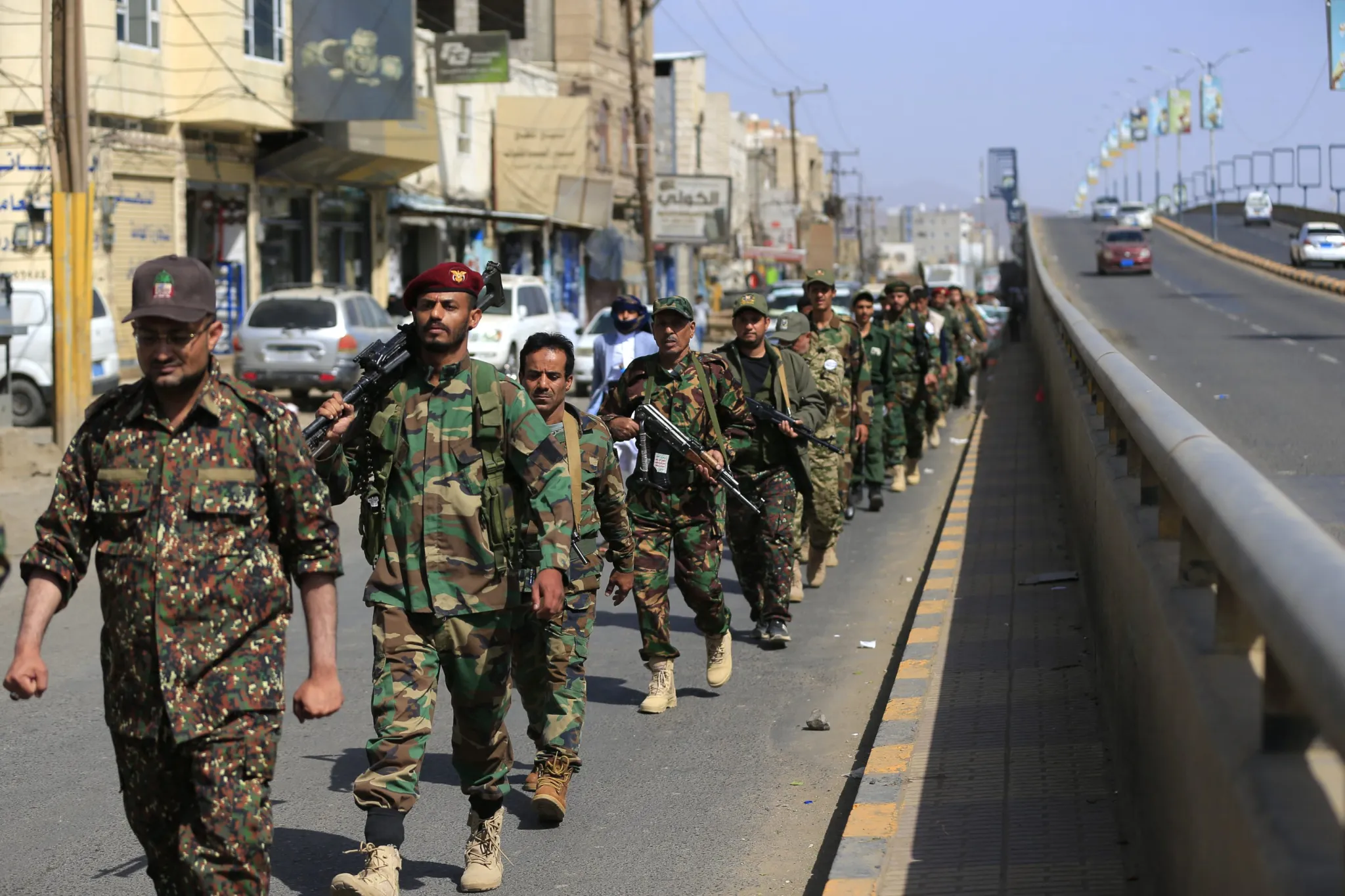
RIYADH, Saudi Arabia — Saudi Arabia’s emergency system for moving crude around the Persian Gulf has been crippled after the kingdom halted its main cross-country pipeline while Yemen’s Houthi rebels advanced along the Red Sea coast. The combined disruption has compromised both the overland and maritime corridors Riyadh uses to bypass the contested Persian Gulf.
Saudi crude exports to Asian markets through the Red Sea fell from approximately 3.4 million barrels per day in June to just 128,000 barrels per day in August, according to tracking data compiled by energy intelligence firm Kpler. Flows recovered modestly to roughly 700,000 barrels per day this month, but the shutdown of the East-West conduit and the fall of Mokha threaten to erase those gains.
The East-West Crude Oil Pipeline, a 746-mile conduit linking major oil fields in the Eastern Province with the Red Sea port terminal of Yanbu, was closed on Friday. Saudi authorities acted after a series of drone strikes launched from Iraqi territory, where Tehran-backed paramilitary factions operate. Regional intelligence officials have said Houthi technical and operational operatives actively assisted Iraqi militias in carrying out long-range attacks against Saudi infrastructure.


The pipeline had become more important after the Strait of Hormuz was effectively closed to commercial traffic on Feb. 28, when joint U.S.-Israeli strikes hit targets inside Iran and Tehran retaliated with waves of missile and drone barrages aimed at energy facilities and shipping lanes across the Gulf. Saudi state oil company Saudi Aramco began routing crude to Yanbu, sending supplies north through Egypt’s Suez-Mediterranean (SUMED) pipeline and the Suez Canal toward European refiners, while southern shipments traveled through the Bab el-Mandeb to Asia.
A separate Houthi advance unfolded over the same 48-hour period. Rebel forces captured the strategic port city of Mokha and seized a nearby Red Sea island from Saudi-backed Yemeni government units. The move gave the Houthis firing positions overlooking the Bab el-Mandeb Strait, the narrow maritime gateway controlling tanker access between the Red Sea and the Gulf of Aden.
In July, the Houthis declared a total naval blockade on Saudi-flagged vessels. That ended a fragile four-year lull in direct confrontation with Riyadh and was followed by heavy attacks on commercial shipping. The two bottlenecks have effectively neutralized the kingdom’s emergency energy transit architecture, which had been designed to move higher volumes through the East-West pipeline and avoid Hormuz.
The disruption comes as Crown Prince Mohammed bin Salman pursues the multi-trillion-dollar Vision 2030 initiative. The modernization agenda depends heavily on steady oil revenues and regional stability to attract foreign capital and turn Saudi Arabia into a global logistics, tourism, and industrial powerhouse. Its plans have faced severe headwinds since the Oct. 7, 2023, outbreak of the war in Gaza, which set off a cascade of regional conflicts involving Iran-aligned groups across Lebanon, Iraq, Syria, and Yemen.
A Saudi official, speaking on condition of anonymity because they were not authorized to brief reporters, said the kingdom would take all necessary measures to defend its territory and critical infrastructure. The official added that Riyadh was engaging international partners, including the United States, to secure freedom of navigation through the Red Sea.
Military analysts say Riyadh has only a narrow and perilous set of options. Saudi Arabia led a nine-nation military coalition that intervened in Yemen in March 2015 to restore the internationally recognized government after the Houthis seized the capital, Sanaa. The conflict killed an estimated 150,000 people and produced a severe humanitarian crisis before a United Nations-brokered truce took hold in 2022.
“Saudi Arabia has spent several years trying to move beyond the Yemen conflict and focus on economic transformation and regional stability,” said Neil Quilliam, an associate fellow with the Middle East and North Africa Programme at Chatham House. “Recent Houthi gains increase pressure on Riyadh to respond, but every available option carries significant costs and uncertain outcomes.”
A renewed ground or air campaign would carry high operational risks, particularly because the Houthis’ arsenal has evolved. “The kingdom already faced this in the past, but Houthi weaponry is more sophisticated now than it was back then, and the Saudis likely have less interceptor missiles available as a result of the U.S.-Iran conflict,” said Sherwan Hindreen Ali, Middle East research manager at the Armed Conflict Location & Event Data Project (ACLED).
Diplomatic alternatives also remain difficult. Houthi leaders have demanded the full and unconditional lifting of all sea and air restrictions on territory under their control, a concession that would permit the group to permanently entrench its military position along the Red Sea. Tehran, meanwhile, has shown little willingness to rein in its regional proxies without major sanctions relief and security concessions from Washington.
Saudi vulnerability has also been intensified by uncertainty over the United States’ security umbrella. Gulf security officials have pointed to Washington’s lack of a kinetic military response in September 2019, when a drone and cruise missile assault on Aramco’s Abqaiq and Khurais processing facilities temporarily removed 5.7 million barrels per day from production—more than half of the kingdom’s output.
U.S. forces conducted air operations against Houthi installations last year to deter attacks on commercial vessels in the Red Sea. The American military presence in the region is now concentrated around the Strait of Hormuz, where U.S. naval deployments remain involved in enforcing maritime containment around Iran and protecting commercial shipping. The effort has strained operational readiness and consumed large quantities of advanced surface-to-air interceptors.
Political calculations in Washington further cloud the prospect of a broader American intervention. Competitive congressional elections are approaching, and U.S. President Donald Trump has expressed reluctance to commit American forces to another open-ended Middle Eastern theater. On Thursday, he resisted calls from defense hawks to intensify operations against Iranian assets. “Maybe I don’t do that because of the election,” Trump said during an appearance on Fox News’ “The Ingraham Angle.”
On Saturday, Trump said Iran was “probably” responsible for the attack on the Saudi pipeline. Referring to a recent phone conversation with Crown Prince Mohammed, Trump said: “He’s a good friend of mine, and I can just say everything’s going to work out fine and dandy.” The White House did not respond to requests for comment on whether the administration was considering military options in Yemen.
Former U.S. Ambassador to Saudi Arabia Michael Ratney said Riyadh was confronting an escalating regional war it had actively sought to avoid, without clear assurances of direct U.S. military backing. “Despite their antipathy for the Iranians, this is a war they had never asked for, they had great trepidation about,” Ratney said. “And once it started, all of their … worst-case scenarios started coming true.”
Ratney said an effective response would remain a formidable challenge without sustained American military cooperation. “My understanding at this point is the White House is not enthusiastic about getting involved,” he said.