SpaceX Boost Mobile Deal Puts 7.2 Million Customers on Borrowed Towers
The customers are the only asset SpaceX cannot re-buy — and they are already leaving.
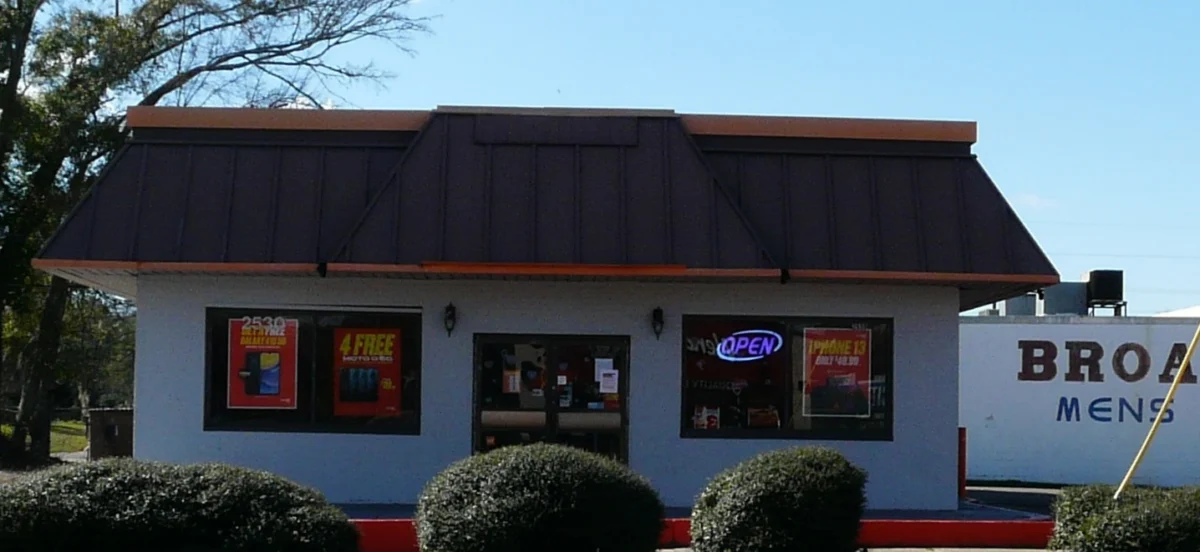
Boost Mobile’s own website makes the pitch in one line: unlimited talk, text and data for $25 a month, forever, no contract and no credit check. After 30 gigabytes the speeds can slow, but the price holds as long as the customer stays. It is the cheapest way into an American phone plan from a national brand, and it is the whole of the business SpaceX is now reported to want to buy.
The Washington Post reported on November 2 that SpaceX has held talks with EchoStar, Boost’s owner, about buying the carrier outright or gaining access to the network it uses. Elon Musk discussed the idea personally with EchoStar chairman Charlie Ergen in October, the Post said. Neither company has confirmed the talks, announced a price, or commented. What the reporting does establish is the shape of the thing being discussed: SpaceX would get about 7.2 million wireless subscribers, more than 3,000 Boost-branded stores, and the billing and retail operations it would otherwise have to build. It would not get a network. Boost has not owned a national tower network for a year.
EchoStar’s own filing says what happened to the customers first. The company’s third-quarter 10-Q, filed on November 3, puts wireless subscribers at 7.193 million on September 30, down from 7.375 million at the end of June. The business lost about 182,000 subscribers net in three months, against a gain of 223,000 in the same quarter a year earlier. New sign-ups fell by nearly a third, to 486,000 from 693,000, and the churn rate rose to 2.97 percent. The average customer pays $39.11 a month. DISH bought about 9.3 million prepaid customers when it took Boost over in July 2020. The list SpaceX is reported to be buying is about 2.1 million names smaller than the one DISH paid $1.4 billion for — roughly 23 percent gone in six years, with the latest quarter the sharpest cut.
The reason the list is shrinking sits in the same filing, a year earlier. In August 2025 EchoStar agreed to sell its 3.45 GHz and 600 MHz spectrum licenses to AT&T for about $23 billion, and to turn Boost into what it called a hybrid mobile network operator: Boost keeps its own cloud-based 5G core, and AT&T’s towers carry the calls. The company said elements of Boost’s own radio network would be decommissioned over time. By November 15, 2025, the 10-Q says, all customer traffic had moved off EchoStar’s 5G network and onto AT&T’s, and a Boost blog post says its proprietary towers were shut down in late 2025. The spectrum went to AT&T. The towers went dark. What is left to buy is a brand, a customer list, a software core — and the stores.
The contracts underneath that list are the part of the deal nobody has signed. DISH’s own filing for the AT&T network agreement, from July 2021, says AT&T may terminate it if a qualifying change of control puts the wireless business in the hands of a “restricted party”, a term the filing says “generally includes certain U.S. wireless providers, certain U.S. cable companies and certain large technology companies”. The filing does not name SpaceX. If AT&T did terminate, DISH could keep using its network for existing mobile customers for up to two years. The agreement runs ten years, and DISH agreed to pay AT&T at least $5 billion over its term. On November 5, Semafor’s Rohan Goswami reported on X that executives at AT&T and T-Mobile had separately discussed removing Boost from their networks if SpaceX buys it. Neither carrier has said it decided anything. T-Mobile’s chief executive, Srini Gopalan, had already ruled out the direct route on the company’s October 28 earnings call: “we don’t really see the room for an MVNO for satellites or SpaceX in that context.” Verizon’s chief executive, Dan Schulman, has said there are “no back doors” to any of its network agreements.
The customers, for their part, are not waiting for the contracts to be read. On the Reddit thread that followed the November 2 report, a user who said he had been with Boost since it absorbed Virgin Mobile wrote: “Well fuck. Been with boost since they acquired Virgin mobile. If this happens I gotta look for a different, low cost carrier.” On r/BoostMobile, where the SpaceX speculation had been circulating since late October, a customer of several years wrote: “Been with boost for years, but hearing this makes me want to drop it entirely, cause screw Musk.” A Boost dealer who uses the phone himself was blunter about the service: “The hybrid network sucks for a call quality. The Internet gets good reception in hard areas.. the owner is trying to squeeze everybody on higher plans to make money. We’re hoping he gets up and sells the company back to the founder.” And on r/NoContract, after the report, one user asked: “Can it really be any worse than Charlie running boost? Since he bought the brand I think he has lost customers just about every quarter.”
Musk talks about using a legacy carrier’s spectrum “ten times more effectively”, a line he offered at the Baron Investment Conference on November 6 without naming a target. Deutsche Telekom’s chief executive, Tim Höttges, put a price on the ambition on November 5: at least $200 billion, with SpaceX holding about 76 megahertz of spectrum against T-Mobile’s roughly 400 — a “dirt track” against an “autobahn” — and another $20 billion to $30 billion just to rent the towers. Schulman puts a national build at $300 billion to $500 billion over four to six years. LightShed Partners puts an initial build at $10 billion to $15 billion, excluding spectrum. The same carrier costs $10 billion, $200 billion or $500 billion depending on who is counting, and none of the counters has said what happens to the $25 plan. The only written protection for the customers is AT&T’s two-year transition after a termination nobody has announced, and the T-Mobile agreement they also ride on expires on July 1, 2027.
Ergen has described the shortfall himself. “As management, we haven’t cracked the code on how to be successful to the level we’d like to in the wireless business,” he told investors on an August call. “In general, we’ve treaded water for four years now.” The record behind him is a six-year unwinding. Boost exists at all because the Justice Department’s 2019 settlement of the T-Mobile–Sprint merger required the prepaid business to be sold to DISH, to keep a fourth national competitor alive. DISH paid $1.4 billion, took about 9.3 million customers and seven years of access to T-Mobile’s network, and agreed to buy Sprint’s nationwide 800 MHz spectrum for $3.6 billion. It never closed that spectrum purchase. In August 2026, T-Mobile transferred the 800 MHz portfolio to the investment firm Grain Management for $2.9 billion in cash plus Grain’s 600 MHz licenses. Fifty-eight days later, on October 8, SpaceX agreed to buy Grain’s portfolio — up to 14 megahertz of paired low-band spectrum — for about $8 billion in cash, according to the Wall Street Journal. The airwaves DISH was supposed to buy to become the fourth carrier are the airwaves SpaceX is buying to become the fourth carrier, at more than twice the price.
The dates do not line up either. Boost’s T-Mobile agreement expires on July 1, 2027. The Grain spectrum deal is expected to close in the first half of 2027. Qualcomm’s ground equipment — the only signed contract in this whole story, a multi-year deal announced November 4 to supply the radios and baseband units for tens of thousands of Starlink Mobile cell sites — starts deploying in 2027. The Federal Communications Commission authorised a 15,000-satellite direct-to-device constellation on October 6 and waived the rule requiring SpaceX to lease spectrum from a terrestrial carrier, but commercial use of the most valuable bands waits on the EchoStar spectrum closing, targeted for November 30, 2027. SpaceX aims to switch the service on in early 2028. The contract SpaceX would need expires months before the spectrum it has already bought even closes.
SpaceX’s own third-quarter filing, published October 22, lists Starlink’s consumer base at 13.6 million subscribers — nearly double the 7.2 million of a year earlier. It records $856 million already paid toward the EchoStar spectrum, with the total expected to reach $1,241 million by the end of 2026. The word Boost does not appear in it.