Iran Nuclear Program Now Has a Price on Its Whereabouts
The reward page asks for the program's facilities, equipment and people — "or the movement of any of the above." The inspectors left in June 2025, and the 440.9 kilograms have not been verified since.
Up to $20 million and possible relocation is what the United States is offering for information about Iran’s nuclear program. The notice, posted by the State Department’s Rewards for Justice program, asks for its facilities, its equipment, its people, “or the movement of any of the above.”
The Iran nuclear program‘s last verified figure is 440.9 kg of uranium enriched to 60 percent purity, 972 pounds, based on information available up to June 13, 2025. That is the last figure the agency could verify. Rafael Grossi, the director general of the International Atomic Energy Agency, told the UN Security Council on October 27 that his agency has not identified any repair or reconstruction at the damaged sites since June 2025. It also cannot verify the amount, the composition or the location of that stockpile, or confirm that no safeguarded material has been diverted. Inspectors have been unable to work normally in Iran since they were withdrawn for their safety when the attacks began in June 2025.
The claim has been repeated for sixteen months. After American bombers hit Fordow, Natanz and Isfahan in June 2025, President Donald Trump wrote on Truth Social that the sites had been “completely and totally obliterated.” A preliminary Defense Intelligence Agency assessment, reported days later, said the strikes had set the program back by only months, and that the stockpile had never been destroyed. The claim survived anyway. The former director of national intelligence, Tulsi Gabbard, told Congress in March 2026 that the strikes had “obliterated” the enrichment program and that the entrances to the bombed halls had been buried and sealed with cement. The defense secretary, Pete Hegseth, said in April that American operations had struck nearly 80 percent of Iran’s nuclear industrial base.
In October, Trump told NewsMax he was watching Fordow again. “We’re watching Fordow. We may have to go there… We’ll try to hit that target. We’ll destroy it very quickly,” he said. After voting early on October 24, he said a strike could come “maybe tomorrow.” On November 3 he told Fox News the United States “may need to strike Fordo,” within an hour, at any time it wants. In a telephone interview the same week he called the enriched uranium stockpile “nuclear dust” and said the country was “locked and loaded.”
Washington has paid for Iran tips twice before, and neither time was the target the program itself. In 2019 the reward was up to $15 million for information to disrupt the finances of the Revolutionary Guard and its Qods Force. In 2024 it was up to $20 million for the arrest or conviction of a Guard member accused of plotting to kill a former national security adviser, John Bolton. The new one is the first of the three aimed at the program itself rather than a group’s money or one named person. It is also the first to add relocation to the money.
The $20 million reward carries no date and no expiry. It states no criteria for what earns the full amount. The page tells anyone with information to send it through one of several platforms, in many languages, with a name, a location and a preferred language, and to upload photographs, videos and documents. It lists a channel on Tor, the network that hides a user’s location. It says it reads every tip. The program began in 1984. Its site lists a category for weapons of mass destruction.
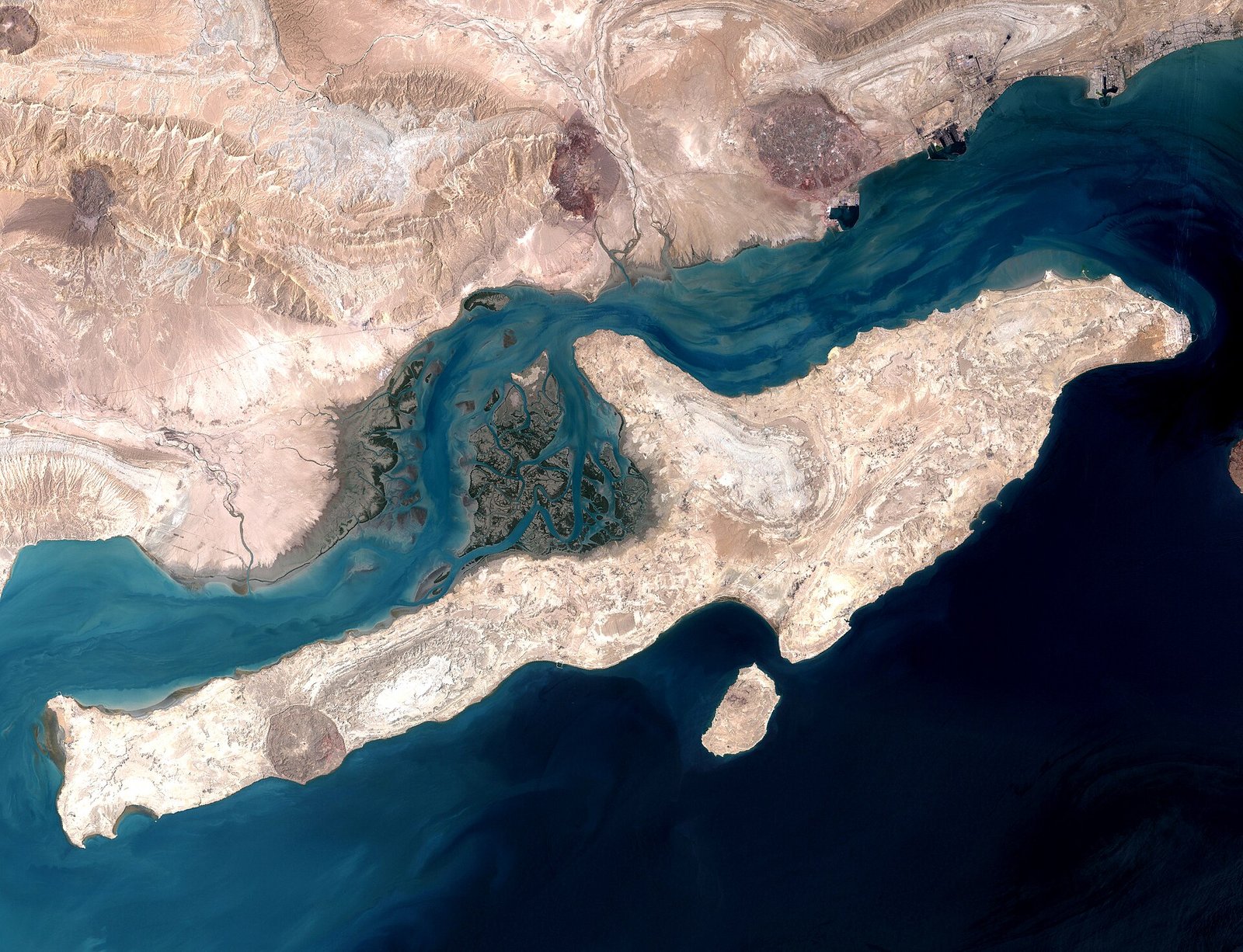
On Friday, the day the bounty was posted, Trump confirmed that American forces had hit an Iranian air defence system on Qeshm Island, the largest island in the Persian Gulf, 22 kilometres off Bandar Abbas. “They knocked out — they built a little bit of an anti-aircraft device and we knocked it out in about 15 minutes, maybe five,” he said, calling the action minor. Iranian state media reported two explosions in the Suza area, and on Saturday the Tasnim news agency said two missiles had struck the island. Iranian media also said air defences had destroyed an American drone over Qeshm — the model given differed between accounts, an MQ-9 in one, an MQ-1 in another. Neither claim has been independently confirmed. US Central Command called the situation “relatively calm.”
The November 2 strikes were not the start of the sequence. Unnamed American officials cited in the Wall Street Journal called them the latest in a series of limited strikes Washington has secretly carried out against Iran in recent weeks. The sequence, as Drop Site News documented it, runs through a ship captain killed in the Persian Gulf on October 30 and four fishermen hit off Qeshm’s southern coast the next morning. Mehrzad Panjeh and his brother Mehran were checking baited hooks. A drone struck the water near their boat between Suza and Mesen, setting it on fire and throwing Mehran into the sea. Their relatives Mohammad Panjeh and his son Mahmoud were hit in a nearby boat, which broke apart. Father and son clung to floating wreckage for hours before rescue boats found them at around 4 p.m. All four survived with minor injuries.
“We were doing our usual work, just what we were doing as fishermen for years,” Mehrzad Panjeh told Drop Site. “We never thought it would come to that.” The United States has publicly confirmed only the November 2 strikes, as defensive, and the November 6 strike, as minor. It has not confirmed the October 30 or October 31 attacks. No confirmation has come for either.
Trump had promised twice, on October 8 and again that week, that the United States would not attack Iran “at any time prior to the Midterm Elections.” A Pew survey in October found 65 percent of Americans disapproved of his handling of the war. Seventy-one percent called gasoline unaffordable. The first strike after the promise expired came on November 6, three days after Republicans lost both chambers of Congress. It came the same day as the bounty.
On November 5, an explosion aboard the Marshall Islands-flagged tanker Velos Sapphire, a 75,000-deadweight-ton oil products tanker sailing empty toward Bahrain, killed one seafarer. The crewman was first reported missing, then found fatally injured on board; the crew put out the fire, and the ship was taken to Bahrain’s Khalifa Bin Salman Port. His nationality was not given, and neither was his name. No attacker has been identified, and the cause has not been established. The International Maritime Organization had documented 129 incidents in the Strait of Hormuz and the wider Middle East as of November 6, with 25 seafarer fatalities since the conflict began.
Qatar presented proposals on Friday, and Iran is reviewing them. The proposal, as regional officials described it to the Associated Press, runs over two days. First the blockade lifts and some frozen funds are released, while inspectors return to the bombed sites. Then Iran reopens the strait under an arrangement it reached with Oman that Washington has not approved. Iran’s conditions for talking about its nuclear work are the end of the blockade on its ports, the lifting of sanctions, the unfreezing of its assets, compensation for war damage, and an end to hostilities across the region, including Israeli operations in Lebanon. Trump said the United States was doing “very well” with Iran and that Tehran wanted a deal “very badly.” Qatar’s media office denied reports that the talks had failed.
Under Central Command’s post about the reward, S.B.S. wrote: “yall have cash app?” Miss Polly, replying to Al Jazeera’s report of the strikes, wrote: “How dare you frame these illegal strikes of aggression as “defensive strikes.” An aggressor 10,000 kilometres away cannot claim self defence and you know it. Why wasn’t that the gist of your story instead of spewing propaganda for the US TERRORIST REGIME?”
Another user, nickbruechle, wrote: “Fuck you @AJEnglish. I don’t care if you put quote marks around it, by parroting the US’ ridiculous claim that attacking a sovereign nation is defensive, you are legitimising it.” And under Drop Site’s report of the fishermen, a user posting as @Backup2394, whose bio carries a Bahrain flag, wrote: “The poor “fishermen” in question 🤣” — quoting a post about a Revolutionary Guard commander, as if the boats had not been fishing at all. Three of the four replies argue about the words: defensive, minor, reward. The fourth doubts the fishermen were fishermen at all.
The IAEA has said it has no credible evidence of a coordinated Iranian nuclear weapons program. The one place its inspectors still work is Bushehr, the country’s nuclear power plant.