Poland’s Top Court in Chaos as Judge Suspends Leaders, President Rushes Back from Africa
President Nawrocki cuts short Africa trip as rival judges claim authority over top court
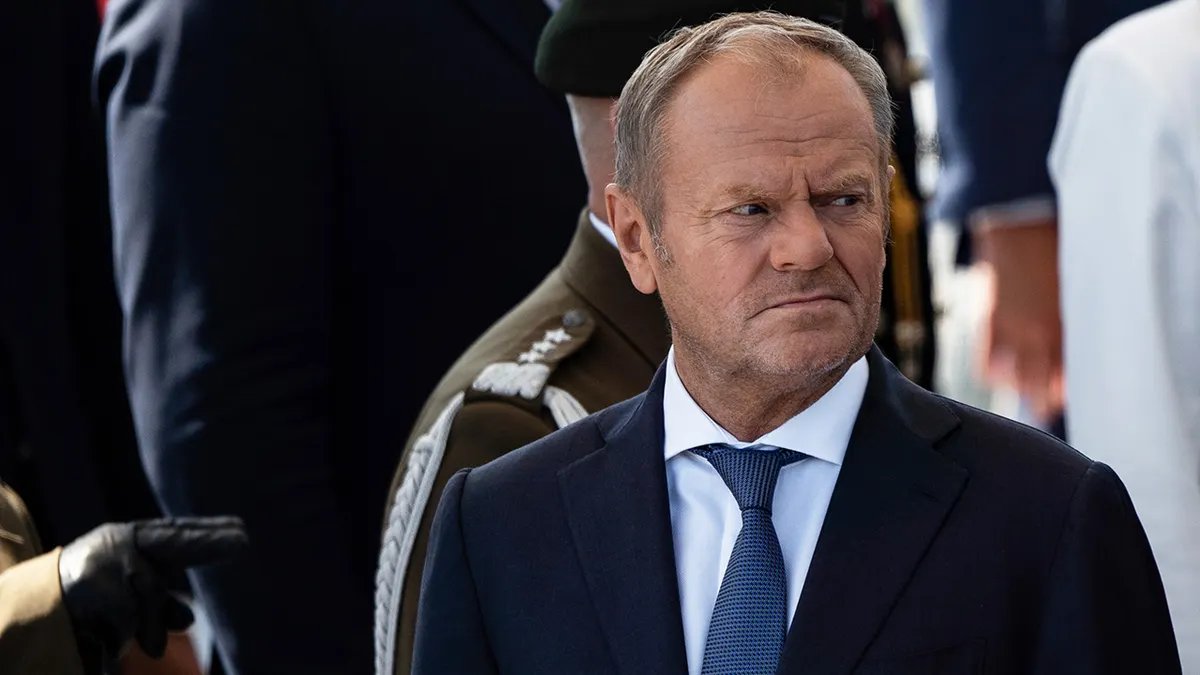
WARSAW — A newly elected judge moved to suspend the president and vice-president of Poland’s Constitutional Tribunal on Friday evening, triggering a physical confrontation at the court’s Warsaw headquarters and forcing President Karol Nawrocki to abort a state visit to Senegal.
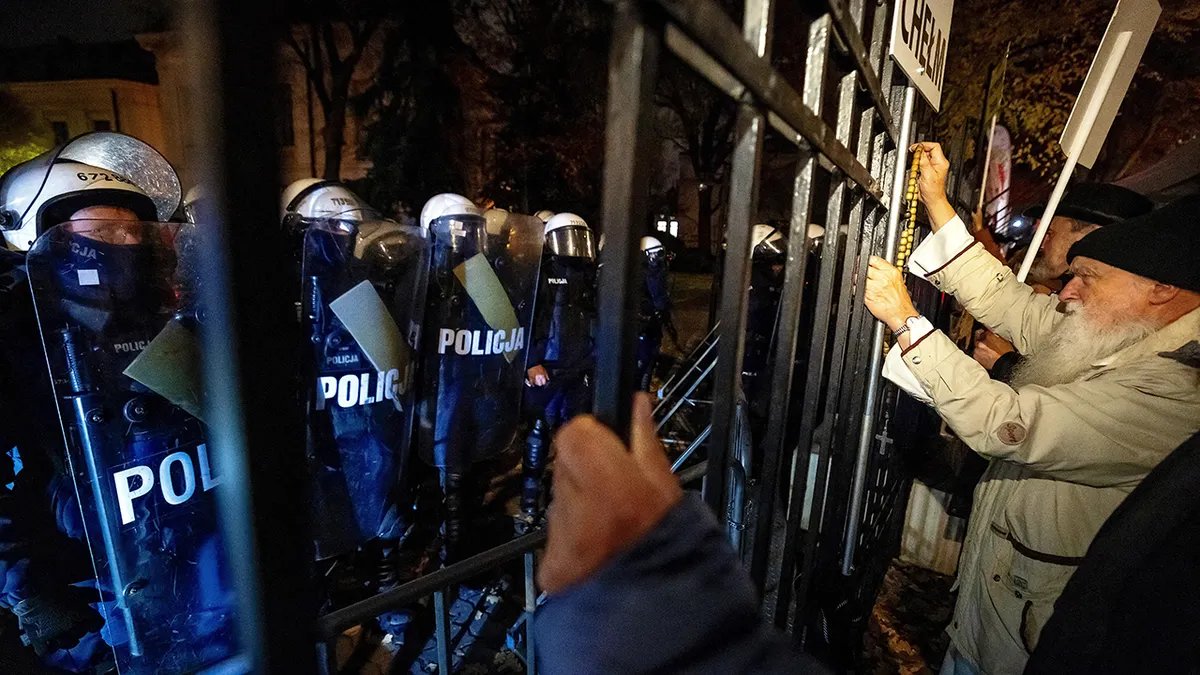
Judge Anna Korwin-Piotrowska, one of five judges whose oaths Nawrocki has refused to accept, cited a “state of higher constitutional necessity” and her seniority on the bench to justify the one-month suspensions of Tribunal President Bogdan Święczkowski and Vice-President Bartłomiej Sochański. Riot police surrounded the building after Korwin-Piotrowska reported safety concerns for judges and staff.
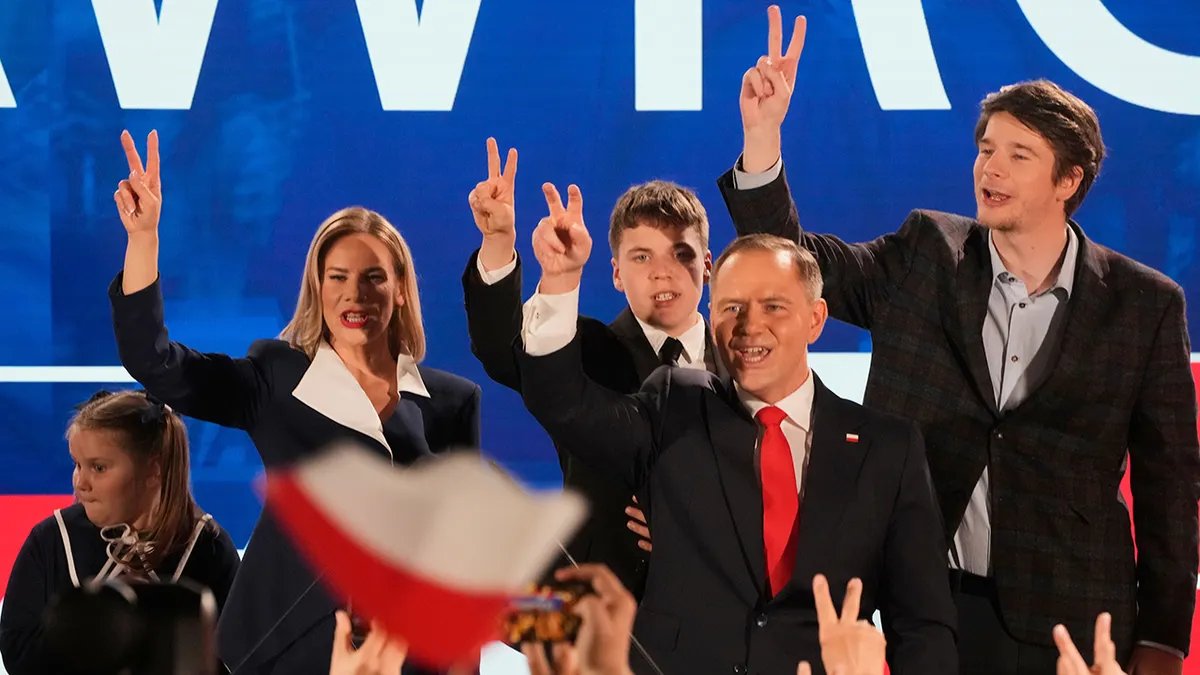

Nawrocki’s plane turned around over the Mediterranean. He arrived at the tribunal in the early hours of October 31, confronting the newly elected judges directly: “You are not Constitutional Tribunal judges.” His office later labeled the events a “forcible takeover of a constitutional organ of the State” and announced criminal complaints against three of the new judges.
The clash marks the most dramatic escalation yet in a crisis that has paralyzed Poland’s highest court since 2015. That year, the outgoing parliament and incoming Law and Justice party each elected five judges to the same seats. President Andrzej Duda, allied with PiS, swore in only the party’s picks. The tribunal later ruled three of the original appointments valid — but the PiS-backed judges were already seated.
For eight years, the reconfigured court issued rulings that tightened abortion restrictions, challenged EU treaty primacy, and drew condemnation from European institutions. The Court of Justice of the European Union ruled in December 2025 that the tribunal “does not meet the requirements of an independent and impartial tribunal established by law.”
Prime Minister Donald Tusk‘s coalition, elected in 2023 on a platform of judicial repair, moved this year to seat eight new judges. Nawrocki accepted three. The remaining five, including Korwin-Piotrowska, took their oaths before a parliamentary notary after the president refused. The presidential office and Święczkowski insisted the oath required the president’s physical presence.
International bodies disagreed. The European Court of Human Rights issued interim measures in May ordering Polish authorities to “refrain from hindering the taking up and exercise of judicial duties.” The Council of Europe’s Venice Commission stated in October that the president has no discretion to review parliamentary appointments and that oaths may proceed without him if he refuses or delays.
Tusk called the solution “simple” on Monday and accused Nawrocki of “choosing forceful confrontation, which could cost Poland very dearly.” The president’s allies see it differently. Marcin Przydacz, head of international policy in Nawrocki’s office, told European TV that “even lawyers who are close to the Tusk government say that there’s absolutely no legal basis for such behavior.” Nile Gardner of the Heritage Foundation called it “clearly a crisis for Poland and an attempted coup by Donald Tusk” with tactics “straight out of the Putin playbook.”

Legal scholars are split. University of Warsaw professor Marcin Matczak called the suspension’s legal basis “non-existent.” Others argue Korwin-Piotrowska acted lawfully to force compliance with European rulings.
The diplomatic corps has fractured. Poland’s UN ambassador Krzysztof Szczerski resigned Monday, following the weekend departures of ambassadors to China and Romania. Jakub Kumoch and Paweł Soloch explicitly cited the “unlawful attempt to take over the Constitutional Tribunal.” Foreign Minister Radosław Sikorski called Kumoch’s resignation “unprofessional.”
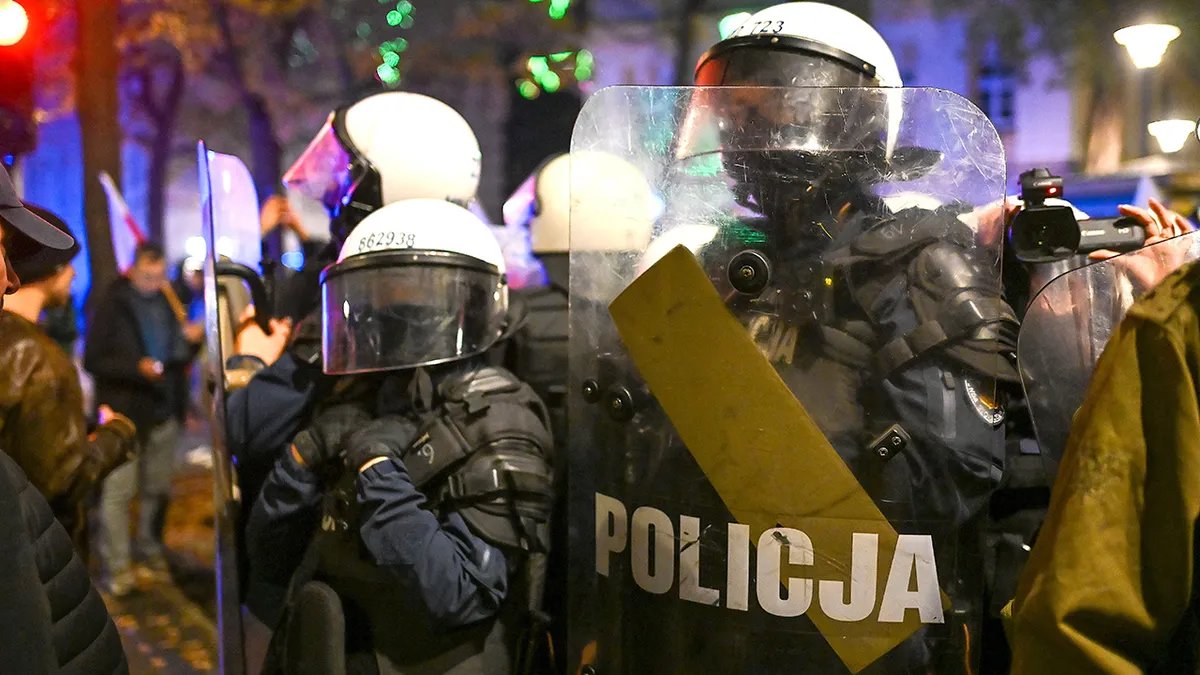
International reaction mirrors Poland’s divisions. The European Commission backed the Sejm’s appointment authority. Commissioner Michael McGrath referenced the ECtHR’s interim measures. French opposition leader Marine Le Pen warned that “one cannot claim to defend democracy and the rule of law while remaining silent when the constitutional balance of a member state is gravely threatened.” Russian Security Council Deputy Chairman Dmitry Medvedev labeled it a “constitutional coup” — a comment Tusk seized on to accuse the opposition of advancing Russian interests. U.S. Ambassador Tom Rose urged restraint, citing concern for “the stability, security, and democratic future of a country we are proud to call our friend and ally.”
With parliamentary elections a year away, the institutions meant to resolve constitutional disputes have become the dispute itself. No mechanism exists to break the deadlock while both sides claim legal legitimacy.