NVIDIA Cuts Gaming GPU Output 40% to Feed AI Demand, Pushing RTX 5090 to $9,400
RTX 5090 hits $9,400 as data-center demand starves consumer supply
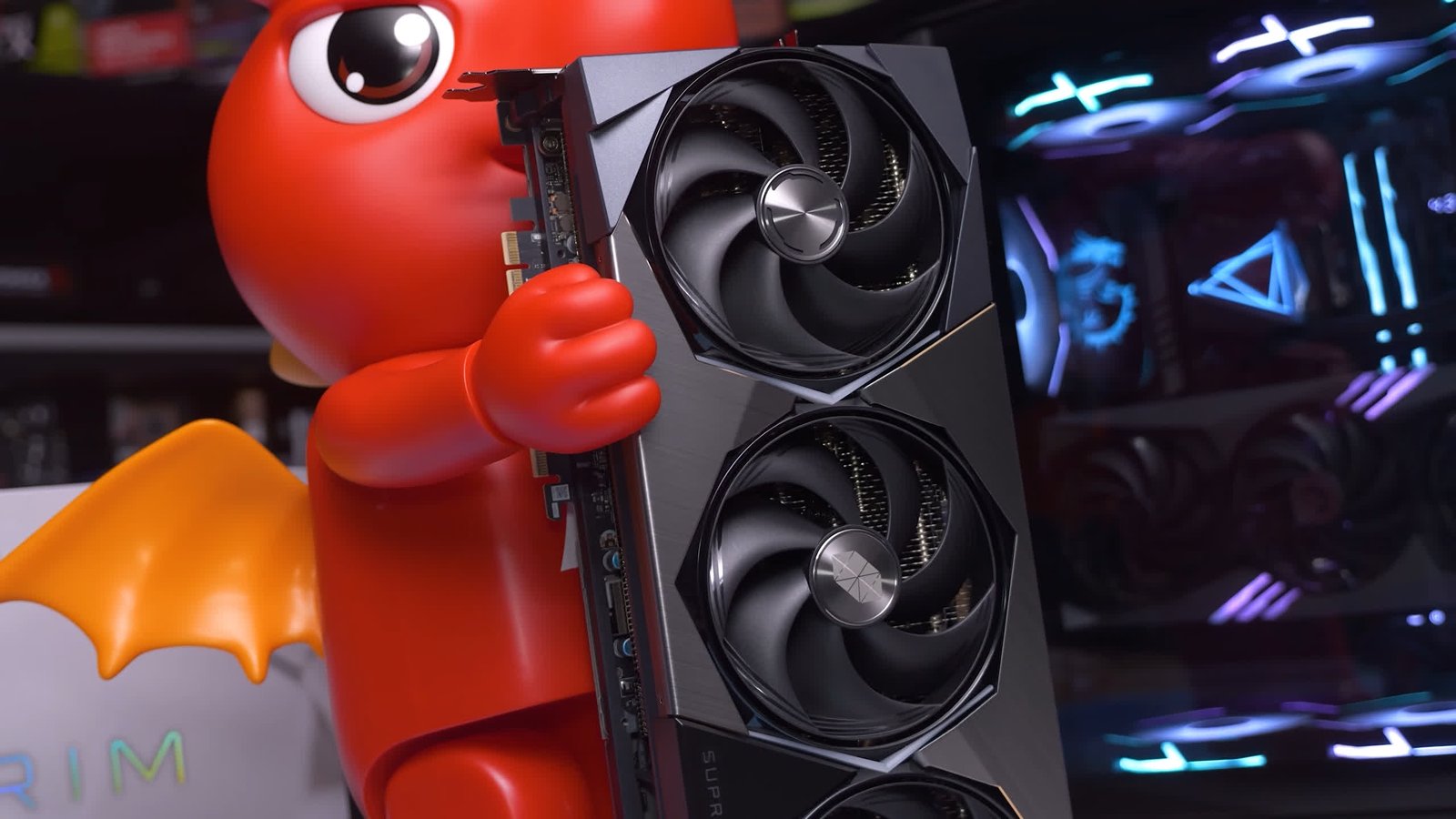
NVIDIA has quietly slashed production of its GeForce RTX 50 series by 30 to 40 percent in the first half of 2026, redirecting memory supply toward data-center chips that command far higher margins. The move confirms what pricing data has signaled for months: the company that built its reputation on gaming hardware now treats that market as secondary.
The consequences are visible in retail listings. The RTX 5070, launched at $549 in March 2025, fetched $909 new and $749 used as of November 6 — a 66 percent premium over its launch price. Its Ti sibling, introduced at $749 nine months earlier, has nearly doubled to $1,339.99 for the cheapest available unit, up $160 in the eight days between October 29 and November 6 alone. At the top of the stack, the RTX 5090 carries a $1,999 sticker but has been spotted at $9,400 in the United States, 4.7 times its MSRP. Globally, the card averages $7,240.
A ten-country survey shows graphics-card prices rose 35 percent across August through October. Cloud GPU rental rates climbed 19 percent year-over-year as of November 2. AMD is not immune: the Radeon RX 9060 XT 8GB gained 8 percent between mid-July and early August, and the company has told partners to expect a further 10 to 15 percent increase.


The driver is not a speculative bubble. Since 2023, NVIDIA’s data-center revenue has exceeded its gaming revenue, and every major cloud provider, enterprise AI lab, and sovereign compute initiative competes for the same wafers, high-bandwidth memory, and advanced packaging — notably TSMC’s CoWoS capacity — that consumer cards require. Memory costs alone were projected to jump 20 percent in early 2026. Geopolitical friction and logistic snarls have pushed component shortage forecasts to late 2027.
This marks a structural break from the cryptocurrency cycles that inflated prices in 2018 and 2021, when some cards quadrupled MSRP before collapsing after Ethereum’s shift to proof-of-stake. The current demand comes from multi-year infrastructure commitments, not speculative miners. NVIDIA began pivoting toward AI silicon in 2016; the Blackwell architecture now manufacturing on a custom 4N process was designed for that roadmap first.
AMD’s response has been largely cosmetic. It skipped the RX 8000 designation entirely, launching the RDNA 4-based RX 9000 series in March 2025 to align numerically with NVIDIA’s RTX 50 line and its own Ryzen 9000 CPUs. The RX 9070 XT debuted at $599, but the same supply constraints apply.
Analysts now routinely steer buyers toward the used market, particularly older cards with 8 GB or less VRAM — unattractive for large-model inference and therefore less distorted by institutional bidding. The desktop GPU market is still projected to grow from $4.56 billion in 2024 to $6.38 billion by 2030, with the high-end segment expanding from $55.6 billion to $214 billion over the same horizon. Whether individual enthusiasts remain part of that growth is an open question.