The Invisible Pipeline Delivering Your Daily Crossword Fix
The business infrastructure behind your morning crossword habit
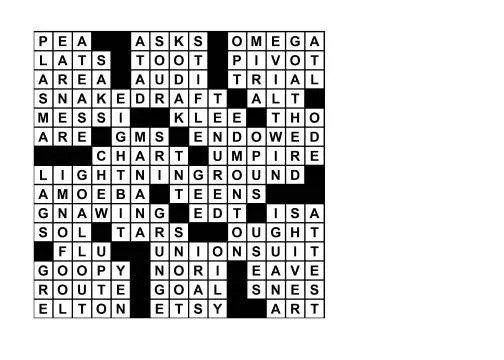
Most readers never see the machinery behind the morning puzzle. They only know the grid waiting on the page or screen, the familiar rhythm of across and down, the satisfaction of a completed square. But every crossword, Sudoku, and word scramble that lands in a newspaper or app on a Friday like this one — November 6, 2026 — moves through a distribution network that has quietly shaped the publishing business for generations.
Tribune Content Agency, Andrews McMeel Syndication, King Features Syndicate, and Creators Syndicate act as the unseen intermediaries. They license puzzles from creators, package them, and ship them to hundreds, sometimes thousands, of outlets worldwide. The USA TODAY crossword, the Los Angeles Times crossword, the Daily Commuter, the Universal Crossword, the Newsday Crossword — all of them travel these same pipes.
Jumble, the scrambled-word game Martin Naydel invented in 1954, moves through Tribune. So does the LA Times crossword and a slate of Sudoku variants. Andrews McMeel carries Celebrity Cipher, Lexigo, and the Universal Crossword. King Features distributes Cryptoquote and Cryptoquip. Creators Syndicate handles Find the Words and the Newsday Crossword.


The pipeline stretches back further than most readers realize. Arthur Wynne’s first “word-cross” appeared in the New York World on December 21, 1913. By the 1920s, crosswords were a national habit. Sudoku took a longer route: Howard Garns created “Number Place” for Dell Magazines in 1979, Japanese publishers renamed it Sudoku in 1984, and the global boom arrived in the early 2000s.
Newer entrants keep the pipeline fresh. Tetsuya Miyamoto developed KenKen in 2004. Allan Turoff invented Boggle in 1972. Scrabblegrams, 7 Little Words, and Kubok have all found their way into the syndication stream, expanding the menu beyond the traditional crossword-and-Sudoku duo.
For publishers, the arrangement solves a persistent problem: daily fresh content that readers expect, without maintaining an in-house puzzle staff. The syndicates guarantee delivery. The creators get paid. The readers get their morning mental workout. The solutions published today represent the endpoint of a supply chain that rarely gets noticed — until a puzzle misses its slot.