The Russian Diesel Deal Has Washington’s Permission and Nowhere to Go
One page of Treasury paper was supposed to unlock Russian diesel. The Agioi Fanendes is still signalling "for orders" in the North Atlantic.
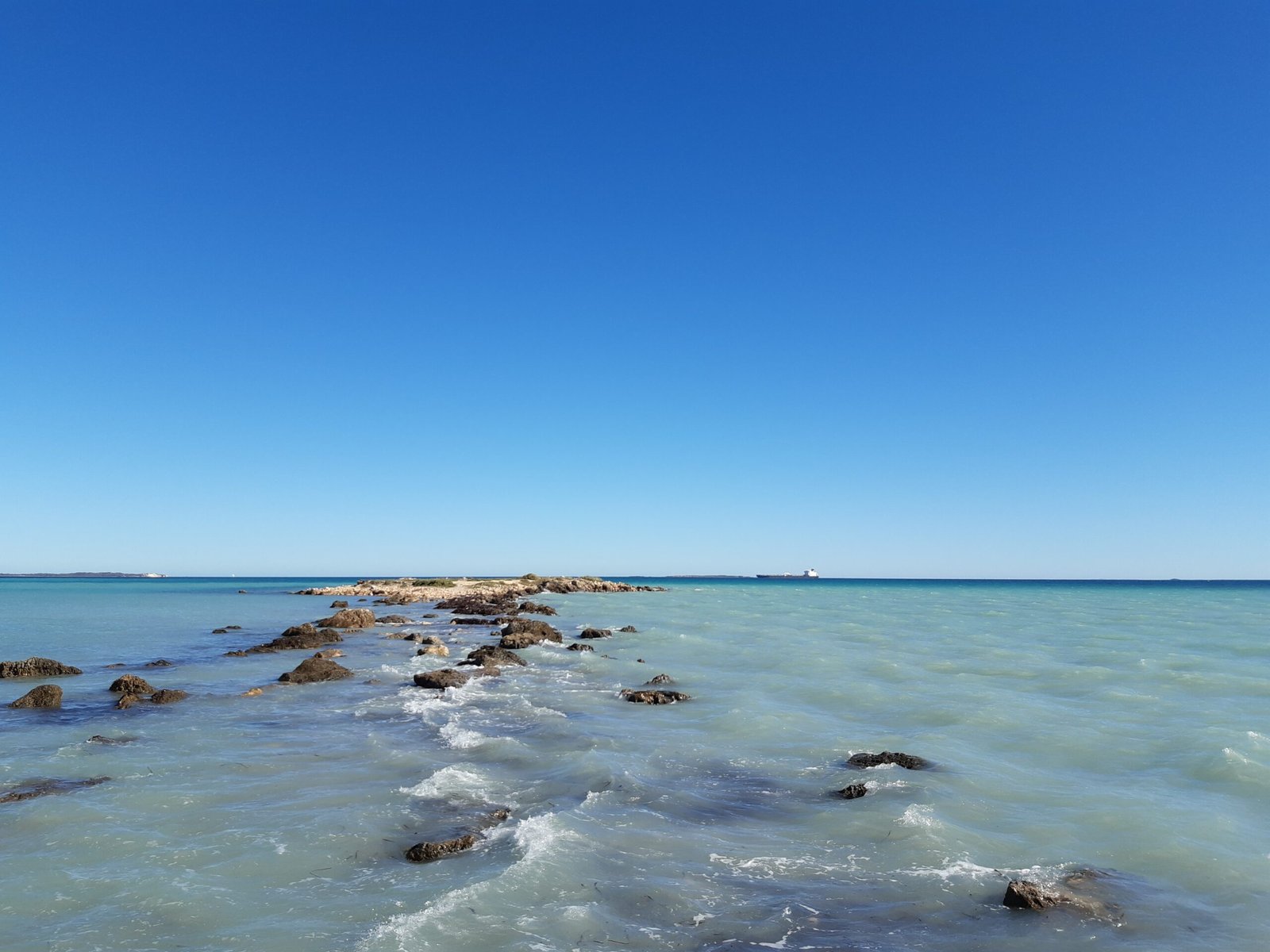
Somewhere in the North Atlantic, a Malta-flagged tanker called the Agioi Fanendes is carrying about 40,000 metric tons of Russian diesel toward a port it no longer names. It left the Russian Baltic port of Primorsk on October 22, due in New York on November 7. On October 26 it was reported idling off Skagen, Denmark. Its tracking now reads “for orders,” which in shipping means the cargo has no declared destination and no confirmed buyer.
New Jersey is the likeliest landing, and on November 2 its governor told the ships to stay away. Governor Mikie Sherrill wrote to the state’s port and terminal operators that buying or unloading the fuel would likely bring harsh civil and criminal penalties. Her letter rests on the Ending Importation of Russian Oil Act, the law Congress passed in April 2022. It bans imports of Russian products under chapter 27 of the tariff schedule. Diesel falls under chapter 27. The law allows a waiver only on certification that Russia has withdrawn its forces from Ukraine. “Of course, no such certification has been made — or could be made — thus far,” the letter says. It also cites a customs statute, 19 U.S.C. section 1595a(b). Anyone taking part in an illegal importation is liable for a penalty equal to the value of the goods. The statute of limitations is five years. It runs past this administration. One operator has already answered. Kinder Morgan Terminals runs a terminal at Perth Amboy. It told a New Jersey newspaper that it is not accepting Russian diesel.
The license the ship is sailing under is a single page. General License 135, issued by the Treasury’s Office of Foreign Assets Control on October 9, authorizes transactions prohibited by two sanctions regulations, 31 CFR parts 587 and 589. It covers the sale, delivery, offloading or importation of diesel fuel of Russian origin. The authorization runs through 12:01 a.m. on April 7, 2027. The second paragraph draws a line. It withholds authorization for any debit to an account on the books of a U.S. financial institution belonging to Russia’s central bank, its National Wealth Fund or its Ministry of Finance. The license covers the cargo. It says nothing about the ship. It names no volumes, no price and no counterparties, and it is silent on blocked ships, bunkering or insurance. Senator Richard Blumenthal wrote on October 27 to Thanassis Martinos, managing director of Eastern Mediterranean Maritime, the tanker’s Athens-based owner. He put the gap in one sentence: “The President may have given a license to facilitate this transaction, but only Congress can make it legally valid.” He gave the company until October 31 to name the seller, the buyer, the charterer, the insurer and the terminal operator. On X the next day he added: “I’m sending a sledgehammer message to shipping companies whose tankers are transporting illegal Russian diesel to our ports. Reverse course while there’s still time.”

On September 18 the president signed the Lindsey O. Graham Sanctioning Russia and Iran Act, which orders duties of up to 500 percent on Russian goods and up to 100 percent on goods from the biggest buyers of Russian oil and gas. On October 16, two days before those duties were due to take effect, he signed an executive order. It set the rates at their statutory maximum and waived them in the same document. The law requires a written certification to Congress that the waiver serves the national interest. The waivers have no expiry date. They sit dormant, a framework that can be switched back on without new legislation.
Under the European Union’s price cap, premium petroleum products including diesel may be carried only at or below $100 a barrel. Listed vessels get no services. A separate regulation bars bunkering, ship supply, crew changes and tug services to them. Malta’s sanctions unit is already seeking price-cap attestations from the Agioi Fanendes’ owners. Lloyd’s List Intelligence, in a compliance guide published in October, puts it this way: permission to trade the cargo is not the same as permission to serve the vessel. Two of the four tankers would fail that test on their own names. The Talisman, Russian-flagged and 20 years old, sits on the sanctions lists of the United States, Britain and the European Union. It has turned away from the Atlantic into the Mediterranean and now sits off Algeria, signalling “for orders” like the Agioi Fanendes. The Leruo, Sierra Leone-flagged and Hong Kong-owned, sits on the lists of Britain, the European Union and Canada; it changed its destination to Brazil on November 2. The fourth, the Beast, Seychelles-owned and also sanctioned, left Primorsk on October 27 and is heading for the Atlantic.
Six Russian diesel cargoes have broadcast that they plan transatlantic voyages, according to shipping data from Kpler and LSEG. The first three together amount to 924,000 barrels. None of the six has arrived in the United States since the deal was announced. Four tankers are now operating without confirmed buyers, according to the Institute for the Study of War. Two tankers changed course on November 2. The midterms were the next day. Kpler analyst Matt Smith said it was not clear whether the shipments had American buyers yet, and that the third tanker might change course too. “Because of regulatory, sanctions concerns, we may not see this cargo discharge on the U.S. Atlantic coast,” he said. “It’s clear there’s hesitancy here in bringing these barrels onshore just because of the implications of doing so.”
This week the Ryazan refinery, one of Russia’s largest, was hit in an overnight drone strike. The Yaroslavl plant was hit the night before. It was the second refinery attack in a week. The diesel Russia can export, what its refineries produce after domestic demand is met, has fallen from about 1,180 thousand barrels a day in January 2024 to roughly 240 thousand in October 2026. That is the Energy and Environmental Policy Research Institute’s finding, from Kpler data. Nearly 40 percent of Russian refining capacity is idle after Ukrainian strikes. Russia is already exporting about 260 thousand barrels a day, slightly more than it has available. Meeting the announced schedule on top of existing exports would require roughly 384 to 509 thousand barrels a day. Moscow has enforced fuel export bans since April after shortages at home. Whatever cargoes do move will most likely be diverted from Russia’s existing buyers, chiefly Turkey and Brazil, and add nothing to the world market.
The first cargo is about 300,000 barrels. That is roughly 7 percent of a single day’s American diesel use, about four million barrels. The full announced program is 4.8 million tons, about 36 million barrels. Averaged over the license period, that is about 203 thousand barrels a day. The International Energy Agency puts the global diesel deficit at 1.6 million barrels a day, and the program is about 13 percent of it. Delivered in full it would lower American retail diesel by about 34 cents. Retail diesel rose from $3.46 a gallon in January to $6.18 in mid-October. The United States, meanwhile, remains the world’s largest diesel exporter, shipping about 1.4 million barrels a day in October, and has imported effectively no Russian diesel since 2024.
“Diesel is only six freaking dollars a gallon,” Michelle Miller, a farmer who posts as Farm Babe, said in a video on October 9, the day the deal was announced. “Harvest does not have a snooze button.” The Farm Bureau puts the spike at about $2,200 in added harvest costs for an average corn farm, and more than $8,300 for rice farmers. Patrick De Haan, who tracks wholesale prices for GasBuddy, wrote on Threads on October 13 that prices were “not blinking” over the deal. The replies underneath came from the people paying them. “It’s because our oil companies would rather export all of our diesel so they can make even more money!” wrote flyfishpacman. “Not to mention the diesel that is imported is a drop in the bucket compared to consumption in the US,” wrote michael_tate_tri. And tensleepcj, who burns dyed farm diesel, put the workaround in one line: “I saved $4 last week on 10 gallons of dyed. Still cost $20 more than it did in February. Not so much a benefit as a slightly smaller detriment?” American distillate stocks fell 3.6 million barrels to 99.3 million in the week to October 30, the lowest since May 2003, with 23.8 days of domestic supply, according to the Energy Information Administration. Diesel prices averaged about $6.29 a gallon in September. It was still near that level this week, at $6.27. Futures are up more than 60 percent since the United States went to war with Iran in February.
On Thursday, Kirill Dmitriev, President Putin’s envoy, met President Trump privately at the White House, where he had attended an event hosted by First Lady Melania Trump with Russian and Ukrainian representatives. Trump told reporters he expects an agreement that will involve more than Ukraine. “It’s going to be a big agreement, and it’s going to involve more than Ukraine,” he said. “I could even say it might involve all of Europe. It’s going to be a big, beautiful agreement, and everyone’s going to be thrilled.” American-mediated talks between Russia and Ukraine are scheduled for November 10 and 11 in Abu Dhabi. The Democrats won both chambers of Congress on November 3. They take over in January. They are expected to scrutinize the Russian diesel deal. Legal action against it is possible. The Kremlin spokesman, Dmitry Peskov, denies any connection between the tankers changing course and the election result.
No Russian diesel cargo has arrived in the United States since the deal was announced. Kinder Morgan, which runs the Perth Amboy terminal Sherrill wrote to, has said it is not accepting Russian diesel.