Canada Submarine Deal Shrinks From 22 Boats to Eight Firm Orders
The navy said 22. The government announced 12. The negotiators are now talking about eight.
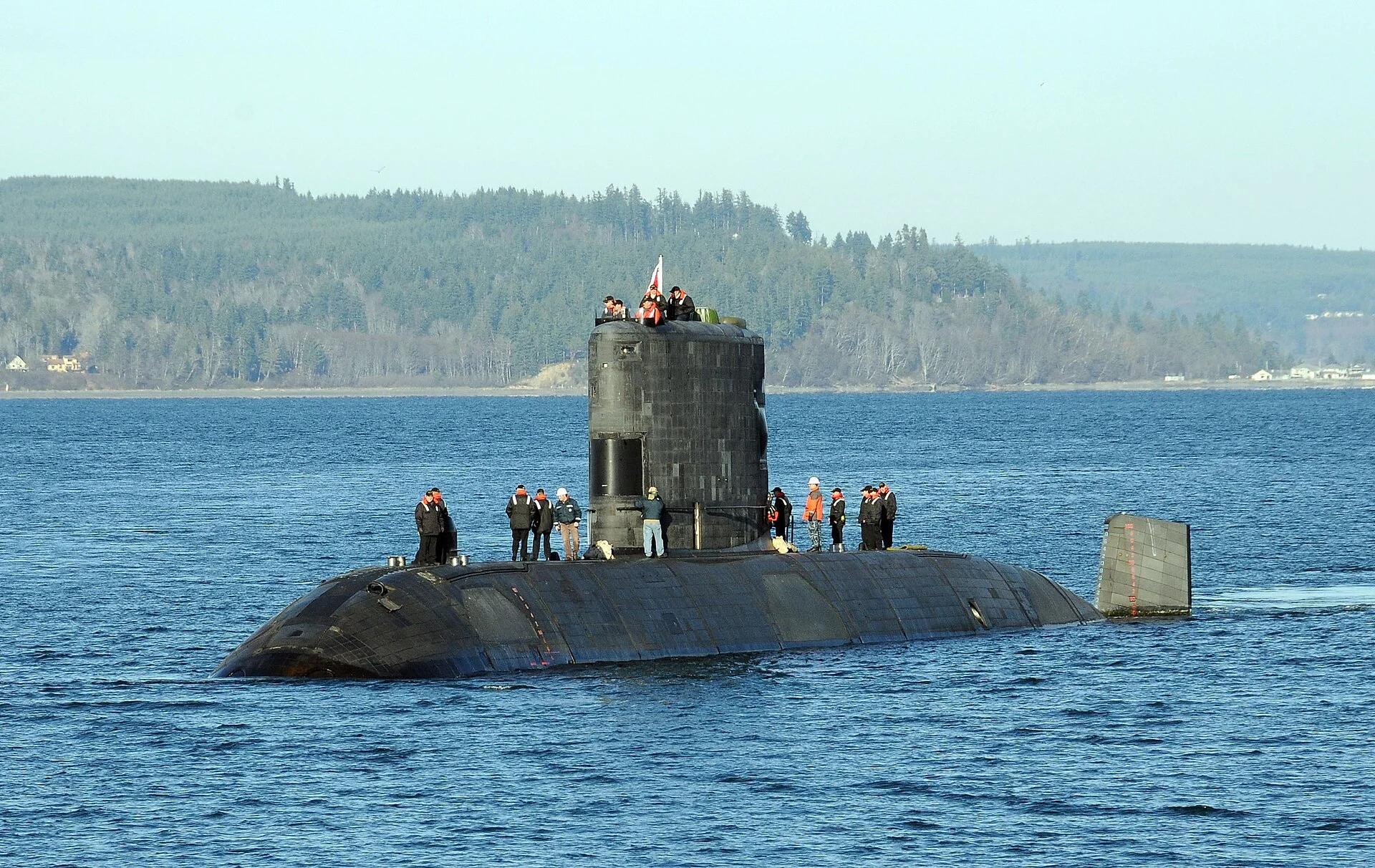
Canada’s negotiators went into last week’s meetings in Ottawa with a smaller number than the one the prime minister announced in July. Eight submarines firm, the CBC reported, citing three anonymous sources. The other four would come some other day, under some other government, if the money and the politics still held.
The meetings brought together federal officials led by the Defence Investment Agency, the German builder Thyssenkrupp Marine Systems, known as TKMS, and the Norwegian defence company Kongsberg. The CBC report said Canada had been talking about splitting the order for weeks, since a round of meetings in Europe in September. The government’s public language has not moved. A spokesperson for Stephen Fuhr, the secretary of state for defence procurement, told the CBC the government stood by the prime minister’s pledge of up to 12 modern submarines to replace the aging Victoria-class fleet. The Defence Investment Agency said it could not comment on the content or status of negotiations that are still active.
The navy itself set the first number, and it was 22. Rear Admiral Jason Armstrong, speaking at Vanguard Defence’s Deep Blue conference on October 27, said the navy’s own studies put the requirement there. “All their numbers say that it should be 22,” he said, according to Vanguard’s report of the keynote. Armstrong noted that the original requirement for the Victoria class had been six boats to cover one ocean. Canada has three oceans to cover, plus allied missions abroad, and the 22 was the studies’ answer to that geography. The crew to sail those boats does not exist yet either. Armstrong said the submarine force would have to grow from about 260 sailors to roughly 1,200. That is more than four and a half times its present size. The growth would be built up alongside the German and Norwegian navies and with college and university programmes in British Columbia and Nova Scotia for the maintenance workforce. He put the boats’ service life at 30 to 40 years, called the submarine the apex predator of a wider crewed and uncrewed network the navy is building with Defence Research and Development Canada, and named the protection of subsea cables and pipelines as a new area of warfare for his team. He closed with a line he said he had used for years: “There will always be a submarine in our waters. We have to decide whose submarine that is.”

In Halifax on July 6, Prime Minister Mark Carney named TKMS the preferred supplier for the Canadian Patrol Submarine Project and called it the largest defence procurement in Canadian history. The number was 12. The government’s own release that day gave the reason the project could not wait. The current fleet was aging, it said, with only one of four submarines seaworthy. The first four new boats would be delivered ahead of schedule, in 2034, and contracting would be concluded no later than the end of 2027. The 12 was not new. A Senate defence committee had recommended 12 submarines with air-independent propulsion back in 2017, six for each coast. The recommendation was in a report called “Reinvesting in the Canadian Armed Forces.” The competitive process that produced the TKMS selection ran from a request for information in September 2024 to proposals in March 2026, with two qualified suppliers identified in August 2025. The government said it completed a process of that scale in roughly eight months, five years ahead of the original schedule.
Canada took the four Victoria-class submarines from Britain’s Royal Navy in 1998 for $750 million. The boats were built in the 1980s, laid up by the British in 1994, and sold on as a stopgap while Canada decided what to do next. The lead boat, HMCS Victoria, spent 115 days at sea between 2000 and 2010. A life-extension programme announced in 2016 was meant to carry the class into the early 2030s at a cost of CAD$1.5 billion to CAD$3 billion. The government’s July backgrounder said the current fleet would remain operational into the mid-to-late 2030s. The first four replacements are promised for 2034 in the prime minister’s release. Thomas Röwekamp, the chair of the German parliament’s defence committee, told the CBC in Ottawa last week that Germany and Norway had given up production slots so Canada would receive four boats by 2036. The two dates sit on the record side by side, and no official statement reconciles them.
Negotiators set the third number, eight, and the reasons given for it are about money and time rather than oceans. The CBC’s sources said federal officials wanted to leave future governments room to adjust course, since deliveries would not begin until the mid-2030s and could stretch on for more than a decade after that. One source said cost was a factor. The sources also described an internal debate over whether crewed submarines might eventually give way to cheaper or more capable drone technology. Germany is examining what a smaller firm order would mean for the $86-billion economic investment promised last summer, and TKMS is talking to its 400 suppliers about the effect of a smaller order. Andrew Bernardo, a TKMS spokesperson, told the CBC the negotiations were on track and that it would be premature to comment on details. Röwekamp, who was in Ottawa last week but was not part of the negotiations, said he was confident the three countries would settle their differences, described the relationship as government-to-government and part of a strategic partnership important to NATO, and said he hoped Canada would order 12.
The $86-billion package was attached to the full dozen. The CBC reported its contents: a partnership with Alberta on a large carbon-capture facility using TKMS industrial technology, direct investment to modernise and expand the Port of Churchill in Manitoba for liquefied natural gas and critical-minerals exports, a heavyweight torpedo manufacturing plant, joint development and testing of hypersonic missiles, and dedicated maintenance facilities on both coasts. Dave Perry, the president of the Canadian Global Affairs Institute, told the CBC the promised benefits could shrink unless the buyer committed to the whole purchase from the start, calling the full buy “buying the whole enchilada.” Perry added that splitting an order was not unusual, and pointed to the River-class destroyer plan, in which the government first committed to three of 15 ships from Irving Shipbuilding in Halifax as a way of controlling its financial commitment. The arithmetic of the split is plain enough on the CBC’s own figures. Twelve boats at $20 billion to $24 billion is $1.67 billion to $2 billion a boat to buy, and more than $100 billion over two decades all in is more than $8.3 billion a boat. The $86 billion in promised benefits is between 3.6 and 4.3 times the purchase price. Other estimates put the cost differently: Defence Connect, an Australian defence publication, puts the programme at roughly CA$20 billion to CA$30 billion to buy and CA$60 billion to CA$80 billion over about 30 years. The Parliamentary Budget Officer estimated $25 billion to $30 billion over the full lifecycle in 2021.
The Type 212CD’s published specifications describe a different boat from the one Canada has now. The Type 212CD is about 73 metres long and displaces about 2,800 tonnes submerged. It runs on diesel-electric power with a hydrogen fuel-cell air-independent propulsion system. It is rated for more than 20 knots submerged and up to 41 days’ endurance, and carries a crew of about 28 plus mission personnel, firing from six torpedo tubes. The Victoria class, at about 70 metres, displaces about 2,494 tonnes submerged. It sailed with 47 crew in British service on lead-acid batteries that gave 90 hours at 3 knots. The new boat is a little larger, a little faster under water, far longer-lived below the surface, and crewed by about 19 fewer people. That last difference does not solve Armstrong’s crew problem. A fleet of 12 boats at 28 crew is still a force several times the size of the one Canada has, before training, maintenance and shore staff are counted. The Canada submarine deal would put Canada into an existing German and Norwegian programme: Germany has ordered six 212CDs and Norway six, the first Norwegian boat is due in 2029, and the surrendered slots that would bring Canada its first four are taken from that queue.
The fallback, if the TKMS talks fail, is the boat Canada passed over. It was earlier and larger. Hanwha Ocean of South Korea offered its KSS-III Batch II with a first boat in 2032, four by 2035 and all 12 by 2043, one a year after the first four, and said the schedule could save about US$1 billion by retiring the Victorias early. Hanwha’s own KPMG-backed estimate put its industrial package at $94 billion in gross domestic product and an average of 22,500 full-time jobs a year from 2026 to 2044. The Korean boat also offered the vertical-launch land-attack capability the German boat does not carry. Thyssenkrupp’s chief executive, Miguel López, told the Korea Herald this week that the contest with Hanwha had been very close. The government kept Hanwha as the reserve supplier. Nothing is signed with either company, and the choice of who builds the boats, and how many, stays open until contracting concludes.
Defence Connect notes the 212CD is designed for first-year ice, not the deep multi-year ice that has historically been the preserve of nuclear boats. Canada resolved that tension the other way in its 1987 White Paper, which proposed nuclear submarines for under-ice patrols and was never carried out. Lee Matheson, writing in the Canadian Naval Review in August, put a limit on that endurance. Air-independent propulsion extends a conventional boat’s time below the surface, he argued, but not far enough for an Atlantic-to-Pacific transit through the Arctic Archipelago. There are no forward Arctic replenishment options for the system’s liquid oxygen and hydrogen, he wrote, and without external logistics support, Arctic under-ice operation stays out of reach. “Arctic sovereignty cannot rest on the assumption that AIP submarines can patrol the Arctic without logistics support,” he wrote. The drone debate in Ottawa and the navy’s own programme point in different directions. Armstrong’s team is building uncrewed underwater systems to operate alongside the 212CD, not instead of it, with the submarine as the centre of the network.
The thread under the CBC report on Reddit’s r/canada ran against the officials’ reasoning. “Buy 12 now and face the price now or buy 8 when you still need 12, but pay a higher price in the future for the other 4,” wrote LiftsEatsSleeps. The flexibility the officials described as prudence read, in the thread, as the familiar way a purchase shrinks: “this is how we only end up with 4 new subs and a few white papers looking at the ‘next one’,” wrote astral__monk. On the drone question, the thread split from the internal debate the CBC reported. One commenter, TimedOutClock, wrote that sub drones would be “in addition to the 12 subs, not to replace them,” and treated the split order as a negotiation tactic over industrial benefits rather than a judgement about the boats. Nobody in the visible comments argued for eight as the right number. The officials’ case rests on keeping options open. The commenters’ case is that an open option is how the last four boats, and the package sized for them, disappear.
The boats Canada is negotiating for do not exist yet. The ones they would replace are the four it bought second-hand in 1998.