The Rules for a Power Bank on a Plane End at the Pocket
The man did what the checklists tell passengers to do. The fire started where the checklists put it.
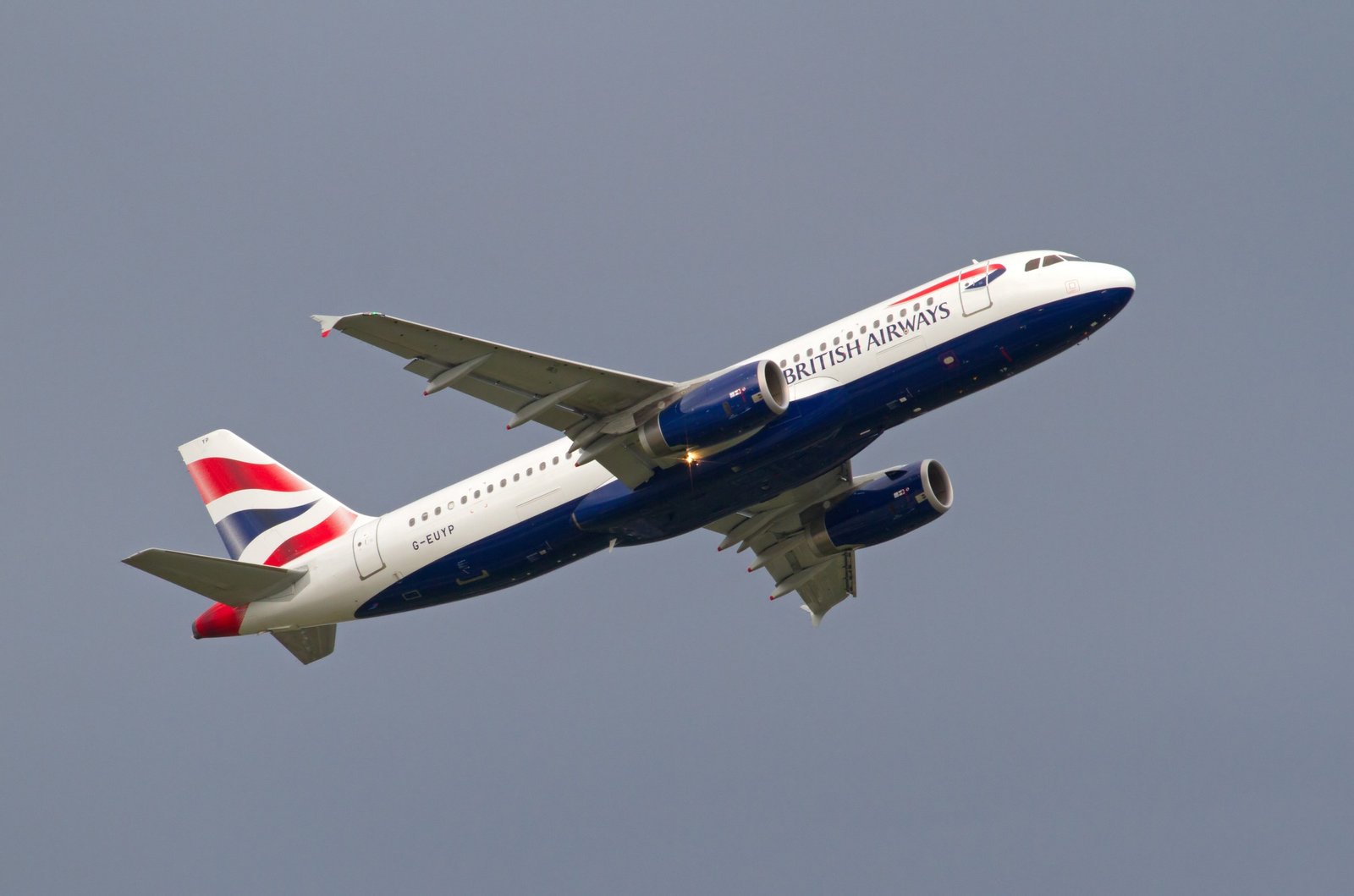
The power bank was in the man’s tracksuit pocket. The flight had been out of Gatwick for fifteen minutes, bound for Bari. That is where the rulebooks want it. The Civil Aviation Authority tells passengers to keep power banks with them in the cabin. The European regulator says they should be carried where they can be monitored, on the person if possible. British Airways says they belong in the seat pocket or the bag under the seat in front, never in the overhead locker. On 15 October the pocket caught fire anyway, the tracksuit with it, and the aircraft turned back before it had reached the Channel.
Sandy Edwards and her sister Jackie Riggs were sitting behind the man. Edwards told BBC Radio Sussex it all happened so fast. The man in front of them started screaming. He stood up with his tracksuit on fire and his leg burned, and threw the burning device to the floor. She said she did not know what to do. The crew put the flames out, the pilot brought the aircraft back to Gatwick, and paramedics met it there. Passengers were taken to an isolated gate. They were given grey tracksuits to change into. A police officer told them to keep the clothes they had worn sealed until they could be washed at a high temperature. The sisters were put on a flight at 14:00 the same afternoon. British Airways said it was extremely grateful for the crew’s actions and that safety was always its top priority.
The Times reported the Bari destination. It put the aircraft at 10,000 feet. It added the detail that explains the rest of this article. The crew took the power bank to the back of the aircraft. They dropped it into a bin filled with water in the lavatory. The crew were following the procedure for a fire that has to be cooled, not just smothered.


The document passengers actually meet for a power bank on a plane is the CAA’s six-point checklist, published in October, a week after the Gatwick flight. It tells travellers to take power banks into the cabin and check the airline’s size and quantity limits, never to recharge a power bank on a flight, and to check with the airline before using one and keep it easily accessible. If a device gets hot, switch it off, stop charging and alert the crew at once. If it smokes, alert the crew at once. The checklist does not promise prevention. It tells them where to be standing when it does, and who to call.
The European Union Aviation Safety Agency issued its Safety Information Bulletin 2025-03 in May 2025, after a rise in battery incidents. It says power banks should not be charged or used to charge other items during a flight. Its press release goes further in plain language: using or charging power banks is not forbidden, but it is strongly discouraged. Batteries at a lower charge pose a lower risk, the agency says, so it is preferable to carry them partly charged and charge them fully on arrival. It is a recommendation, not a mandate. Its purpose is to get airlines to tell passengers more, and to train ground staff and crew.
The international baseline, an addendum to the International Civil Aviation Organization’s Technical Instructions that took effect on 27 March 2026, splits the difference in verbs. Power banks must be carried in cabin baggage, must be individually protected when not in use, and must not be recharged on board. They should not be used to charge other devices in flight. They are limited to two per person. Must not covers recharging the bank itself; should not covers using it to charge a phone. The CAA’s own passenger page lands in the same place: you may be able to charge other devices from a power bank, it says, but check with the airline beforehand or ask the cabin crew. On a British Airways aircraft the answer is narrower still. The airline’s rules since May 2026 allow two power banks per person at up to 100Wh each. They forbid them from the overhead lockers at any point, and forbid using seat power to charge them. They must stay in the seat pocket or under the seat in front.
A passenger reading all four texts in a row would be forgiven for not knowing whether charging a phone from a power bank mid-flight is allowed, discouraged, or banned. One flyer put the confusion exactly where it lives. Posting on Instagram under the name harry_d31 in June, after watching a video about another British Airways power bank fire, he wrote: “Not the best video to see 30 minutes before boarding a plane 😂 but was actually quite useful – didn’t know you shouldn’t charge your phone with a power bank when on the plane. That’s kinda the point of them.” He is not careless. He is reading the rule the way an ordinary person reads it: a power bank exists to charge a phone, and the documents spend their force on where the thing sits, not on whether it is switched on. The CAA’s checklist asks the passenger to check with the airline first. The airline’s answer depends on the airline. The European bulletin discourages the use without forbidding it. None of the four texts says, in one place, what a passenger on this flight was supposed to do with a charged bank in a pocket at 10,000 feet, beyond keeping it visible and calling the crew when it burned.
The locker rule, the strictest of the four texts, was written by a fire nobody on the Gatwick flight could have seen. On 28 January 2025 an Air Busan Airbus A321 caught fire at Gimhae airport in South Korea while passengers were boarding. South Korea’s Aviation and Railway Accident Investigation Board reported interim findings in March 2025. The fire likely started with an insulation breakdown, an internal short circuit, inside a power bank in an overhead luggage bin above row 30 on the left side of the cabin. Forensic analysts found multiple electrical melting marks on the debris of the bank and no abnormalities in the aircraft’s own wiring or lighting. They could not determine what caused the breakdown, and the findings were interim, not a final report. Everyone on board got out, seven with minor injuries, and the aircraft burned. A bank sat in a closed bin above heads, where nobody was watching it, and the seat-pocket rule is built to prevent that case happening again. The Gatwick bank was not in a bin. It was in a pocket, on a person, in full view, and it still set his clothing alight.
The United States Federal Aviation Administration issued a safety alert for operators, SAFO 25002, in August 2025. It warns that lithium batteries stored in overhead bins or carry-on bags may be obscured and hard to reach, so detection and firefighting are delayed. Halon extinguishers, it says, can briefly suppress the open flames. They do not halt thermal runaway, the self-sustaining rise in pressure and temperature inside the cell. The primary response is large amounts of water to cool the battery until every cell has discharged. The alert recorded 50 lithium battery incidents on United States flights in 2025 by the time it was issued. The crew on the Gatwick flight did what the alert describes. They cooled the device. They kept cooling it.
The CAA’s summer campaign, “Pack Right. Safe Flight.”, reported lithium battery incidents running at about two a week. Reports of overheating or malfunctioning passenger devices had risen 98 percent between 2024 and 2025. Cases of devices packed wrongly in hold baggage had risen 91 percent in 2025. More than a third of travellers, 36 percent, did not know the danger of packing batteries in checked baggage, even though 92 percent flew with a phone and 49 percent with a power bank. The average traveller carried four lithium-powered devices, which the CAA put at more than 2,000 devices on a busy Airbus A380, and called the fire risk the number one safety risk to aircraft. The October checklist release added the second half of that picture. Awareness of the rules had risen to 86 percent of recent flyers, up from 81 percent the year before, yet 31 percent still believed lithium items should go in checked luggage, and 54 percent of passengers now carried a power bank, up from 49 percent. Glenn Bradley, the CAA’s head of flight operations, said awareness did not always translate into understanding. The Gatwick passenger was not in the 31 percent. He had the bank exactly where the campaign wanted it.
Two other flyers, posting on X in September, located the problem somewhere the checklist does not reach. One, posting as siderealyear, wrote: “People wouldn’t feel the need to use power banks on planes if the outlets and USB ports at each seat were reliable. It’s gotten to the point that it’s now a safety hazard that plane outlets provide barely a trickle of power and USB ports are so loose cables don’t stay in them” The post was about power banks on planes generally, not the Gatwick flight. Mike Fleming, posting the next day, wrote: “Lithium-ion charging devices are going to be banned from the cabin (already banned from the belly) if people don’t stop using them. Airlines could do a better job of telling pax not to use them. In my experience, @united takes this issue most seriously among the US airlines.” Set beside the CAA’s line, the two posts split the duty differently. The regulator puts the duty on the passenger: pack right, keep it visible, call the crew. The flyers put it on the aircraft and the airline: working seat power so the bank is not needed, and clearer instructions not to use one. The CAA’s own survey gives the flyers half their case. A third of passengers still get the packing rule wrong after a summer of campaigning, and more than half now fly with the device the campaign is about.
Up to 100Wh needs no approval. Between 100Wh and 160Wh, the airline’s approval comes first. Over 160Wh is prohibited. A battery showing damage, overheating or swelling should not be used and should never be carried on an aircraft.