Willow Wind Rescue: 460 Miles Off San Diego, Hundreds of Miles East of the Route to Samoa
He was found hundreds of miles east of the route to Pago Pago. The beacon did not track the voyage; it ended the silence.
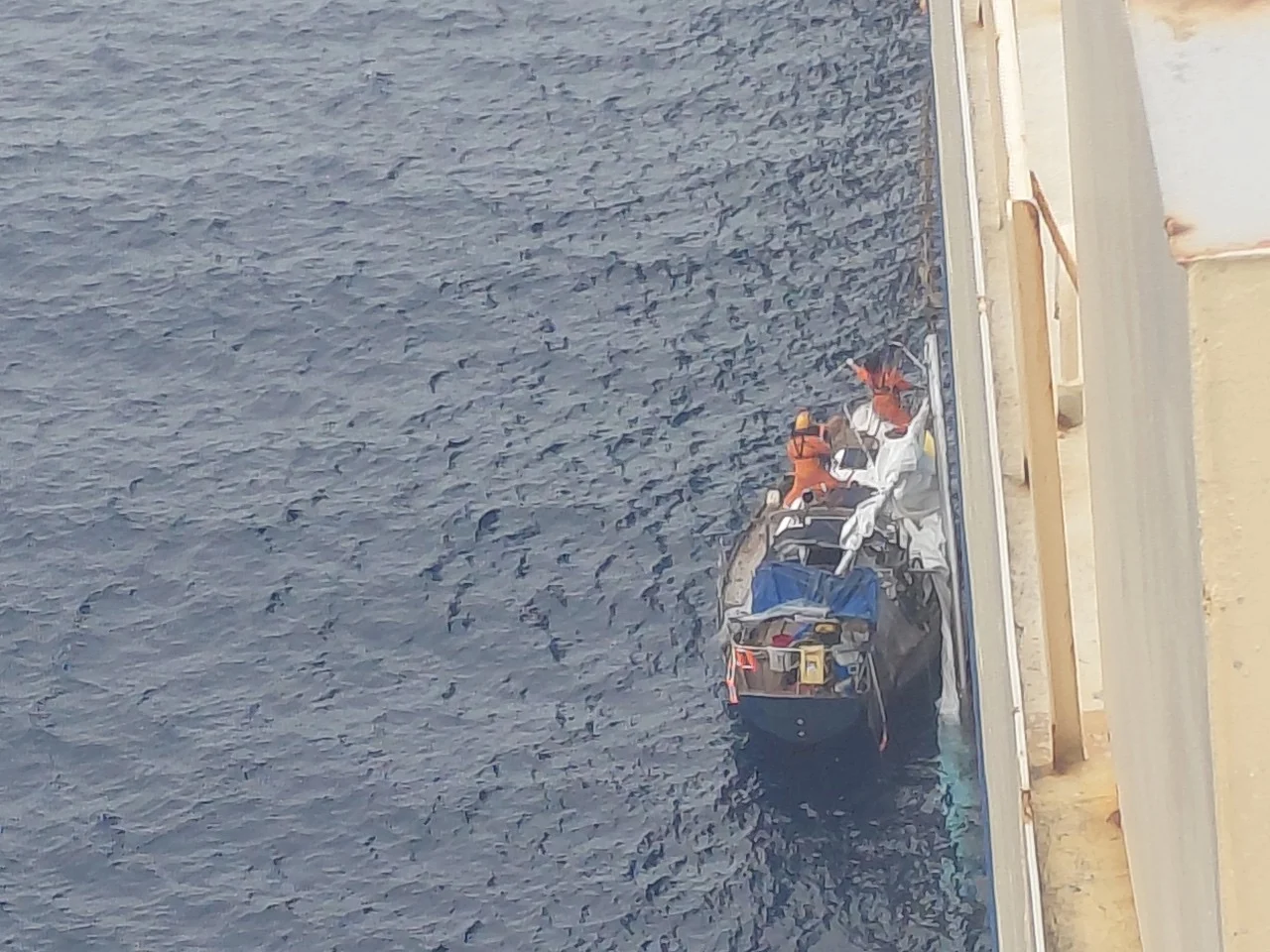
The crew of the motor vessel Grand Orion took an 86-year-old sailor and his dog off the sailboat Willow Wind on Wednesday, Oct. 28, about 460 miles off San Diego. That distance is the first thing the Coast Guard release gives, and it is not the distance that matters most. The great-circle route from Astoria, Oregon, to Pago Pago, American Samoa, runs 4,425 nautical miles, and at the latitude where the boat was found it passes about 1,146 nautical miles from San Diego. A boat within 400 nautical miles of San Diego, which is what 460 statute miles amounts to, was at least 700 nautical miles east of the track it was supposed to be on. In 68 days since the last contact on Aug. 20, the straight-line advance from Astoria to a point due west of San Diego comes to 811 nautical miles, 18 percent of the passage, or just under 12 nautical miles a day. A cruising boat averaging five knots covers 120 nautical miles a day.
The Coast Guard Pacific Area watchstanders received the report of the overdue mariner on Saturday, Oct. 24, 65 days after the last contact. Three days later, on Tuesday afternoon, the Rescue Coordination Center at Alameda received the alert from the emergency beacon registered to Willow Wind. A C-27 Spartan from Sacramento found the boat that evening. Grand Orion arrived at about 3:20 on Wednesday morning and could not take the pair off in rough seas until 5:36 that evening, more than 14 hours later. The next morning a Jayhawk helicopter hoisted them from Grand Orion about 170 miles west of Ventura and carried them to Sector San Diego, where emergency medical personnel took the sailor to Scripps Mercy Hospital for further evaluation. The cutter Robert Ward was diverted to the search, and the release does not say it reached the scene.
The National Oceanic and Atmospheric Administration describes two kinds of 406 MHz emergency position-indicating radio beacon (EPIRB), and the difference between them decides what 68 days of silence can mean. A Category I beacon fires itself when its hydrostatic release lets go as a boat sinks to a depth of 3 to 10 feet, and it can also be fired by hand. A Category II beacon fires only by hand. Either kind transmits for at least 48 hours once activated, and the registration attached to it is what tells a rescue center who and what it is looking for, and only once the beacon is activated. Willow Wind stayed afloat, with damaged sails, so a sinking-triggered release cannot be the reason an alert arrived on Oct. 27. The release does not say which kind of beacon the boat carried or how the alert was set off. What the specifications settle is narrower and more useful: the beacon was a device for the last two days, not a record of the 68. The alert of Oct. 27 is the first transmission the record shows.

A float plan is not filed with the Coast Guard. It is left with a friend or an emergency contact, with the route, the expected return, and the safety gear aboard, and the Coast Guard’s own Pacific Northwest district had explained the arrangement in a release of its own. The district’s search and rescue program manager said the Coast Guard does not keep float plans for boaters. He said families who can confirm a boater is under way and give a general location help crews get there much faster in a real emergency. The release on this rescue does not say who reported the sailor overdue or whether a float plan existed. The dates are the evidence that is public: 65 days between the last contact and the report, then a beacon alert three days after that. Cmdr. Jason Nguyen, the Southwest District command center chief, said the case showed the importance of carrying emergency communication equipment and creating a float plan so someone ashore knows the voyage plans. The beacon and the plan do different jobs. The dates show the second produced no report for 65 days.
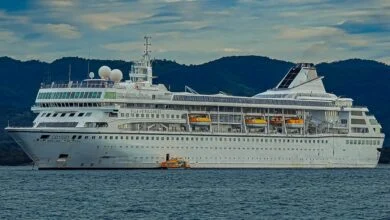
Grand Orion was not a rescue ship. VesselFinder lists it as a vehicles carrier, 199 meters long, 59,217 gross tons, built in 2006 and flagged in the Marshall Islands, and the maritime record of the rescue has it en route from Balboa to Yokohama when it diverted. Under the Safety of Life at Sea convention, a master in a position to help is bound to proceed with all speed to assist people in distress at sea, whatever their nationality or status. The ship stood by from 3:20 in the morning until the transfer at 5:36 in the evening, and a post dated Oct. 28 on Instagram, under the handle @waiyan115135, carrying photographs of a sailboat alongside a large ship and of an older man and a tan dog aboard, called it “12 hours of brutal work.” The post names the sailboat as S/V Willow Wind in the North Pacific. It does not name Grand Orion, and it does not identify the poster as a member of the crew, and neither is claimed here. The photographs and the caption are the only account from the rescuing side that the coverage has not used, and they put hours of work where the release puts two words, rough seas.
https://www.instagram.com/p/DfDIxhkCfab/
Atlas, replying on X to a post about the rescue, wrote, “The beacon doing its job is the whole story here. Worth a reminder to test yours and leave a float plan with someone ashore.” That is Nguyen’s advice in a sailor’s own words, arrived at without the release. William Whittington, who posted about the rescue on X on Nov. 1, ended his post with a different reading: “I sure hope when I’m 86 years old I’ll be up for crazy stunts like this.” On Threads, a poster who said she had sailed several times and loved the life wrote of the retirement she and her husband had imagined at sea, “Ron & I always said it’s how we wanted to retire in fact. Alas. Turned a different corner…” The officials answered a safety question. The commenters answered a different one, about whether an 86-year-old should still be out there at all, and they answered it with admiration and with identification, not with a warning. None of the three posts is quoted anywhere in the surveyed coverage, and none of them says anything about the position, the beacon’s limits, or the 65 days. The officials, for their part, said nothing about what happened to the sails, what the dog’s condition was, or why the boat was where it was found.
Some of the coverage of the Willow Wind rescue filled those gaps with language the release does not support. An Upworthy rewrite of a FOX 5 San Diego report says the pair spent two months adrift at sea and drifted without propulsion. The release says the sails were damaged and the boat was left adrift after the rescue, and it does not say when the sails failed, whether the boat could still sail, or how much of the 68 days was spent drifting rather than sailing slowly, badly, or in circles. The maritime site cited for the claim that the pair traveled more than 1,000 nautical miles counts distance covered, not distance toward Pago Pago, and a longer sailed distance sits easily beside an 811-nautical-mile straight-line advance. A boat can wander a thousand miles and still be found off San Diego. The rescue took a beacon alert, a search plane, a diverted car carrier that stood by for more than 14 hours in rough seas, and a helicopter the next morning. On the straight line, the boat was still 3,849 nautical miles from Pago Pago.
The Coast Guard told the California Post that when medical personnel evaluated the sailor he was weak and had difficulty walking, but had no major injuries, and no condition update had been released as of Nov. 1. The dog’s condition beyond the rescue itself has not been stated. Willow Wind was left adrift with damaged sails. The release does not name the sailor or the dog.