19 States Voted to Lock Daylight Saving Time. The Law That Stops Them Is 60 Years Old
A state may exempt itself from the clock change by staying on standard time. It may not do the same with daylight saving time, and the 19 laws waiting on Congress are written to say so.
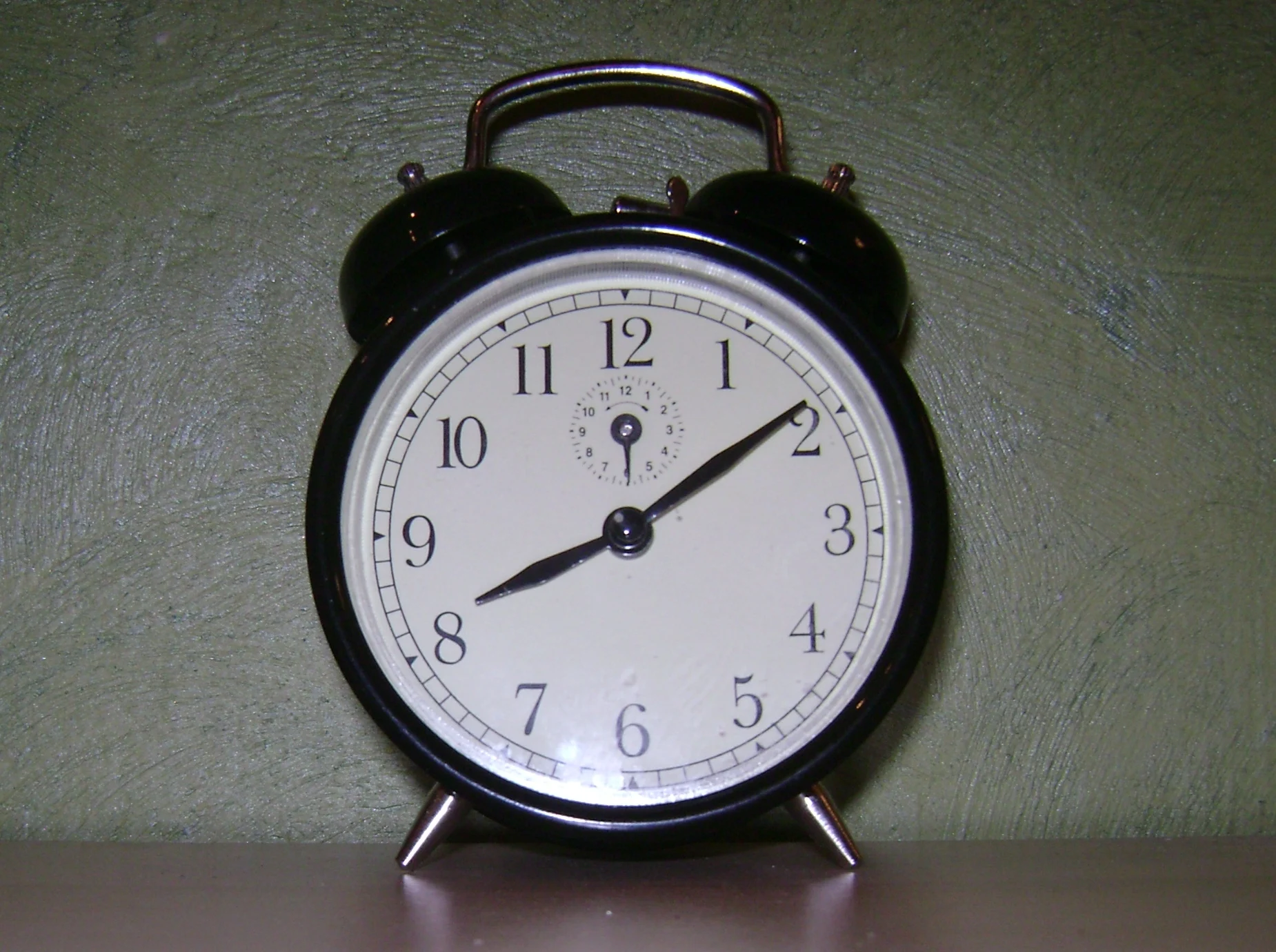
At 2 a.m. on Sunday, Nov. 1, clocks in most of the United States fall back one hour, to 1 a.m., and daylight saving time ends for the year. Nineteen states have already passed laws to stop the twice-yearly change, and none of those laws can take effect until Congress changes the federal rule that governs them.
The Department of Transportation states the rule in one paragraph on its website. Under the Uniform Time Act, the department says, states may exempt themselves from observing daylight saving time by state law. “States do not have the authority to choose to be on permanent Daylight Saving Time.” The department adds that it has no power to repeal or change daylight saving time itself. The statute that sets the dates, 15 U.S.C. 260a, puts the change at 2 a.m. on the second Sunday in March and 2 a.m. on the first Sunday in November, and a state that observes the system must use those dates. The only exit the law writes for a state is the exemption, and the exemption runs to standard time.
The 19 laws were passed between 2018 and 2025, and the Congressional Research Service lists them by year: Florida in 2018; Delaware, Maine, Oregon, Tennessee and Washington in 2019; Idaho, Louisiana, South Carolina, Utah and Wyoming in 2020; Alabama, Georgia, Minnesota, Mississippi and Montana in 2021; Colorado in 2022; Oklahoma in 2024; and Texas in 2025. The Idaho and Oregon measures cover only the parts of those states in the Pacific time zone. Several of the laws carry their own waiting conditions in their text. Florida’s 2018 law applies only if Congress amends 15 U.S.C. 260a to authorize year-round daylight saving time. Idaho’s Pacific portion waits until Washington makes daylight saving time permanent. Delaware’s law directs the governor to ask the transportation secretary to place the state in the Atlantic Standard Time zone if Pennsylvania, New Jersey and Maryland each do the same.


The Congressional Research Service counted 47 states that have introduced legislation since 2015 to change daylight saving observance, all 47 with some variation of permanent daylight saving time, and 42 of them also with legislation for permanent standard time. The National Conference of State Legislatures records 20 states introducing 28 bills on the subject in 2026 alone. Arizona and Hawaii already use the exemption the law allows, staying on standard time all year, and the 2026 bills run in both directions: California has a pending bill for year-round standard time, and a Tennessee bill would put that state on standard time throughout the year from the second Sunday in March 2027.
On Oct. 28, 2025, Senator Rick Scott of Florida asked for unanimous consent to consider and pass S. 29, the Sunshine Protection Act, which he described as “a bipartisan, bicameral bill that returns power to each State and its citizens and that will end the twice-yearly time change.” Senator Tom Cotton of Arkansas answered, “I do object to the legislation.” Senator Sheldon Whitehouse of Rhode Island spoke for the bill before Cotton explained his opposition, saying, “each November, we fall back into darkness very literally.” The objection ended the request. Cotton told the Senate he had failed to object when the same bill passed by unanimous consent in 2022, because he had not communicated his opposition to his staff and had expected another senator to object, and that he had fixed the mistake later that year with allies in the House. The 2022 bill then died when the House took no action.
Cotton’s case against permanent daylight saving time rested on winter mornings. He told the Senate that for many Arkansans the sun would not rise until after 8 o’clock or even 8:30 a.m. in the dead of winter, that it would not rise until nearly 9 o’clock in Seattle, as late as 9:15 a.m. in Grand Rapids, and until almost 9:45 a.m. in Williston, North Dakota. He cited the American Academy of Sleep Medicine, the American Medical Association, the American Academy of Neurology and the American College of Chest Physicians as calling for daylight saving time to be abolished rather than extended, and he quoted a sleep scientist, unnamed in the record, who had called permanent daylight saving time the worst of the available options. President Donald Trump has pressed the Senate from the other side, writing on Oct. 26 that “The United States Senate is letting the Daylight Saving Bill die, when a vast Majority of the Country want it,” and on Oct. 2 urging senators to pass what he called the “No More Changing of Clocks Act.” The House passed its version, H.R. 139, in July. The Senate received it the next day, referred it to the Commerce, Science, and Transportation Committee, and has scheduled no vote. The chamber is in an extended recess and is not due back until Nov. 6, after the Nov. 3 midterm elections.
The country has tried the House bill’s answer before, and the government’s own evaluators could not call it a success. Congress passed the Emergency Daylight Saving Time Energy Conservation Act in December 1973, during the oil embargo, setting a trial of year-round daylight saving time from Jan. 6, 1974, to April 27, 1975. The Transportation Department’s interim report said the observed effects were so small they could not generally be separated from other changes at the time, and that there was no unambiguous direct evidence the trial was either beneficial or harmful. The National Bureau of Standards, asked to evaluate the study, found no significant energy savings or differences in motor-vehicle fatalities, and found statistically significant evidence of increased morning fatalities among school-age children from January to April 1974 compared with the same period in 1973, with a warning that the increase could not simply be read as an effect of daylight saving time. Florida reported eight schoolchildren killed in traffic accidents in the first weeks after the change, against two in the same span the year before, and a state education department spokesman told the New York Times that six of the deaths were clearly attributable to children going to school in darkness. Support for the trial fell from 79 percent in December 1973 to 42 percent by February 1974. Congress amended the law in October 1974 to restore standard time for the winter, and the trial ended the following spring.
Later evidence has not settled the argument the House bill assumes. A Department of Energy report in 2008 found the extended daylight saving period then in force saved 0.03 percent of electricity consumption in 2007, about 0.02 percent of total energy consumption, with insufficient statistical evidence of any measurable effect on gasoline use or traffic volume. A study cited by the Congressional Research Service found fatal traffic crash risk rose 6 percent after the spring transition, with the highest risk in the morning, and found no effect after the autumn transition. The American Academy of Sleep Medicine, in a position statement updated in 2024, said the evidence best supports year-round standard time, which aligns best with human circadian biology. On Oct. 7, 2026, the academy and the Coalition for Permanent Standard Time urged Congress to adopt year-round standard time and named the two bills before it: the Sunshine Protection Act, for permanent daylight saving time, and the Sunshine for Our Kids Act, for permanent standard time. Dr. Karin Johnson, a sleep medicine physician and co-chair of the coalition’s steering committee, said, “This should be the last time we ever have to change our clocks.” Two other bills in the current Congress would take different routes again: one would let states elect year-round daylight saving time, and another would repeal daylight saving time and advance standard time by 30 minutes.
British Columbia adopted permanent year-round daylight saving time on March 8, 2026, under a provincial law enacted in 2019. Alberta adopted permanent Alberta Time, UTC-6, with its clocks no longer resetting to Mountain Standard Time from November 2026, after a 2021 referendum in which 50.2 percent of voters had said no to year-round daylight saving time. Manitoba’s government announced in September 2026 that the province would remain on daylight saving time permanently, under legislation brought into force on Oct. 31, and said its clocks would not revert to standard time on Nov. 1. Saskatchewan and Yukon already kept a single offset all year. Timekeeping in Canada is a provincial matter, so each province acted under its own law. The offsets now leave Vancouver an hour ahead of Seattle, Calgary an hour ahead of Denver, and Winnipeg an hour ahead of Chicago from Nov. 1 until the American clocks spring forward again.
The European Parliament voted in March 2019 to discontinue the seasonal change from 2021 and let each member state choose summer or winter time permanently, but the Council of the European Union must also agree, and after a debate in October 2025 the European Commission decided to study the issue further, so the seasonal change continues. Mexico ended daylight saving time in most of the country, except along the United States border, where the clocks still follow the American schedule.