Thunderstorm Asthma in Victoria: Hay Fever Is the Risk Most People Miss
Three districts are coloured red, five are orange, and the people most at risk are the ones with hay fever and no asthma plan.
Three districts are coloured red on the thunderstorm asthma forecast for Saturday: Northern Country, West and South Gippsland, and East Gippsland. Five more are orange. Mallee, Wimmera, North East, North Central and Central carry a moderate risk, and only the South West is green. The map was issued by the Victorian Department of Health at 2pm on Friday. For the red districts it says to follow an asthma action plan, go indoors, shut the windows and doors, and switch off air conditioners that draw in outside air. For the orange districts it says to carry a reliever puffer at all times and watch for updates.
The last time this happened at scale was 21 November 2016. A gust front crossed Melbourne at 6pm, the temperature fell 10 degrees, and grass pollen in the air was above 100 grains per cubic metre. In the 30 hours that followed, public hospitals in Melbourne and Geelong recorded 3,365 more respiratory presentations to emergency departments than the three-year average. That was a rise of 672 per cent, and asthma admissions rose by 476, a rise of 992 per cent. Researchers telephoned 1,435 of the 2,248 people who presented at eight health services. The mean age was 32, and only 28 per cent had current doctor-diagnosed asthma when they arrived. Eighty-seven per cent had hay fever, and 35 people were admitted to intensive care. All 35 had asthma; 12 were taking inhaled preventers and five died.
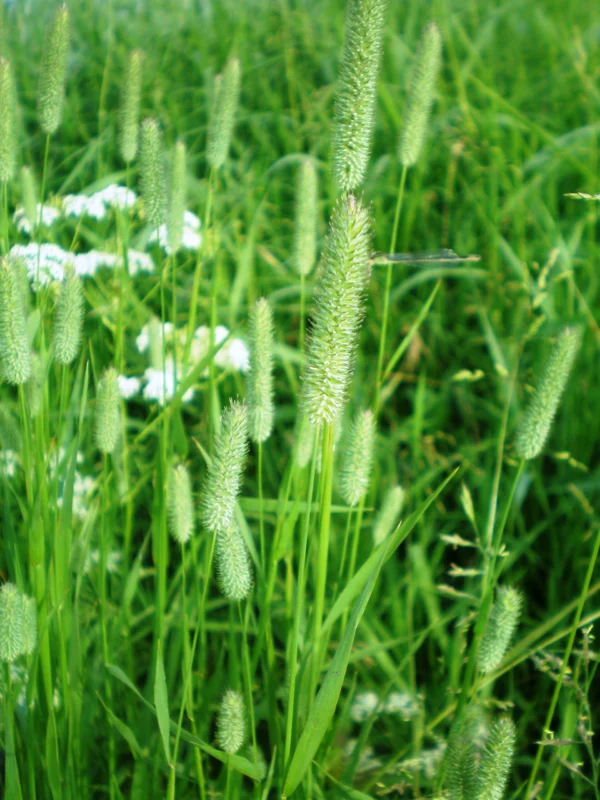
Better Health Channel lists four groups at increased risk: people with asthma, people with undiagnosed asthma, people who have had asthma in the past, and people with hay fever who may or may not have asthma. Hay fever in south-eastern Australia is likely to be a grass-pollen allergy, and around one in four people with hay fever also have asthma. A reliever puffer can be bought from a pharmacy without a prescription, which matters for the fourth group. The distinction that matters is in the symptoms. Hay fever affects the eyes and upper airways, with a runny nose, sneezing and itchy, watery eyes. Wheezing, shortness of breath or chest tightness are lower-airway symptoms, and the guidance says a person with hay fever who develops them should see a GP, because they may also have asthma.
One forecast predicts the storm. The other predicts the pollen. The storm forecast covers a particular, uncommon type of thunderstorm, using Bureau of Meteorology numerical weather models and forecasters watching the latest observations. The pollen forecast uses wind, temperature, rainfall, relative humidity and satellite estimates of grass coverage and condition. Seven automated pollen counters check it against the air itself, at Parkville, Geelong, Hamilton, Ballarat, Bendigo, Wodonga and Churchill. Together they produce a three-day outlook for nine weather districts: green for low, orange for moderate, red for high. The department is explicit about what that product is not. It says the forecasts are not a formal warning. A higher forecast does not mean an event is certain to happen, and a lower forecast does not mean one will not happen.
CSIRO researchers tested the working theory in a model, and it failed. The theory was that pollen grains rupture in high humidity inside storm clouds, releasing tiny sub-pollen particles small enough to reach deep into the lungs. In the model, that mechanism could not explain what happened in Melbourne. Relative humidity was very low through the atmosphere that evening. Most of the available pollen stayed within 40 metres of the ground. Humidity-driven rupturing happened so often at other times that using it to predict would have produced recurrent false alarms. The team tested three other mechanisms instead: mechanical friction from wind gusts, electrical build-up and discharge in low humidity, and lightning strikes. They concluded the three likely operated together, with lightning the only one that generated a pattern of sub-pollen particles following the storm’s path. Their paper ends with a call for targeted laboratory studies of the alternatives, because the rupture process itself is still not pinned down well enough to parameterise.
Victoria’s winter was the wettest since 2016, and Melbourne’s was the warmest on record. Soil-moisture and satellite data showed strong grass growth across large areas of western, northern and central Victoria. Melbourne Pollen expects more high and extreme grass-pollen days in late October and November than last year, when the city recorded five extreme and 15 high days, although it expects conditions to be less severe in Gippsland and parts of the south-east. The season started early in September, for the first time in three decades according to AAP reporting, and could run into January. AAP reported the official pollen outlook for the year as average. Chief Health Officer Caroline McElnay told the ABC that pollen experts had advised there was more grass pollen around this year because of the wetter winter and spring, and that two weekends in a row of high alerts was new. Edwin Lampugnani, whose organisation operates Melbourne Pollen, put the uncertainty plainly: “This year we’re seeing conditions we haven’t previously seen and it’s very difficult to make a prediction.”
After 2016, the government rebuilt the response system. The Inspector-General for Emergency Management reviewed the response and made 16 recommendations, which the government accepted in principle. A $15.56 million package followed, covering real-time monitoring of emergency demand, an overhaul of the State Health Emergency Response Plan, training for hospitals and health workers, and research into forecasting and treatment. The review found there had been no evidence the storm would produce a health emergency of that scale, and no way of predicting its extent or duration. Ambulance Victoria had received the biggest number of requests for assistance in the shortest period in the state’s history. The emergency call authority, ESTA, took 2,232 calls in the 12 hours from 6pm, the highest volume in its history. When Coroner Paresa Spanos handed down her findings in November 2018 into the 10 deaths, aged 18 to 57, she made no new recommendations. The other reviews had already covered the ground. She commented instead that awareness campaigns should continue, and that hay-fever sufferers should be encouraged to seek allergy testing. Evidence to the inquest from Professor Jo Douglass recorded that only three of the 10 people who died had an official asthma action plan.
Only 20 per cent of people with confirmed asthma use preventers. That figure comes from Peter Wark, of the National Asthma Council Australia, who told AAP that at least one in 10 Australians has asthma and twice as many have a grass-pollen allergy or hay fever. “If we want to prevent catastrophes like 2016, we would go a long way in managing this chronic condition in the first place,” he said. Ambulance Victoria says adults should have their action plan reviewed at least once a year, and children’s plans every six months. Its emergency management director, Dale Armstrong, warned against assuming a quiet run of years means the risk has gone. “Asthma doesn’t disappear,” he said. He urged people to check their medication, review their plan and book in with a GP before symptoms become a problem. McElnay’s advice in the government’s 1 October statement was the same in substance: “Thunderstorm asthma can be life-threatening. People at risk should go indoors during thunderstorms, especially when gusty winds arrive before the storm.”
The Bureau of Meteorology trough behind Saturday’s forecast moves over western Victoria early in the day, reaches the central districts about the middle of the day and crosses the east during the afternoon and evening. The forecast covers nine districts and three days, and further advice and warnings go through VicEmergency.