Slate Auto’s $25K EV Patent Threatens the Two-Car Household
The bolt-on chassis design targets households trying to avoid financing separate commuter cars and utility trucks.
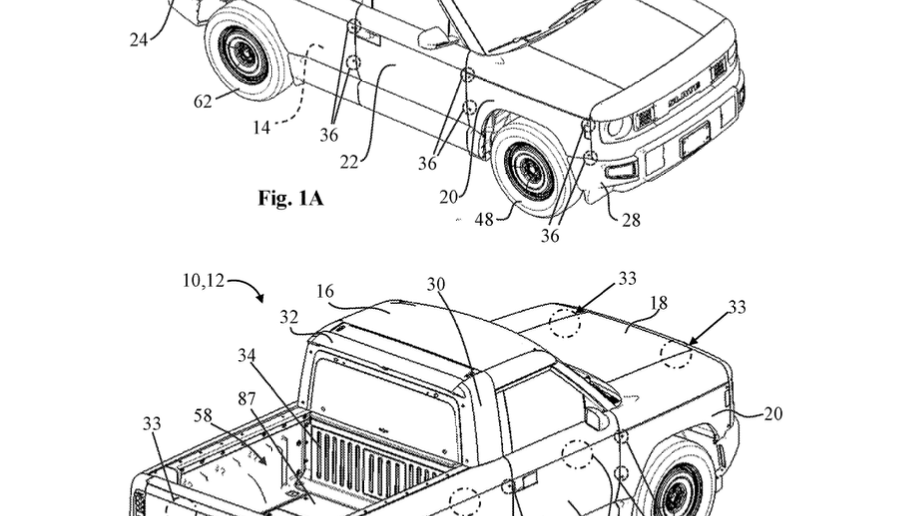
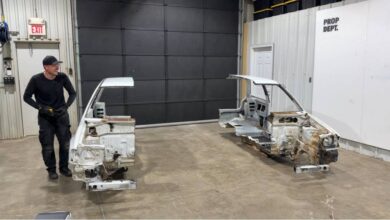
A patent application published last week by the U.S. Patent and Trademark Office outlines a mechanical framework that could allow owners of Slate Auto’s upcoming electric pickup to physically reconfigure the vehicle into an enclosed passenger hauler using bolts, clamps, and screws rather than permanent welding.
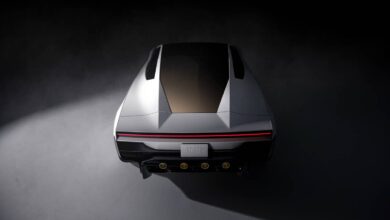
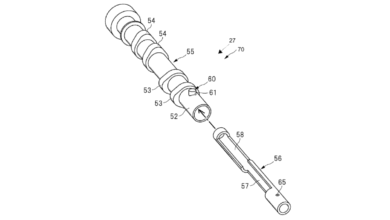
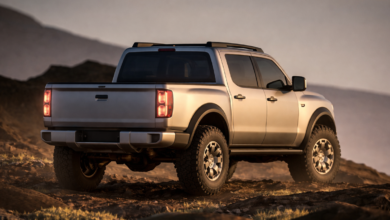
The filing (Application No. 20260307578), submitted in April and first identified by CarMoses, describes a chassis engineered with standardized mounting points for interchangeable body panels. Roof sections, side enclosures, and rear glass can be swapped out depending on whether the vehicle is being used for cargo or passengers. The base truck starts at $24,950 and carries an estimated 205-mile range, according to Slate Auto. Enclosed Squareback and Fastback variants are priced from $29,950.
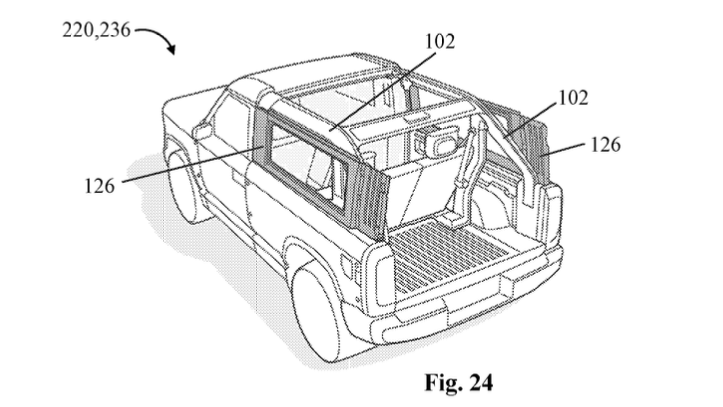


The financial mechanics of this approach target a specific vulnerability in American household budgets. The average transaction price for a new vehicle in the United States hovered near $48,000 earlier this year, according to Cox Automotive data. Maintaining two separate vehicles — typically a commuter car and a utility truck — requires financing, insuring, and depreciating roughly $90,000 in combined assets. A single platform capable of both functions, starting under $25,000, attacks that overhead directly.
Traditional automakers have historically locked buyers into a single body style at the point of sale. Modifying a unibody frame after purchase usually voids structural warranties and compromises crash-test ratings. Slate Auto’s patent attempts to bypass this limitation by integrating the conversion hardware into the original engineering. The drawings detail a hoop-shaped frame featuring pillars and a crossbar that bolts directly to the chassis to support rear seats, rather than placing a bench loosely inside a cargo bed.
This architecture echoes commercial upfitting practices long used by fleet operators. Companies like Ford and General Motors sell stripped cab-chassis trucks to commercial buyers who bolt on utility beds, refrigeration boxes, or passenger shuttles. Applying that modularity to consumer electric vehicles remains largely untested outside of niche kit-car markets.
Insurance underwriters face immediate complications if the concept reaches production. Premium calculations rely heavily on fixed vehicle classifications. A machine that transitions between a commercial-style open-bed truck and a five-passenger enclosed SUV would force carriers to determine which risk profile applies on any given day. State inspection requirements also diverge sharply between light trucks and passenger vehicles, particularly regarding rear-seat safety standards and rollover protection.
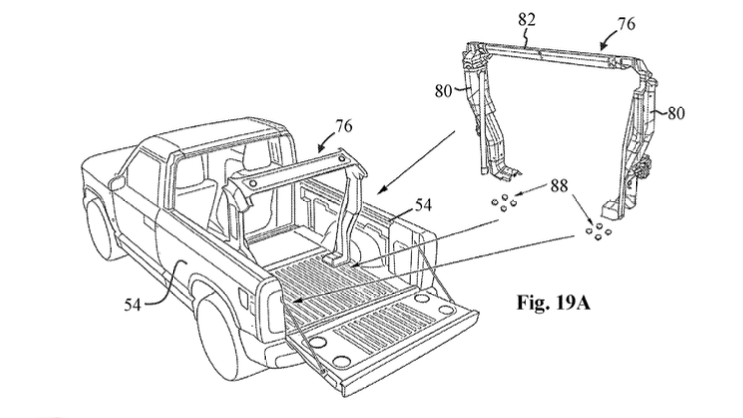
The patent documentation does not specify the labor hours required for a configuration change, the exact tooling needed, or whether a single individual can execute the swap safely. It also leaves open questions about how repeated assembly and disassembly might affect the fatigue life of the fasteners and chassis mounting points over several years of use.