France Riots Push Oil to $108 as Wall Street Prices Euro Risk
Macquarie outlines a five-step eurozone disaster scenario as U.S. inflation hits 3.7% and Copilot usage stalls at 13%.
Brent crude surged to $108 per barrel Monday as French police lost control of multiple cities over the weekend, triggering a repricing of sovereign risk across Europe. Rioters looted shops in Paris, stormed city hall in Marseille, burned down the municipal building in Limoges and torched Lyon’s tourism office. Thousands have been arrested. What began as protests demanding education funding has metastasized into broader unrest, with demonstrators now waving Palestinian flags.
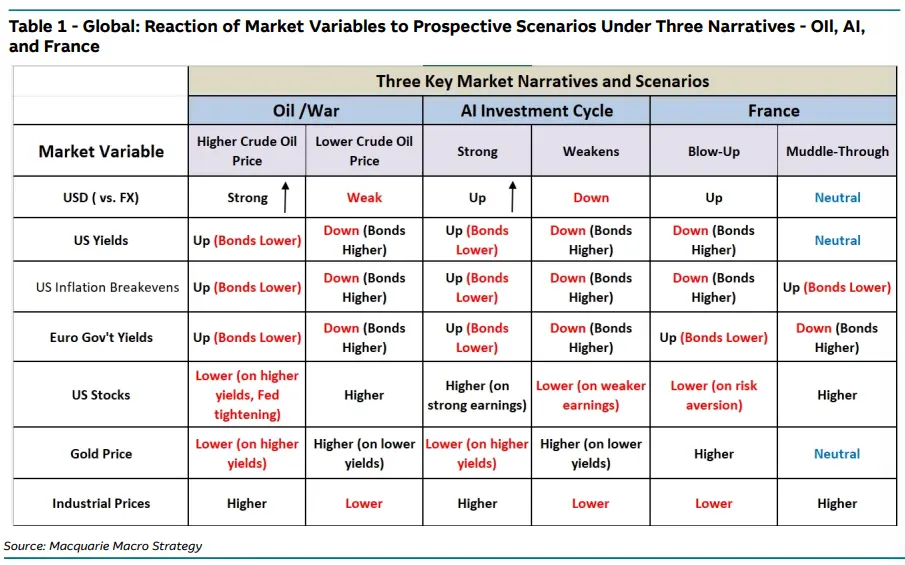
Wall Street is no longer treating the violence as a domestic law enforcement problem. Analysts are actively pricing a scenario where France caves to protester demands for increased spending, worsening its national debt and destabilizing the eurozone’s second-largest economy.
Macquarie analysts Thierry Wizman and Gareth Berry outlined a five-step disaster sequence for clients: a governance breakdown potentially dissolving the National Assembly before April elections, credit rating downgrades in November, widening street violence, spiking French bond yields bleeding into other asset classes, and finally, the election of a far-right populist administration incapable of enacting fiscal austerity.


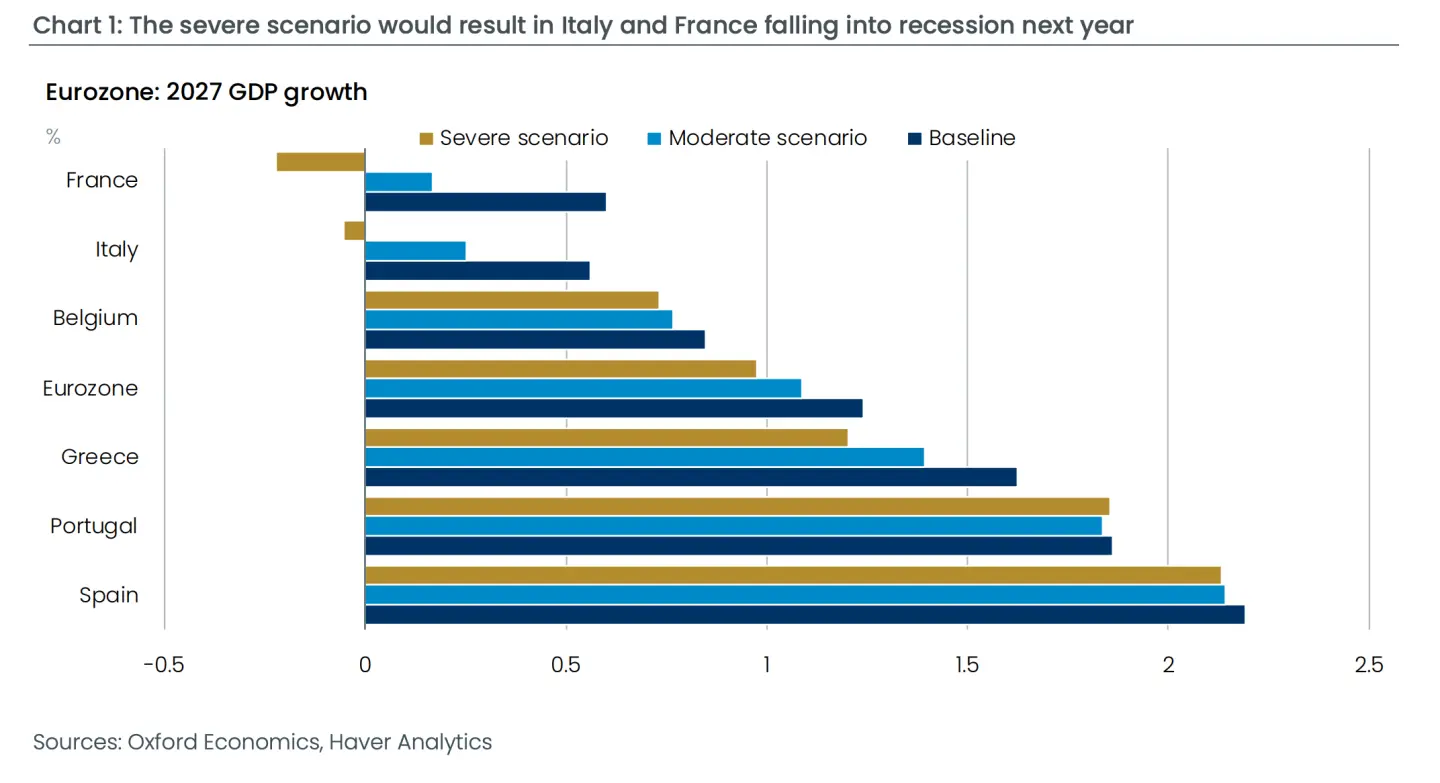
The contagion threat extends well beyond French borders. Ricardo Amaro at Oxford Economics warned that a large increase in French bond yields would drag both France and Italy into moderate recessions. The damage would be highly asymmetrical across the eurozone, he noted in a research brief. Spain, Portugal and Greece would outperform, keeping the broader currency bloc out of a technical recession.
U.S. equities struggled under the weight of the oil spike, though buyers stepped back in following a tech-led selloff on Friday. S&P 500 futures climbed 0.47% early Monday after the index dropped 1.09% to close out last week. Nasdaq futures pointed sharply higher before the New York open.
“Things are looking a lot cheerier than they were at the close on Friday. After yet another lurch lower for tech, buyers have once again appeared,” Chris Beauchamp, chief market analyst at trading platform IG, told Fortune. “It is easy to forget that the S&P 500 was at a record high just two weeks ago. Last week looks more like a healthy rotation than the beginning of something more dramatic.”
Europe bore the brunt of the overnight pessimism. The Stoxx 600 fell 0.78% in early trading. The U.K.’s FTSE 100 slid 0.87%. Asian markets fractured along regional lines: South Korea’s KOSPI jumped 1.76%, while Japan’s Nikkei 225 dipped 0.62% and India’s Nifty 50 lost 1.19%. China’s CSI 300 edged up 0.09%. Bitcoin traded at $82,769.
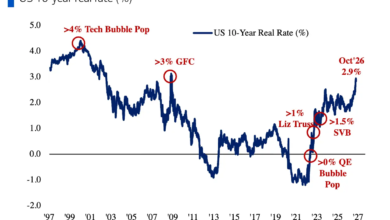
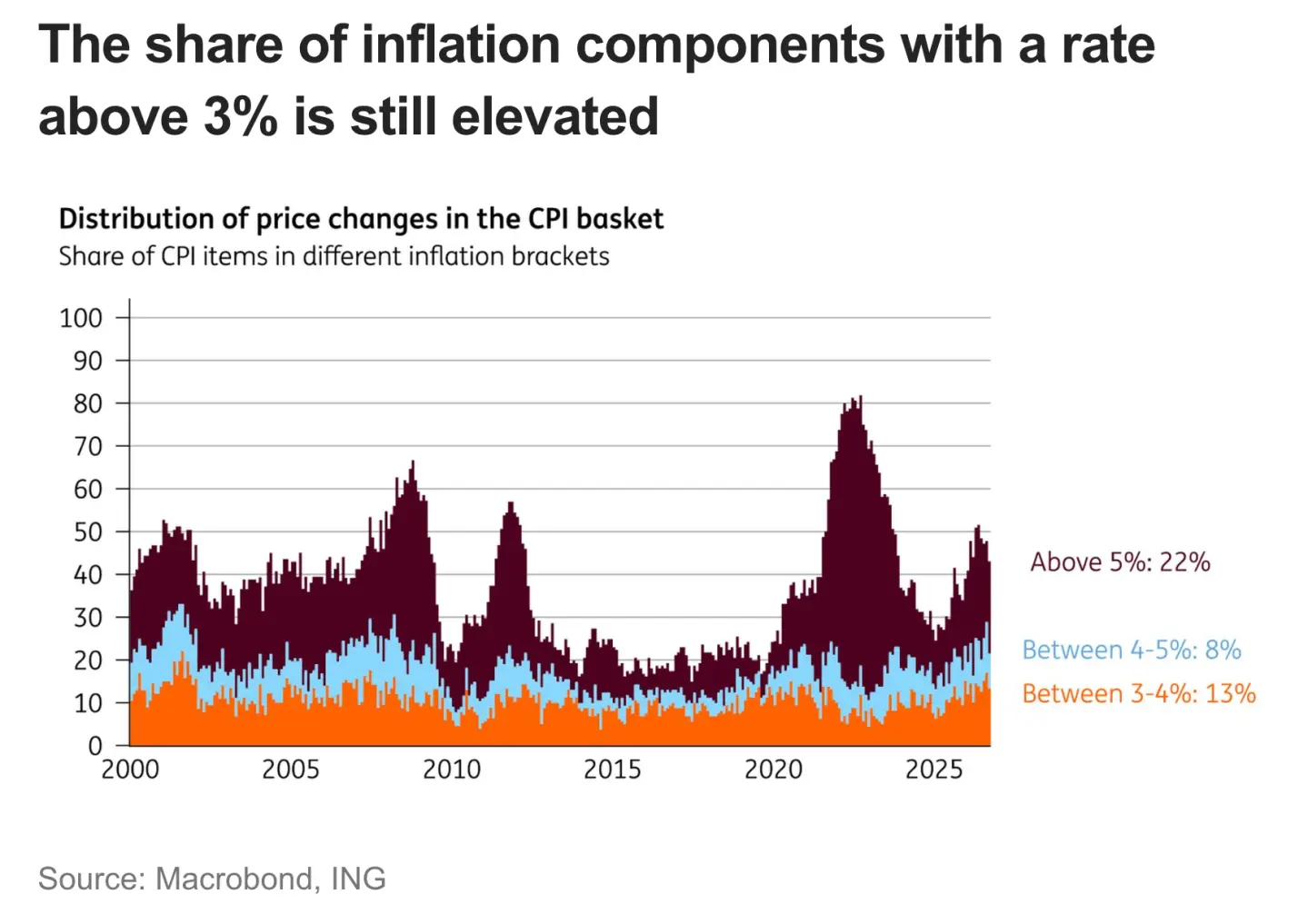
Federal Reserve Chair Kevin Warsh offered no signals of an aggressive rate response to rising prices during his IMF speech in Bangkok last week, despite September inflation ticking up to 3.7% from 3.4% a month earlier. ING’s James Smith argues Warsh’s patience is justified by structural shifts about to hit the data. Smith points to tariff refunds flowing after the Supreme Court decision earlier this year as a primary deflationary catalyst.
“This measure is highly flawed. All it really tells us is that tariffs have boosted a lot of small goods categories,” Smith wrote. Rental costs, which make up 44% of the core inflation basket, should continue easing given the cool state of the U.S. housing market. Wage growth sits at 3%. Smith forecasts inflation will drift closer to 2% by the second quarter of next year, projecting only one more rate hike in December.
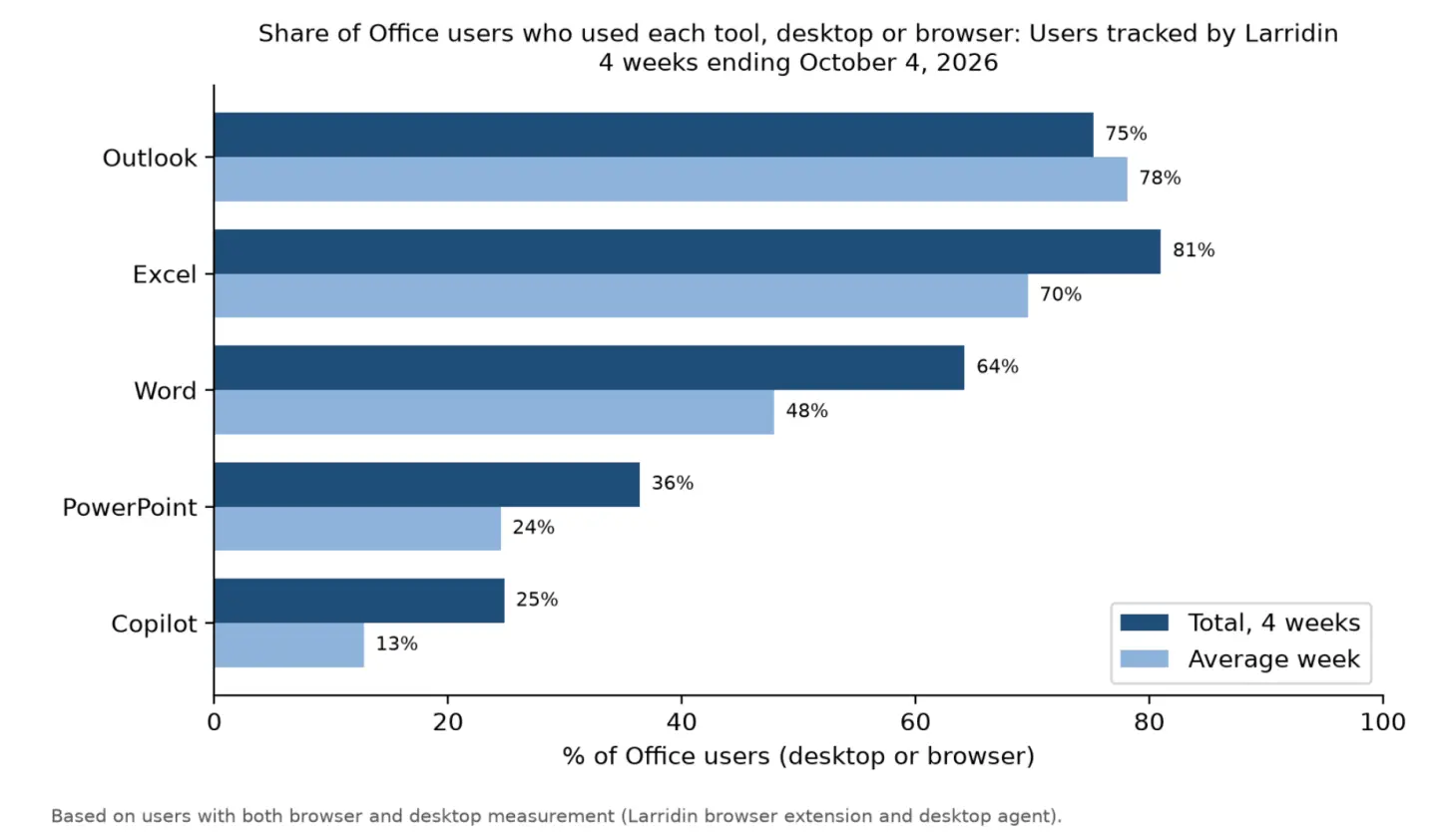
Corporate adoption metrics for artificial intelligence tools showed sharp divergence from vendor marketing claims. Data from AI measurement platform Larridin revealed that only 13% of Microsoft Office users accessed Copilot weekly, despite the company reporting 30 million paid seats. Three-quarters of paying customers did not log into the tool for more than four weeks. Traditional software usage remained dominant: 70% of users opened Excel and 78% used Outlook.
In corporate governance news, Automattic CEO Matt Mullenweg reclaimed control of the WordPress parent company 33 hours after its six-member board voted to place him on leave on Sept. 9, according to an investigation by Fortune’s Eva Roytburg. Three directors who backed the ouster departed alongside the company’s CFO and chief legal officer. Neither Mullenweg nor the board members have publicly explained the sudden power struggle or its resolution.
NFL referees earned an average of $205,000 in 2025, with a reported 10% increase in per-game pay arriving in 2026. Most still hold full-time careers outside football. Clete Blakeman works as a personal injury attorney in Nebraska. Brad Rogers teaches as a senior lecturer at Texas Tech University’s business school. Shawn Hochuli operates as a California-based financial advisor.