Even Realities Smart Glasses Ring Control Fails in Practice
Tiny touchpad sensors trigger constant swiping errors, overshadowing major display and software improvements.
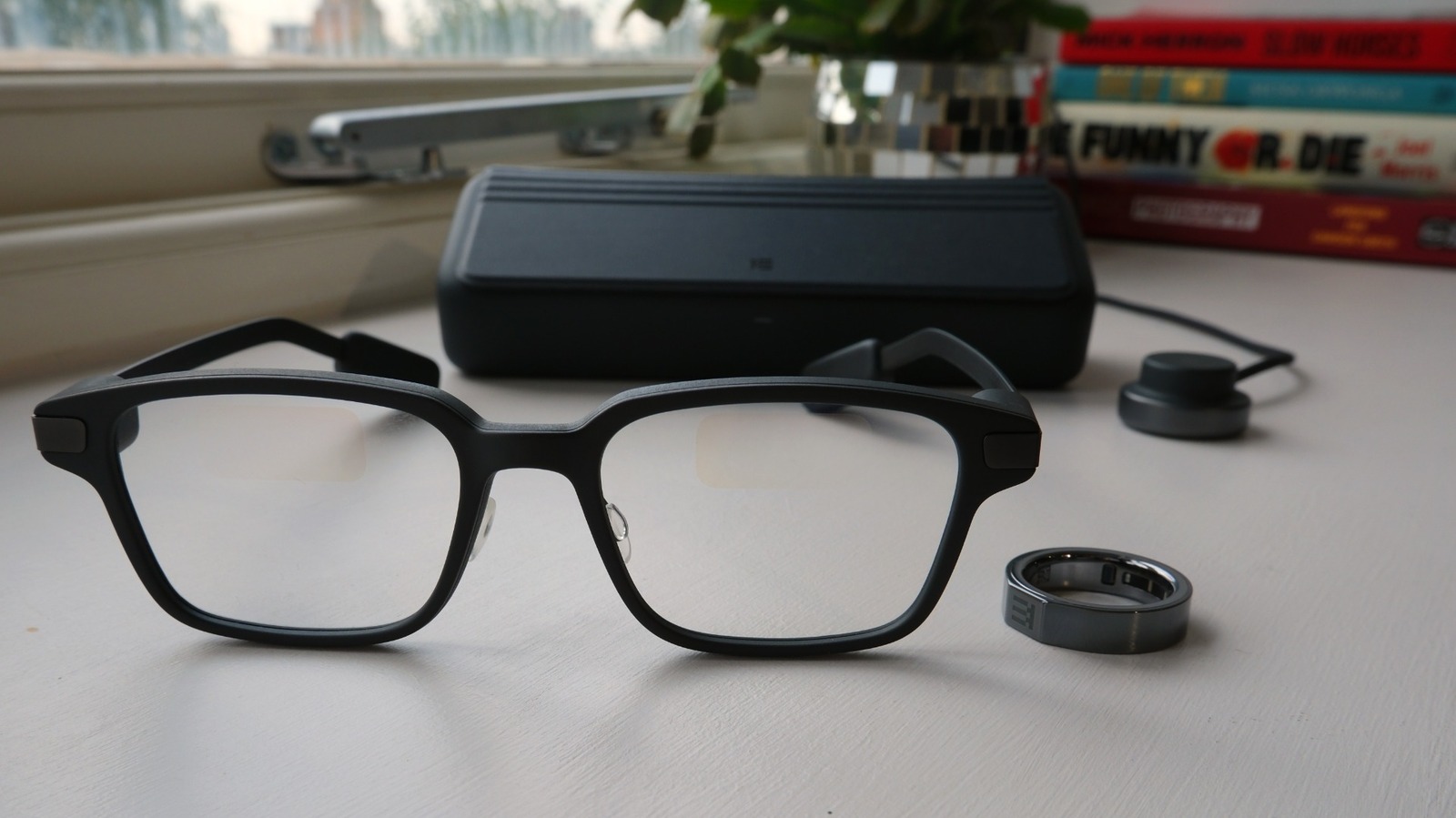
Even Realities’ latest smart glasses introduced a finger ring designed to replace smartphone swiping, but the hardware’s tiny touchpad surface is generating persistent misinput errors that undermine the device’s core hands-free premise. Users attempting to navigate menus through the ring are triggering unintended app launches and erratic scrolling behavior at rates high enough to discourage regular use of the interface.
The control bottleneck centers on physical limitations. The ring’s narrow sensor area recognizes only four distinct inputs: swipe up, swipe down, a tap, and a press. Opening the main menu requires a long press, a gesture the hardware frequently misinterprets as a swipe. Taps register as swipes. Swipes register as taps. The resulting input errors force users into repeated correction cycles, effectively neutralizing the efficiency gains the wearable was built to deliver.
Representatives for Even Realities have attributed the navigation failures to individual user technique rather than a systemic hardware flaw, according to reviewer accounts. Public complaints regarding the ring’s responsiveness remain scarce online, suggesting the issue may be isolated to specific grip styles or hand sizes, though no formal ergonomic parameters have been published by the company.


The control friction stands in sharp contrast to the device’s optical upgrades. Even Realities overhauled its display refresh rate in this generation, moving from static frames to fluid scrolling that mirrors standard computer monitors. Reading and dismissing notifications without removing a phone from a pocket functions exactly as advertised when the input mechanism cooperates. Those notifications, however, cannot be pinned to the dashboard — the default screen triggered upon activation.
Built-in software performs reliably independent of the ring issues. The translation tool processes language rapidly, and the navigation app functions smoothly, though it remains locked to Even’s proprietary mapping data rather than integrating with Google Maps. The onboard AI responds quickly to prompts. Transcription features within Conversate, an application engineered to take notes during meetings, capture audio accurately but struggle to synthesize those transcripts into actionable conclusions.
A nascent app store hosts free homebrew applications that hint at broader utility, including a media controller capable of managing smartphone audio playback and displaying album art directly on the lenses. Installing it requires manual configuration through Spotify‘s developer dashboard to access the necessary APIs. This technical barrier restricts third-party expansion to developers and hobbyists willing to navigate external authentication protocols.