Tesla Roadster Flies at SpaceX Facility Ahead of 2028 Production
Cold-gas thrusters lifted the prototype in Texas, but FAA oversight and 2028 production timelines remain unresolved.
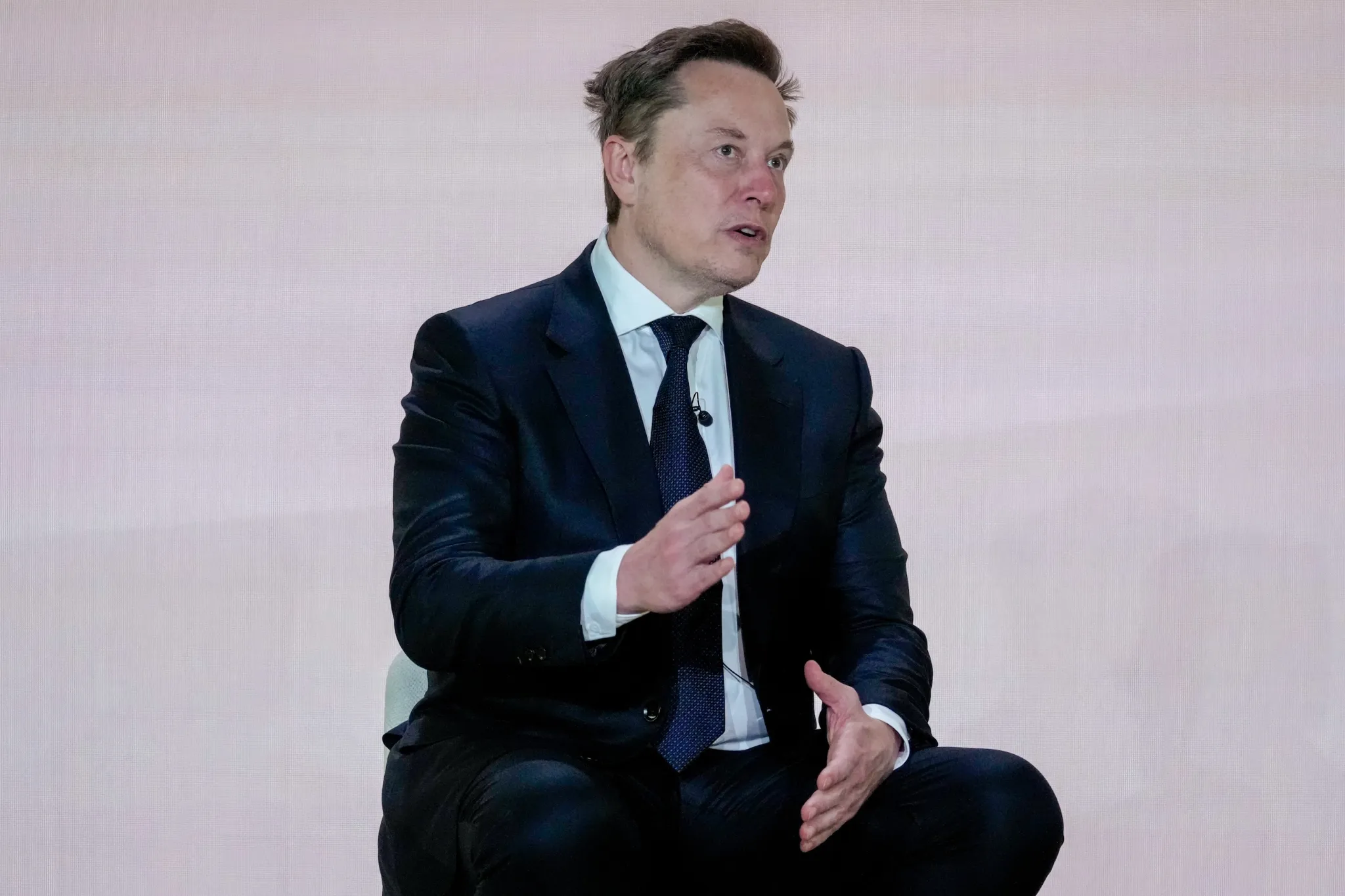
A Tesla prototype equipped with cold-gas thrusters completed a series of airborne maneuvers Thursday at SpaceX’s rocket testing grounds in McGregor, Texas, demonstrating that the automaker’s long-delayed second-generation Roadster can briefly leave the ground. The livestreamed event featured the vehicle driving upside down along a curved ramp, executing a 180-degree midair roll using compressed air bursts, and leaping over a parked Cybertruck and Tesla Semi.
No human was inside the car. A mannequin dressed in a SpaceX pressure suit occupied the driver’s seat while the prototype operated autonomously, a safety measure CEO Elon Musk cited during the broadcast. The demonstration proved the underlying physics of the thruster package work outside a laboratory, but it did not establish how far or how long the vehicle can sustain flight.
The stunt arrives as Tesla prepares to report third-quarter earnings next week, a financial update analysts consider far more consequential to investors than any engineering spectacle. Wall Street consensus treats the Roadster as a low-volume halo project rather than a revenue driver. Dan Ives of Yorkville Ives noted in a recent research brief that the sports car will not meaningfully shift Tesla’s volume or financial trajectory.

What took the air in Texas bears little resemblance to the four-seat electric supercar Tesla unveiled in November 2017. That original concept promised a 620-mile range, a zero-to-60 mph time of 1.9 seconds, and a 2020 production start for buyers who submitted $50,000 deposits. Eight years of delays—driven by supply chain disruptions and Musk’s prioritization of higher-volume programs like the Cybertruck and Optimus robot—have forced a complete redesign. The new Roadster seats no more than two people, targets a top speed exceeding 230 mph, and offers an estimated range of just over 300 miles, less than half the initial projection. Production is now scheduled for 2028.
Tesla has split the program into three distinct tiers. The Performance model serves as the road-legal baseline, utilizing active aerodynamics and a fan-driven suction system to maximize grip. The Thrust variant adds rear-mounted cold-gas thrusters engineered to push acceleration below one second. The Rocket version, available exclusively by invitation, integrates 10 thrusters around the chassis to enable the brief aerial maneuvers shown Thursday. Engineering vice president Lars Moravy confirmed the thruster array relies on approximately 600 liters of rechargeable compressed air rather than combustible propellant.
That propulsion method places the Rocket variant in an unprecedented regulatory void. Cold-gas thrusters expel pressurized gas without combustion, distinguishing them from jet engines or rocket motors that burn fuel. Because the vehicle does not generate aerodynamic lift in the traditional sense and uses non-combustible thrust for short hops, the Federal Aviation Administration told CBS News and Politico that it does not meet the agency’s statutory definition of an aircraft. The FAA therefore has no mandate to certify its airworthiness. Meanwhile, the National Highway Traffic Safety Administration oversees ground vehicles but relies heavily on manufacturer self-certification for federal safety standards. The Transportation Department stated NHTSA will monitor the situation, leaving buyers of a flying car effectively unregulated in the air and lightly scrutinized on the ground.
Musk leaned into that lack of oversight during the reveal, explicitly stating the vehicle is not optimized for safety. Tesla’s website currently lists the Rocket version as unapproved for public road use.
The company has not disclosed final pricing for any of the three trims or clarified whether the thousands of customers who placed deposits on the 2017 specification will receive the redesigned vehicle, require a new reservation, or face cancellation. Current reservation requirements demand $50,000 for the Performance tier and $250,000 for Thrust.
As Tesla pivots its broader corporate strategy toward autonomous ride-hailing networks and humanoid robotics, Musk has positioned the Roadster as the final manually driven vehicle the company intends to produce. Yet Thursday’s proof-of-concept relied entirely on autonomous control to keep a human out of danger—a paradox for a car marketed as the ultimate analog driving experience. The prototype remains at the McGregor facility following the demonstration.