Tressfecta Builds Hardware to Automate Hair Braiding Prep
Plait Pilot automates the grueling process of separating synthetic extensions, aiming to prevent career-ending repetitive strain injuries for stylists.
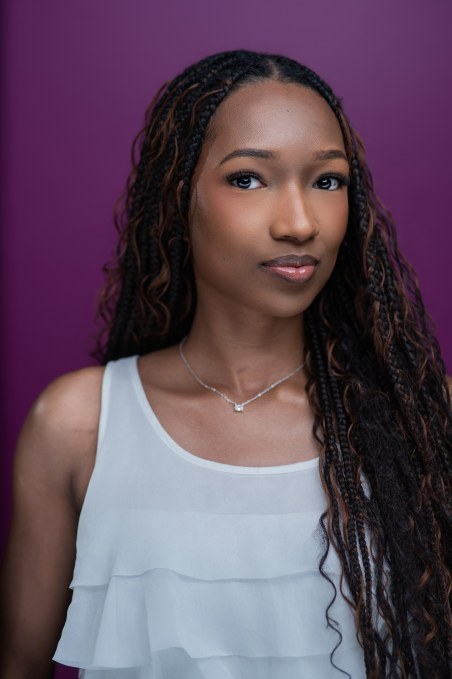
A 24-year-old Northeastern University graduate is engineering a mechanical device to eliminate one of the most physically punishing steps in professional hair braiding, targeting an industry where repetitive strain injuries routinely end careers.
Aisata Diallo founded Tressfecta to build Plait Pilot, a hardware tool designed to automate the separation and dispensing of synthetic braiding hair. Before a stylist begins weaving patterns into a client’s natural hair, they must manually pull apart and prep strands from bulk packs of extension hair. For intricate styles like knotless box braids or micro braids, this preparatory sorting can consume hours before the actual braiding even starts. A single full-head installation frequently requires six to eight hours of continuous manual labor, leaving professionals vulnerable to severe carpal tunnel syndrome, chronic hand cramping, and spinal compression from standing behind a styling chair all day. Diallo herself quit braiding clients because of the physical damage the work inflicted on her body.
The textured hair care sector represents a multi-billion-dollar segment of the global beauty economy, yet it has historically received minimal attention from mainstream technology developers and venture capital. Unlike the general beauty tech market, which has seen rapid expansion in AI-driven skin diagnostics, automated makeup devices, and smart hair tools for straight textures, hardware innovation for Black hair care remains scarce. The engineering barriers are substantial. Synthetic kanekalon and toyokalon fibers—the standard materials used for protective braiding styles—carry static charges, vary wildly in thickness, and tangle easily, making them notoriously difficult for machines to handle without jamming or tearing. Any automated system must also adapt to vast differences in client hair density, length requirements, and braid sizing, preventing a standardized approach.


Plait Pilot attempts to solve the material-handling bottleneck rather than the braiding itself. Stylists load bulk hair onto the machine and input their desired section size. The device mechanically separates the fibers and dispenses pre-measured pieces directly to the braider’s hands, removing the repetitive pulling motion that causes joint degradation over time.
Developing specialized beauty hardware carries steep capital requirements compared to software-only startups. Diallo has bootstrapped Tressfecta through its pre-launch phase while securing non-dilutive funding through grants and startup accelerator programs. She is currently finalizing the working prototype and actively recruiting professional braiders to conduct user testing, gathering the operational data necessary to refine the mechanism for commercial use.
Tressfecta presented its development progress this week as one of the 200 early-stage companies selected for the TechCrunch Battlefield competition at the Disrupt 2026 conference in San Francisco, which concluded Thursday. Diallo confirmed she is now preparing to open a formal fundraising round to finance manufacturing and bring the device to market.