China Proposes Export Bans on 40 AI, Chip and Solar Techs
Draft rules target AI models with over 2 trillion parameters, semiconductor designs and polysilicon manufacturing processes.
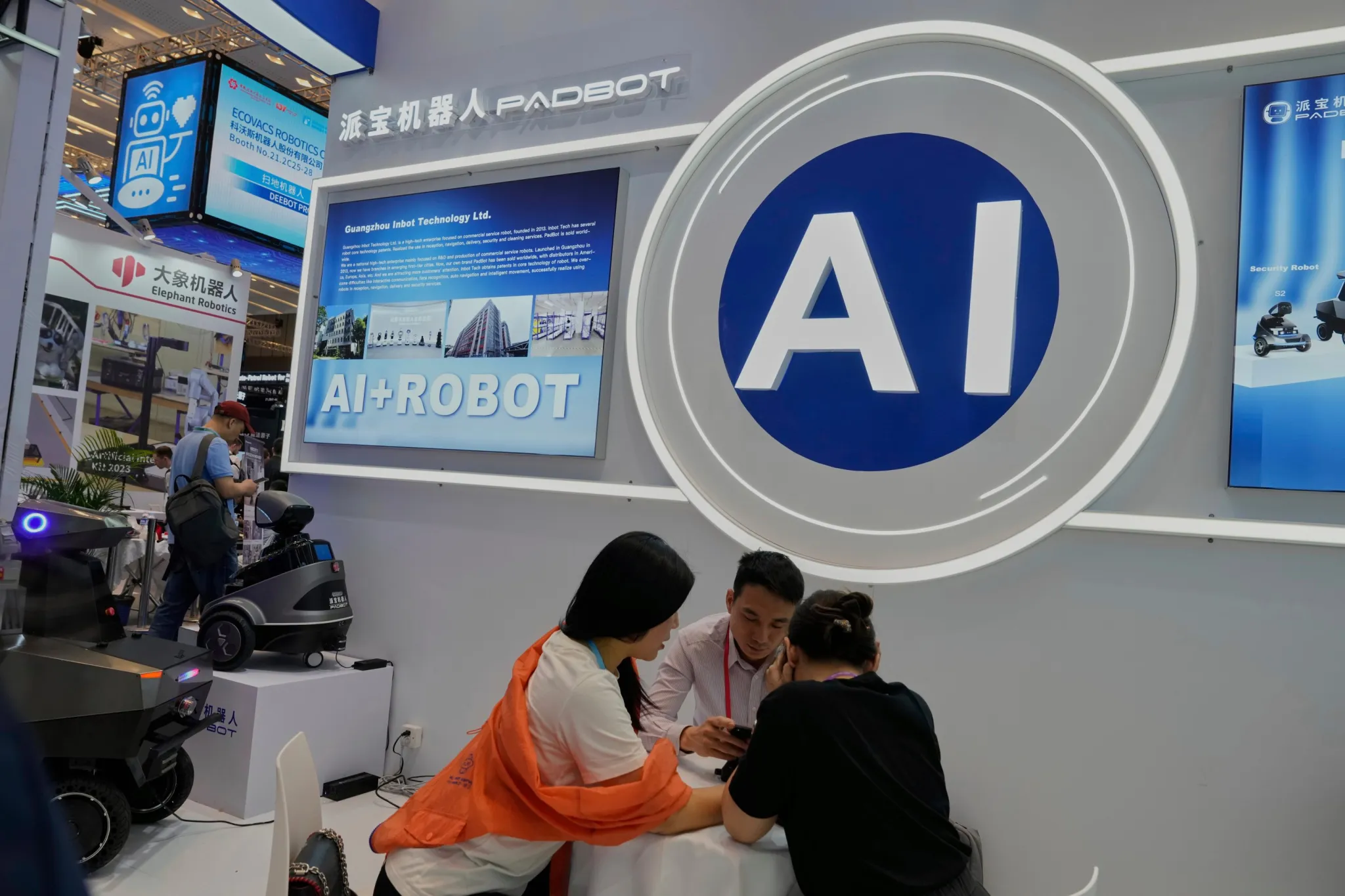
Beijing moved Friday to lock down its most advanced artificial intelligence systems, semiconductor designs and solar manufacturing processes from foreign buyers, proposing restrictions or outright bans on 40 technologies. The draft catalog update, issued jointly by the Ministry of Commerce and the Ministry of Science and Technology, represents China’s most aggressive use of export controls to protect its domestic technology base since Washington began systematically cutting off Beijing’s access to Western semiconductors.
The proposal arrives during a complex diplomatic window. U.S. and Chinese officials recently advanced talks on AI safety governance, including efforts to establish a bilateral notification mechanism for AI incidents that could threaten national security. By tightening export rules while simultaneously engaging in safety dialogues, Beijing signals an intent to dictate the terms under which its homegrown innovations enter global markets rather than waiting for Western regulatory frameworks to constrain them.
Artificial intelligence dominates the list, accounting for 23 of the 40 targeted technologies. The commerce ministry outlined prohibitions on exporting core large-model architectures trained on sensitive national data. AI agents engineered for deployment in highly sensitive environments—specifically national defense networks and critical information infrastructure—would also face export bans.


Beyond blanket prohibitions, the draft introduces precise technical thresholds for restricted exports. Any AI model exceeding 2 trillion parameters would require government approval before leaving the country. Parameter count serves as a primary indicator of a neural network’s learning capacity and computational scale. While the ministries did not name specific commercial products, the threshold directly implicates frontier systems currently developed by Chinese firms, including Moonshot’s Kimi K3 and Alibaba’s Qwen 3.8-Max, both of which operate above the 2-trillion-parameter mark.
This metric-based approach mirrors strategies employed by the United States. In 2023, the U.S. Commerce Department implemented performance-threshold rules to restrict the export of advanced chips to China, targeting specific processing speeds and interconnect bandwidths rather than naming individual companies. Earlier this year, the department briefly directed Anthropic to block foreign nationals from accessing its Fable 5 and Mythos 5 models over national security concerns before lifting those specific restrictions. Beijing’s new parameter limits suggest Chinese regulators are adopting similar quantitative guardrails to control outbound technology flows.
The catalog extends well beyond software. Several semiconductor design technologies, covering specific AI processing chips and memory chip architectures, face proposed restrictions. This defensive posture responds directly to years of U.S.-led export controls that have prevented Chinese foundries from acquiring extreme ultraviolet lithography machines and the world’s most advanced AI accelerators. Unable to easily purchase cutting-edge hardware, Chinese engineers have increasingly focused on architectural efficiency and advanced packaging, making those design methodologies strategic assets Beijing is now unwilling to share.
Twelve solar power-related technologies made the list, centering on polysilicon production and downstream manufacturing techniques. China currently controls more than 80% of the global solar supply chain, from raw polysilicon refining to final module assembly. Restricting the export of these manufacturing processes aims to prevent other nations from replicating China’s dominance in renewable energy hardware, even as Western governments pour billions into domestic solar production incentives like the U.S. Inflation Reduction Act.
Five biomedicine technologies, primarily related to cell and gene therapy development, round out the 40-item proposal.
A commerce ministry spokesperson framed the measures as necessary steps to reinforce national security, prevent technological misuse, and ensure artificial intelligence remains under human control. Lian Jye Su, chief analyst at technology research firm Omdia, characterized the draft as a direct response to Western nations imposing sovereignty requirements on AI, robotics and telecommunications. Gary Ng, a senior economist at Natixis, noted that the fragmentation of global trade now extends deeply into foundational technology access.
The draft catalog is open for public comment before final implementation. Once adopted, the updated list will replace previous iterations of China’s export control framework, fundamentally altering how multinational corporations and foreign researchers access Chinese-developed hardware and software.