

Nvidia’s Europe Spending Spree Masks a Risky Capital Loop
Billions in sovereign AI funding help Nvidia diversify beyond U.S. hyperscalers while locking European startups into the CUDA ecosystem.
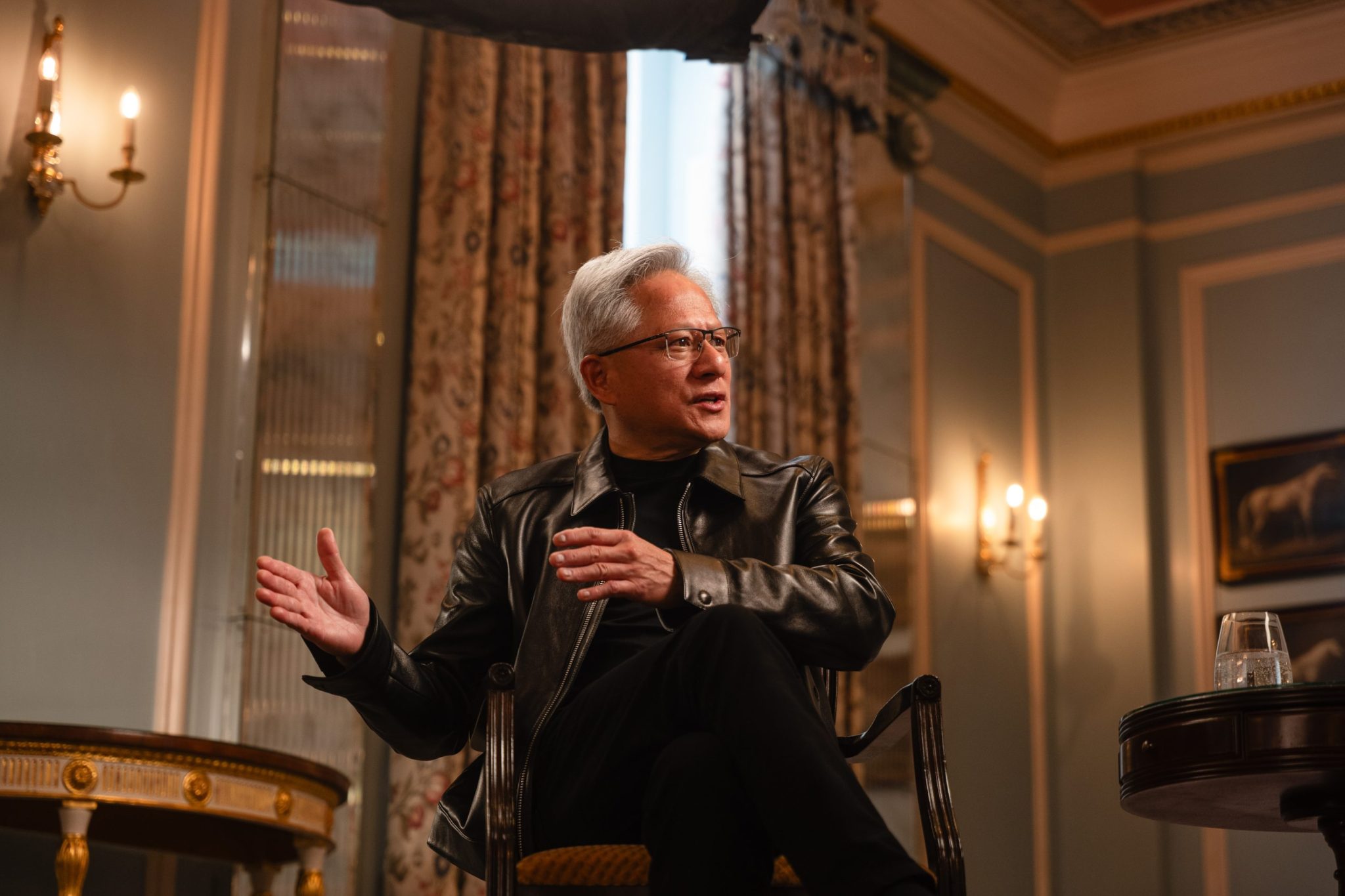
Nvidia is deploying billions of dollars across Europe to build artificial intelligence infrastructure, but the investments follow a financial architecture that increasingly resembles vendor financing rather than traditional venture capital. By taking equity stakes in startups and funding national compute clusters, the $5 trillion chipmaker ensures its hardware remains the default foundation for the continent’s AI ambitions while simultaneously diversifying its own revenue base away from U.S. hyperscalers.
CEO Jensen Huang formalized this approach during a European tour this week, announcing minority stakes in five United Kingdom startups and committing $250 million in compute over five years specifically for British AI safety research. The London announcements followed meetings in Paris with French President Emmanuel Macron, where Huang pledged an additional $2 billion in European AI deals. These commitments stack on top of roughly $8 billion Nvidia says it has already deployed across the continent over the past 12 months. More capital deployment is expected at the GTC Berlin conference next week.
The strategy addresses a structural vulnerability in Nvidia’s business model. U.S. hyperscalers—primarily Microsoft, Meta, Amazon, and Alphabet—still account for approximately half of the company’s data center sales. Investor anxiety over this concentration surfaced in late July when reports emerged that Nvidia was weighing a guarantee for $250 billion in financing for an OpenAI data center in Ohio. The disclosure erased roughly 5% of Nvidia’s market value in a single session and spiked the cost of insuring its debt. The company subsequently reduced the proposed guarantee to about $105 billion.


Sovereign AI revenue offers a hedge against Big Tech concentration. That segment tripled to more than $30 billion in Nvidia’s last fiscal year. Every national “AI factory” built on Nvidia silicon represents recurring demand independent of American cloud giants’ capital expenditure cycles.
Yet the mechanics of these sovereign and startup investments create a closed-loop capital flow. Nvidia injects cash into a company or government initiative. That entity then purchases Nvidia GPUs or rents cloud capacity from data centers stocked with Nvidia hardware. The original investment returns to Nvidia as booked revenue. This dynamic locks customers into the CUDA software ecosystem and makes migration to rival accelerators—such as Google’s TPUs or AWS Trainium and Inferentia chips—prohibitively expensive in both engineering time and sunk costs.
Huang defended the practice by arguing that Nvidia invests only a small percentage of what portfolio companies ultimately raise, calling the process disciplined. He acknowledged the strategic benefit explicitly: every funded entity connects directly into Nvidia’s platform, expanding its reach into markets the company could not penetrate alone. Industry analysts note that AI infrastructure requires capital at a scale traditional venture firms cannot provide, making corporate backing a practical necessity for hardware-intensive startups. Huang illustrated this leverage publicly in London when he singled out Nscale CEO Josh Payne in the audience, stating the neocloud provider was a “zero” before Nvidia invested and helped recruit its board. Nscale is now preparing for a public offering targeting a valuation up to $35 billion.
For European governments pursuing digital autonomy, this dynamic presents a paradox. Sovereign AI initiatives aim to reduce reliance on foreign technology, yet building domestic compute capacity currently requires purchasing from a single American supplier. Huang countered that sovereignty depends on local control over data, services, and technological advancement rather than the geographic origin of the silicon. He argued that allowing local providers to operate Nvidia’s full-stack platform independently satisfies the requirements of digital self-determination.
This debate intersects with broader questions about AI governance that Huang addressed during the trip. Responding to recent criticism regarding AI safety from Pope Leo, Huang stated that industry leaders and institutions “all care about the same thing.” He also pushed back against existential risk researchers, suggesting those focused on catastrophic AI scenarios should stop working on the technology entirely, while asserting that society must refuse to tolerate AI-driven cyber incidents.
The pressure to secure non-hyperscaler buyers intensifies as the broader AI market shows signs of extreme valuation inflation. Anthropic told prospective investors this week that its third-quarter revenue reached $16.8 billion, a 45% increase from the second quarter, as it pitches for an initial public offering planned for November with a target valuation exceeding $2 trillion. Despite posting adjusted profitability for two consecutive quarters and generating $1.70 in revenue for every dollar spent on computing power, the Financial Times reported that Anthropic’s annualized revenue is still expected to fall short of the $100 billion mark closely watched by the market.
Meanwhile, regulatory friction is mounting for AI developers operating globally. Attorneys general from eight U.S. states—Arkansas, Arizona, Idaho, Montana, Iowa, Kansas, West Virginia, and Nebraska—filed lawsuits against OpenAI this week alleging inadequate safeguards for children and deceptive safety marketing. Separately, Apple confirmed plans to launch localized Apple Intelligence features in mainland China in December via iOS 27.3, relying on Alibaba’s Qwen and Tongyi Wanxiang models to navigate strict Chinese regulatory requirements after months of delays.
Nvidia continues to execute its European expansion ahead of the GTC Berlin event scheduled for October 20-22.









