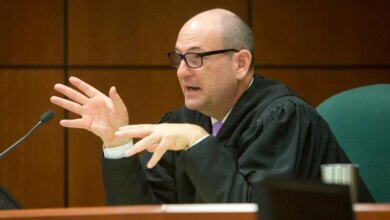
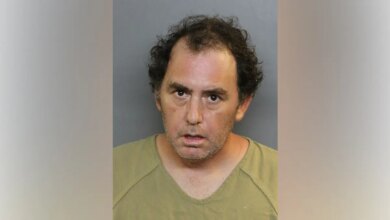
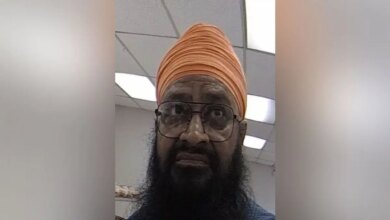
Dale Smith Jr. Charged in 2011 Michelle Parker Murder
Digital forensics advances helped secure a second-degree murder charge 15 years after the Florida mother vanished.
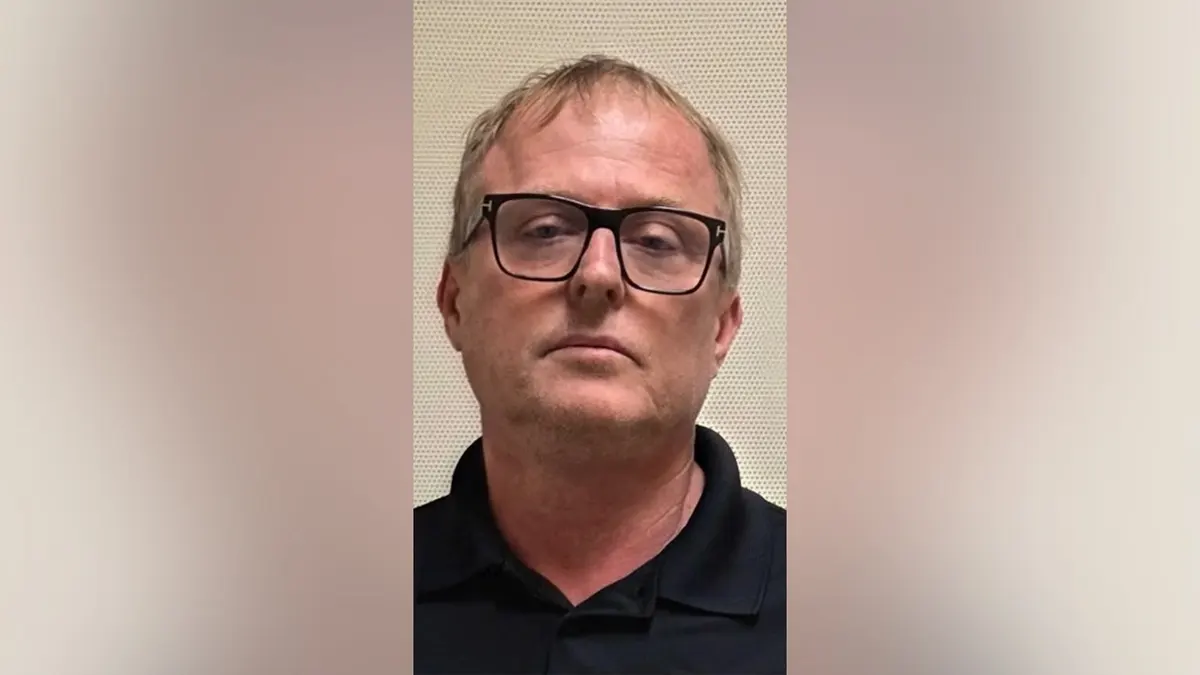
Fifteen years after a Florida mother vanished on the same day her televised courtroom dispute with her ex-fiancé aired nationally, Orlando police have arrested Dale Smith Jr. and charged him with second-degree murder in the death of Michelle Parker.
Smith, 55, was taken into custody Wednesday by the Orlando Police Department. Detectives have not recovered Parker’s remains, but authorities stated that the totality of the evidence points to Smith as the person responsible for her killing. The arrest ends one of Central Florida’s most closely watched missing persons investigations, a case long defined by circumstantial evidence, inconsistent statements and a bizarre pop-culture backdrop.
Parker, who ran an airbrush-tanning business, was last seen on Nov. 17, 2011. Earlier that afternoon, she dropped off her twin children with Smith. Hours later, she failed to arrive at work.


Her disappearance coincided exactly with the broadcast of a prerecorded episode of “The People’s Court.” During the televised proceeding, Parker and Smith argued over the return of a $5,000 engagement ring following their broken engagement. On camera, Parker described Smith as someone who “gets pretty malicious and vindictive,” testifying that she threw the ring at him after he demanded it back. Associates of the couple had previously characterized the relationship as highly volatile.
In no-body homicide prosecutions, which account for roughly 10% of all murder cases in the United States according to criminal justice research, investigators face a significantly higher evidentiary burden. Without physical remains, prosecutors must construct an unbroken chain of circumstantial evidence proving both that a death occurred and that the defendant caused it. Florida courts have upheld murder convictions without a body since the mid-20th century, provided the circumstantial framework eliminates every reasonable hypothesis of innocence.
For Orlando detectives, building that framework required untangling a series of anomalies discovered in the days immediately following Parker’s disappearance. When her brother, Dustin, texted her phone asking where she was, he received a single-word reply: “Waterford.” Family members told investigators the response was entirely out of character, as Parker never communicated using one-word messages. Investigators treated the text as potential evidence that someone else possessed her device.
Physical evidence surfaced across multiple locations in the following days. Parker’s Hummer was found abandoned near an apartment complex west of the Mall at Millenia. Someone had peeled off the decal advertising her tanning business before leaving the vehicle. A dive team searching a lake approximately four miles from her home later recovered her iPhone.
Smith remained the primary focus of the investigation for more than a decade. Detective Phil McMickin said during a Wednesday news conference that investigators interviewed Smith on multiple occasions. Over the years, Smith also participated in civil depositions related to the case. According to McMickin, detectives asked Smith highly specific questions repeatedly across different interviews, and his answers changed each time.
Shifting narratives and contradictory statements frequently form the backbone of circumstantial murder cases. Under Florida law, second-degree murder requires prosecutors to prove that a defendant committed an act imminently dangerous to another person, demonstrating a depraved mind without regard for human life, but without premeditation. This charge carries a maximum sentence of life imprisonment and differs legally from first-degree murder, which demands proof of a premeditated intent to kill.
The breakthrough that finally supported an arrest warrant came after what police described as a renewed, concentrated push over the past year. An expanded investigative team reexamined the entire evidentiary file, leveraging advances in digital forensics unavailable in 2011. Modern forensic techniques routinely allow investigators to extract deleted data from older smartphones, map historical cell tower pings with greater precision and analyze metadata that early 2010s technology could not process.
Authorities confirmed that all available evidence leads to Smith. Defense counsel for Smith has not yet issued a public statement regarding the charge or the evidentiary basis supporting it. Smith remains in custody in Orange County.