

Yellowstone September Crowds Surpass August for First Time
Shifting school calendars, international tourism, and wildlife patterns pushed September past August in Yellowstone visitor counts for the first time.
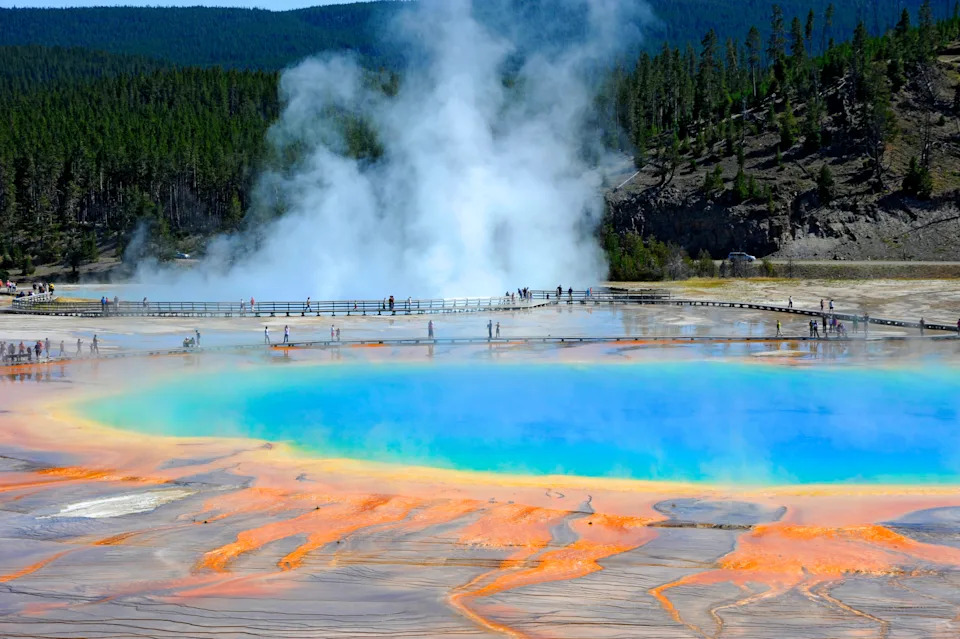
For the first time since the National Park Service began tracking monthly attendance in 1979, Yellowstone National Park recorded more visitors in September than in August. The milestone, reached last month, signals a structural shift in how Americans and international travelers schedule trips to the country’s oldest national park.
Park entry data shows 868,450 people passed through Yellowstone’s gates in September 2026, edging out the 856,467 recorded in August by roughly 11,983 visits. While July remains the undisputed peak — drawing 958,705 visitors this year — the traditional late-summer drop-off has effectively vanished. September now ranks as the third-busiest month of the year, trailing only July and June, and pushing August into fourth place ahead of May.


The crossover did not happen overnight. In the early 1980s, September visitation routinely fell below half of August’s totals. By 2000, it had climbed to 56 percent, reaching 85 percent by 2019. The final margin closed rapidly over the past three years, with August winning by just 7,900 visitors in 2023 before the 2026 flip.
Two distinct forces drove the reversal. September traffic grew by approximately 28,900 visitors compared to the same month last year, while August simultaneously shed about 25,500. The late-summer decline reflects broader changes in domestic travel habits. With many U.S. school districts now resuming classes in early-to-mid August rather than after Labor Day, families are cutting summer road trips shorter. Meanwhile, international tourism — which accounts for a growing share of U.S. national park visits — tends to peak later in the season, aligning with European and Asian holiday schedules that extend well into autumn.
Climate patterns also play a critical role. Yellowstone sits largely above 7,000 feet in elevation, where mid-summer daytime temperatures frequently push into the 80s at lower elevations like Mammoth Hot Springs but remain comfortable in September. Cooler weather drives wildlife behavior that attracts photographers and sightseers. Elk begin their annual rut, or mating season, in September, filling valleys like the northern range near Gardiner, Montana, with bugling bulls. Bears enter hyperphagia, a period of aggressive foraging to build fat reserves for winter hibernation, making them far more visible along roadsides and meadows than during the heat of August.
Todd Walton, marketing and sales director at Yellowstone National Park Lodges, attributed the rising numbers to these milder conditions and the departure of the family vacation rush, noting that camping and wildlife viewing both improve as temperatures drop.
The operational reality of this shift complicates resource management for the National Park Service. Historically, parks scaled back seasonal ranger staffing, reduced shuttle frequencies, and began closing secondary facilities shortly after Labor Day. A sustained September surge requires extending peak-season infrastructure deeper into the fall, straining budgets already stretched by deferred maintenance backlogs across the 433-unit park system.
Yellowstone’s five entrance stations — spread across Wyoming, Montana, and Idaho — face unique logistical bottlenecks. The park’s loop road system funnels nearly all vehicular traffic through a handful of geyser basins and canyon overlooks. When September crowds match August levels, congestion at Old Faithful, the Grand Canyon of the Yellowstone, and the Norris Geyser Basin persists weeks longer than planners anticipated even a decade ago.
Travelers attempting to avoid the new September crush have a narrowing window. October remains significantly quieter, drawing roughly 314,000 visitors in 2025, about a third of the September total. Early October typically offers lingering mild weather before the park transitions toward winter operations. Most interior roads close to regular vehicles by early November, reopening only to guided snowmobile and snowcoach tours in mid-December.
The NPS is currently processing final tallies for the 2026 fiscal year, which ended Sept. 30, to determine if overall annual visitation will surpass the record 4.86 million recreation visits set in 2021.









