

Bitcoin Drops to $80,154 as U.S. Inflation and Tech Rout Hit Markets
A 3.7% U.S. inflation reading and a historic semiconductor rout in Seoul extinguished cryptocurrency momentum built earlier in October.
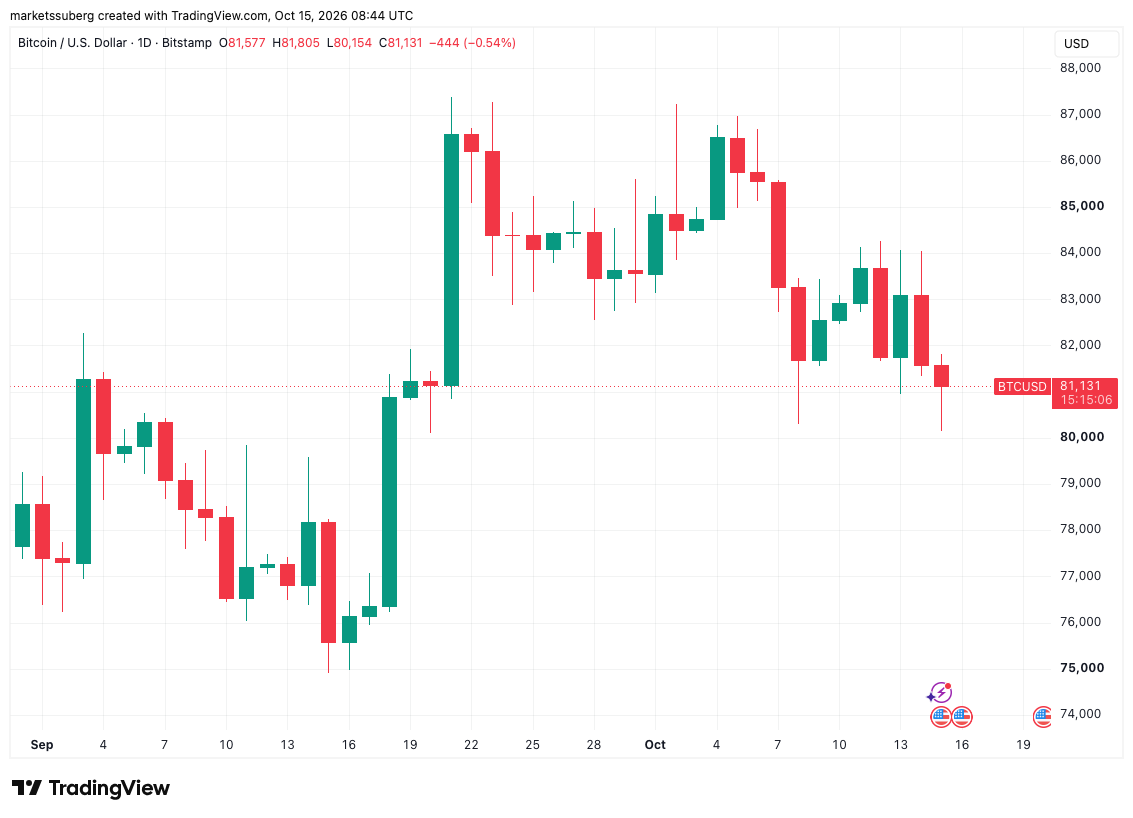
A hotter-than-expected U.S. inflation reading has reignited fears of further Federal Reserve interest rate hikes, dragging Bitcoin below $81,000 and triggering a synchronized sell-off across global risk assets.
BTC/USD fell to $80,154 on Bitstamp on Thursday, its lowest level since Sept. 20. The decline erased weeks of recovery for the cryptocurrency, which had been attempting to sustain momentum above $85,000 throughout early October. Bitcoin’s historical sensitivity to liquidity conditions makes it particularly vulnerable when bond yields rise and rate-cut expectations evaporate. Traders are now pricing in a prolonged period of restrictive monetary policy, a scenario that historically suppresses speculative capital flows into digital assets.
The catalyst was the September Consumer Price Index report, which showed U.S. inflation accelerating to 3.7% year-over-year. Energy costs drove a significant portion of the increase, complicating the Fed’s path forward. Trading firm QCP Capital noted the dilemma facing policymakers: whether persistent inflation forces additional rate hikes or if mounting credit stress eventually compels a pivot.


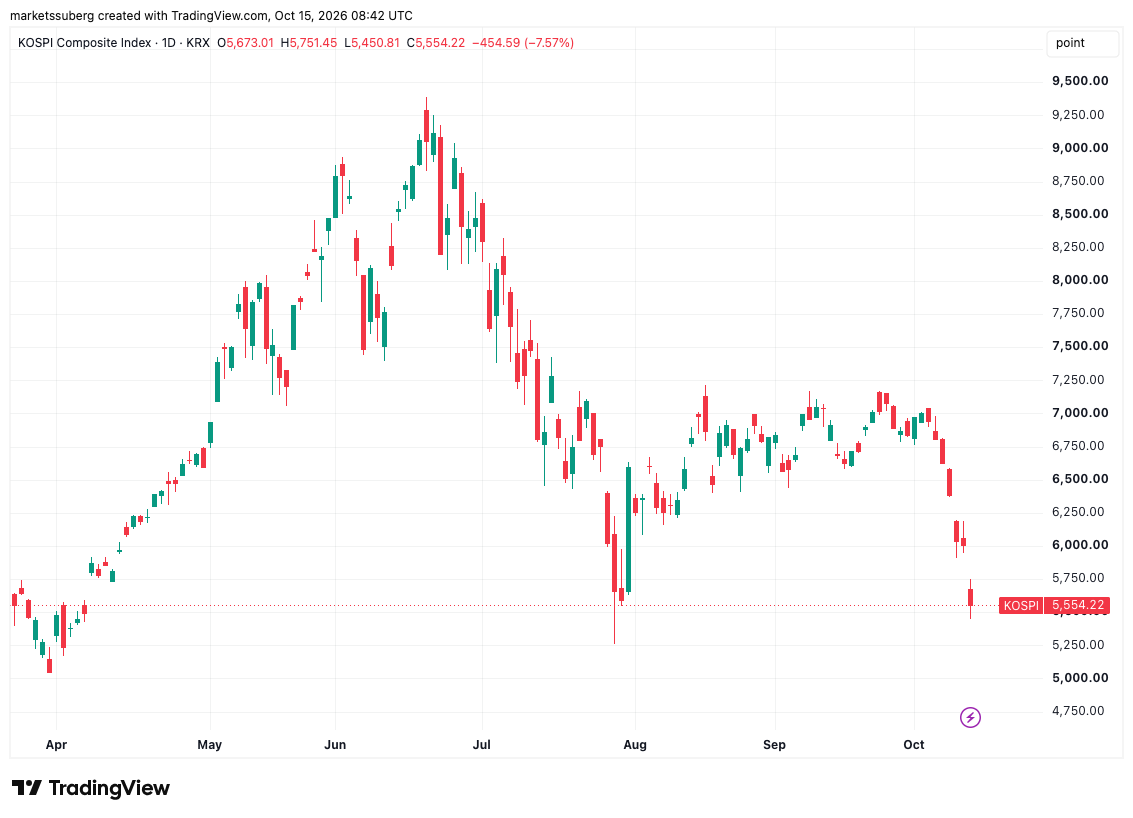
South Korean equities absorbed the heaviest damage from the shifting macroeconomic landscape. The KOSPI plunged 7.5% on Thursday, closing at 5,554 points—its lowest daily finish since April 8. Week-to-date losses reached 15.5%. The index briefly tested its 200-day moving average near 5,450 points, a technical support level unseen since late July.
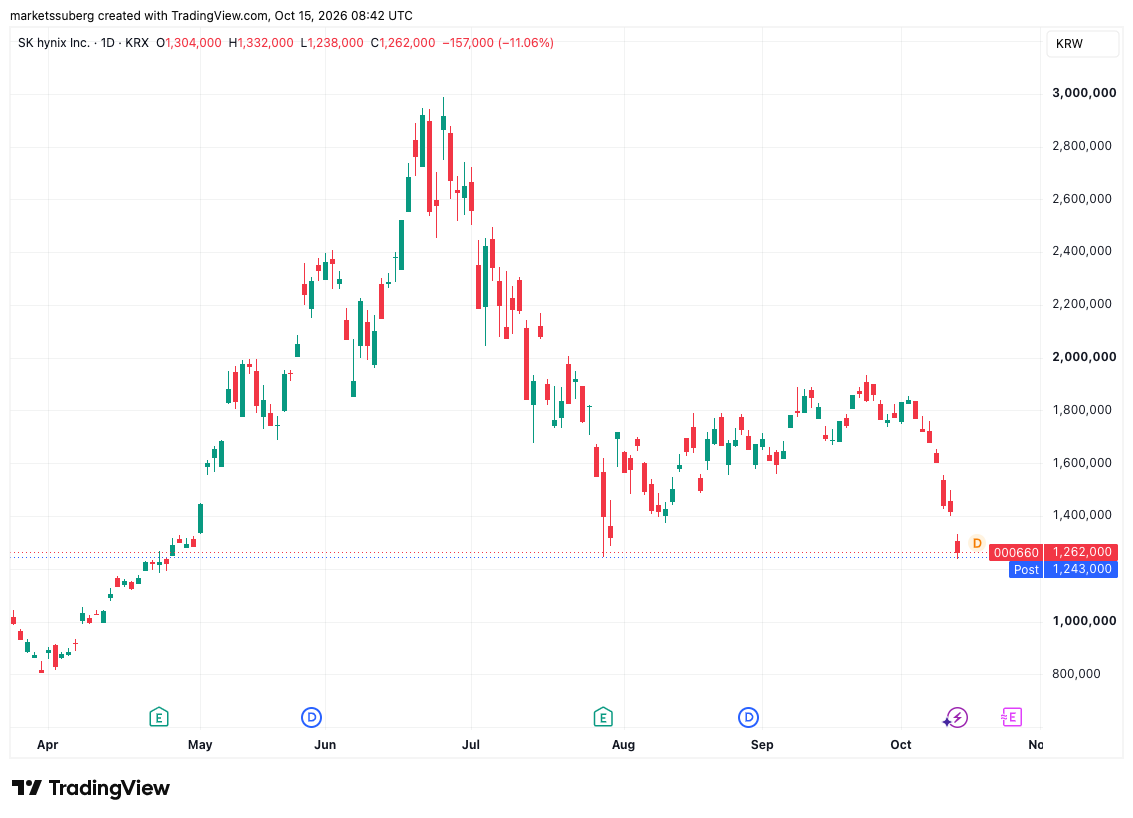
Semiconductor manufacturers anchored the rout. SK Hynix dropped 11%, while Samsung Electronics lost 9.5%. Both companies face intense scrutiny over their massive capital expenditures tied to artificial intelligence infrastructure. Investors have grown increasingly concerned that the debt obligations required to compete with Chinese chipmakers and satisfy AI demand may not yield proportional near-term returns. Foreign capital outflows have accelerated the downward pressure.
Mirae Asset Securities analyst Kim Seok-hwan told The Korea Herald that deteriorating domestic supply-demand dynamics have left the market highly exposed to external shocks, warning that near-term volatility is likely to persist without a shift in the global environment.
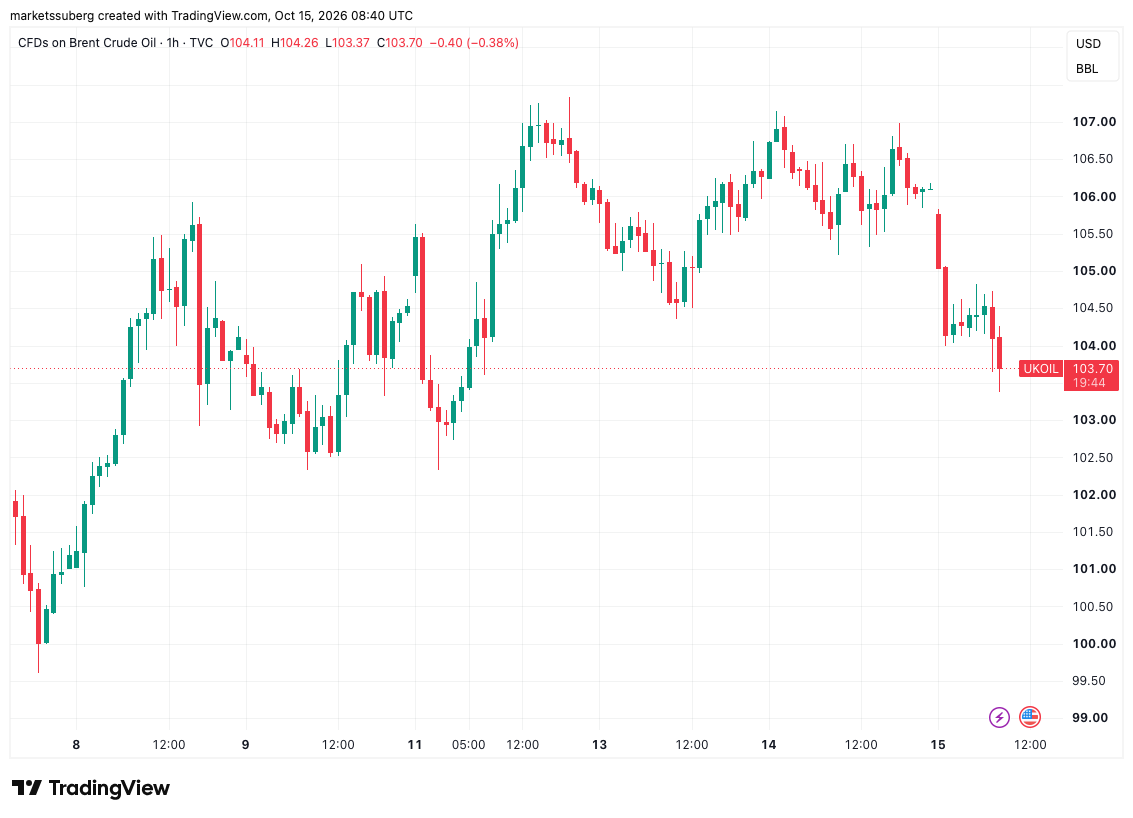
Energy markets presented a paradox on Thursday. Despite escalating geopolitical risks—including the sinking of a Singapore-registered fuel tanker in the Strait of Hormuz on Wednesday, an act the Maritime and Port Authority of Singapore condemned as unjustifiable—crude prices retreated. Brent crude fell 2.2% to $103.70 per barrel, while WTI slipped 0.5% below $95.
The counterintuitive price action reflects aggressive supply-side interventions. Firas Bechwaty, head of business development at trading platform ICM, told CNBC that transit volumes through the Strait of Hormuz are unlikely to return to pre-U.S.-Iran war levels. However, Saudi Arabia continues routing crude to international buyers via alternative pipelines and ports. Simultaneously, International Energy Agency member nations have accelerated emergency strategic petroleum reserve releases, providing enough buffer to prevent oil from spiking despite the maritime attack.
While lower oil prices typically ease inflation concerns, Thursday’s retreat failed to comfort crypto or equity investors already locked into a risk-off posture following the CPI print. The market’s attention now pivots to late October, when Samsung and SK Hynix release third-quarter earnings on Oct. 29 and Oct. 28, respectively. Samsung is projected to report 195 trillion won ($145 billion) in sales and approximately 107 trillion won ($80 billion) in operating profit. Any shortfall could deepen the technology sector’s slump and prolong the drag on correlated assets like Bitcoin.









