Louisville Basketball 2026-27: Roster Overhaul and Title Push
Pat Kelsey's heavily funded Cardinals face a critical eligibility battle and a complete tactical shift in the paint to validate their ACC ambitions.
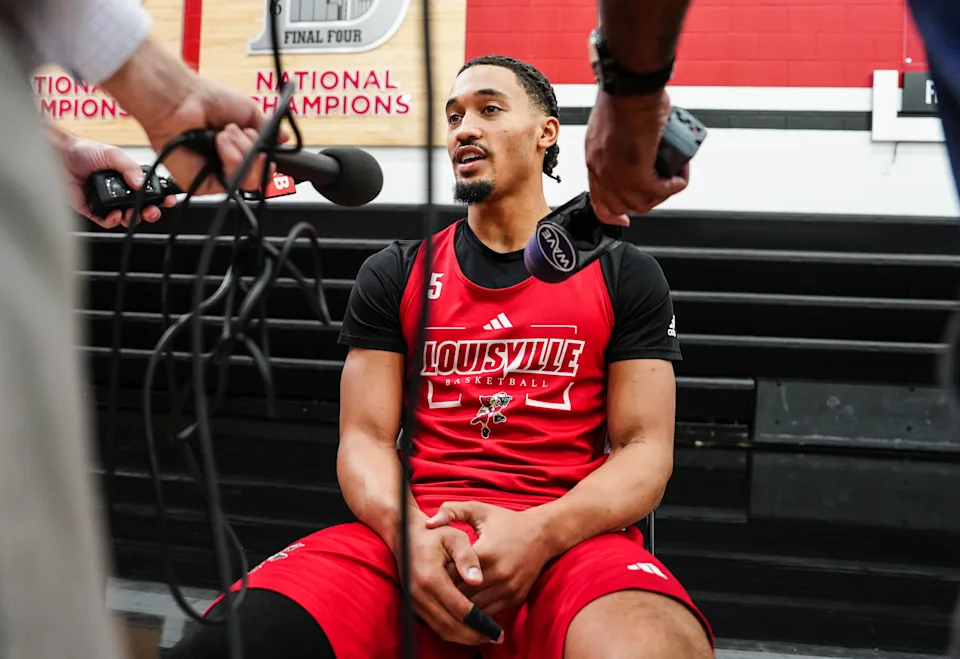
Pat Kelsey enters his third season as Louisville’s head coach with a roster constructed to erase the program’s recent postseason shortcomings. After securing the Cardinals’ first NCAA Tournament victory since 2017 last March, Louisville is attempting to transition from a team that exceeded baseline expectations into a legitimate Atlantic Coast Conference title contender.
The financial commitment required to reach that tier in the current era of college basketball is substantial. Louisville assembled what industry analysts consider one of the most expensive rosters nationally through name, image, and likeness collectives. This investment arrives after a 51-win stretch over two seasons exposed distinct tactical vulnerabilities against elite competition. Kelsey holds a 2-13 record against Quad 1A opponents at Louisville, and his teams have never advanced beyond the second round of the NCAA Tournament throughout his coaching career.
“I’m crystal clear of the expectations here,” Kelsey told reporters Oct. 8. “Everybody said, ‘The criticism is going to be harsher and bigger.’ That’s fair. That’s totally fair.”

The pressure to deliver a deep March run—something Louisville has not achieved since reaching the Final Four in 2013 and winning the national championship before that title was later vacated—is compounded by an unprecedented roster turnover. Only one scholarship player returns from last season, leaving 11 new faces to integrate before the regular season begins.
The immediate test arrives Oct. 21, when Louisville opens preseason exhibition play against Kansas inside Allen Fieldhouse. Associate head coach John Andrzejek acknowledged the group “hasn’t been punched in the mouth yet,” a reality check that will begin in Lawrence.
**Frontcourt Transformation Anchors Defensive Ambitions**
Louisville’s inability to compete physically with top-tier programs defined its losses last season. Across 10 games against Quad 1A opponents in 2025-26, the Cardinals were outscored by 58 points in the paint, outrebounded by 35, and surrendered 27 more second-chance points than they generated.
To correct those deficits, Kelsey targeted size and rim protection, headlined by the addition of former Kansas forward Flory Bidunga. The reigning Big 12 Defensive Player of the Year provides the anchor Louisville lacked during stretches where smaller lineups were exploited on the glass. In modern college basketball, where transfer portal movement frequently prioritizes perimeter scoring, acquiring a proven defensive interior presence of Bidunga’s caliber represents a deliberate philosophical shift toward physicality.
Behind Bidunga sits Obinna Ekezie Jr., a 7-foot-2 freshman from Lagos, Nigeria, who arrived as the consensus top center in the Class of 2026. Ekezie reclassified to start his collegiate career a year early and did not receive full-contact medical clearance until Oct. 7 following offseason surgery on his right shoulder.
Despite the delayed timeline, his physical development has accelerated. Ekezie increased his weight from 230 to 248 pounds while improving his standing vertical jump by four inches, reaching 31.5 inches. Andrzejek described him as a “biomechanical marvel” possessing NBA-caliber mobility and wingspan.
Kelsey indicated Ekezie will likely begin the season backing up Bidunga to ensure proper acclimation. However, Louisville’s ceiling depends on eventually deploying both players simultaneously. Pairing Bidunga’s defensive instincts with Ekezie’s athleticism would give the Cardinals a frontcourt rotation capable of matching the size of traditional ACC heavyweights like Duke and North Carolina without sacrificing transition speed.
**Offensive Recalibration Without Elite Volume Shooting**
Kelsey dismissed speculation that Louisville’s stylistic identity will change despite the personnel overhaul. He intends to maintain the fast-paced, downhill offensive system he has utilized throughout his 14-year head coaching tenure.
The execution, however, must adapt. Last season, Louisville attempted 52.9% of its shots from three-point range—the fourth-highest rate nationally—converting 36% (406-for-1,127). That volume was fueled largely by guards Ryan Conwell and Isaac McKneely, both of whom departed.
Without those specialists, Louisville’s three-point attempt rate will inevitably decrease. The strategic adjustment relies on leveraging the new roster’s length to attack the basket. Eight of Louisville’s nine Division I veterans shot 63.6% or better on two-point attempts last season, contributing to a 59.4% overall field-goal percentage from inside the arc with an average attempt distance of just 4.7 feet from the basket.
Senior guard Jackson Shelstad, a transfer who anchors the backcourt alongside junior Adrian Wooley and senior De’Shayne Montgomery, emphasized that shot selection will dictate the offense rather than a rigid system. “If the 3 ball is there, we’re going to shoot it,” Shelstad said. “We’ve got a lot of good shooters, but we’re just going to take what the defense gives us.”
Kelsey’s offenses have ranked in the top 70 nationally in three-point attempt rate in 12 of his 14 seasons as a head coach. Maintaining enough perimeter threat to prevent defenses from collapsing entirely on Bidunga and Ekezie inside remains the primary schematic challenge for new associate head coach Sean Dixon and the rest of the staff.
**Seth Trimble’s Eligibility Fight Looms Over Backcourt Depth**
The most volatile variable facing Louisville is the legal status of transfer guard Seth Trimble. The former North Carolina standout is seeking a fifth season of eligibility through a federal lawsuit challenging the NCAA’s age-based eligibility model.
Trimble joined more than three dozen athletes from the high school Class of 2022 in litigation arguing the NCAA’s rules unlawfully restrict their ability to compete. Jefferson County Circuit Court Judge Brian Edwards initially sided with the athletes in August, issuing a temporary restraining order. A three-judge panel from the Kentucky Court of Appeals dissolved that order Oct. 2.
An evidentiary hearing is scheduled for Oct. 14. If Edwards issues a preliminary injunction reinstating Trimble’s eligibility, the NCAA is expected to appeal again to the Kentucky Court of Appeals, prolonging the uncertainty.
“I’m not really worried about what’s to come,” Trimble said Oct. 8. “I can’t stress and harp on something that I can’t control.”
Kelsey stated he is “operating every day” as if Trimble will play, though he admitted the outcome remains unpredictable.
The stakes extend beyond depth. Without Trimble, Louisville possesses only three upperclassmen guards. His four years of ACC experience and reputation as an elite on-ball defender would fundamentally alter how Kelsey manages matchups against high-powered conference backcourts. Trimble’s availability determines whether Louisville’s perimeter defense can complement its upgraded interior or remain susceptible to the same breakdowns that derailed Quad 1A performances last winter.
Louisville finalized its non-conference schedule earlier this month, locking in matchups designed to bolster its NCAA Tournament resume ahead of ACC play beginning in late December.