Tripod Cat Carmie Steals Halloween With Four Costumes Tailored to Missing Leg
Four custom outfits turn a missing limb into creative advantage, sparking millions of views and a debate over which design wins
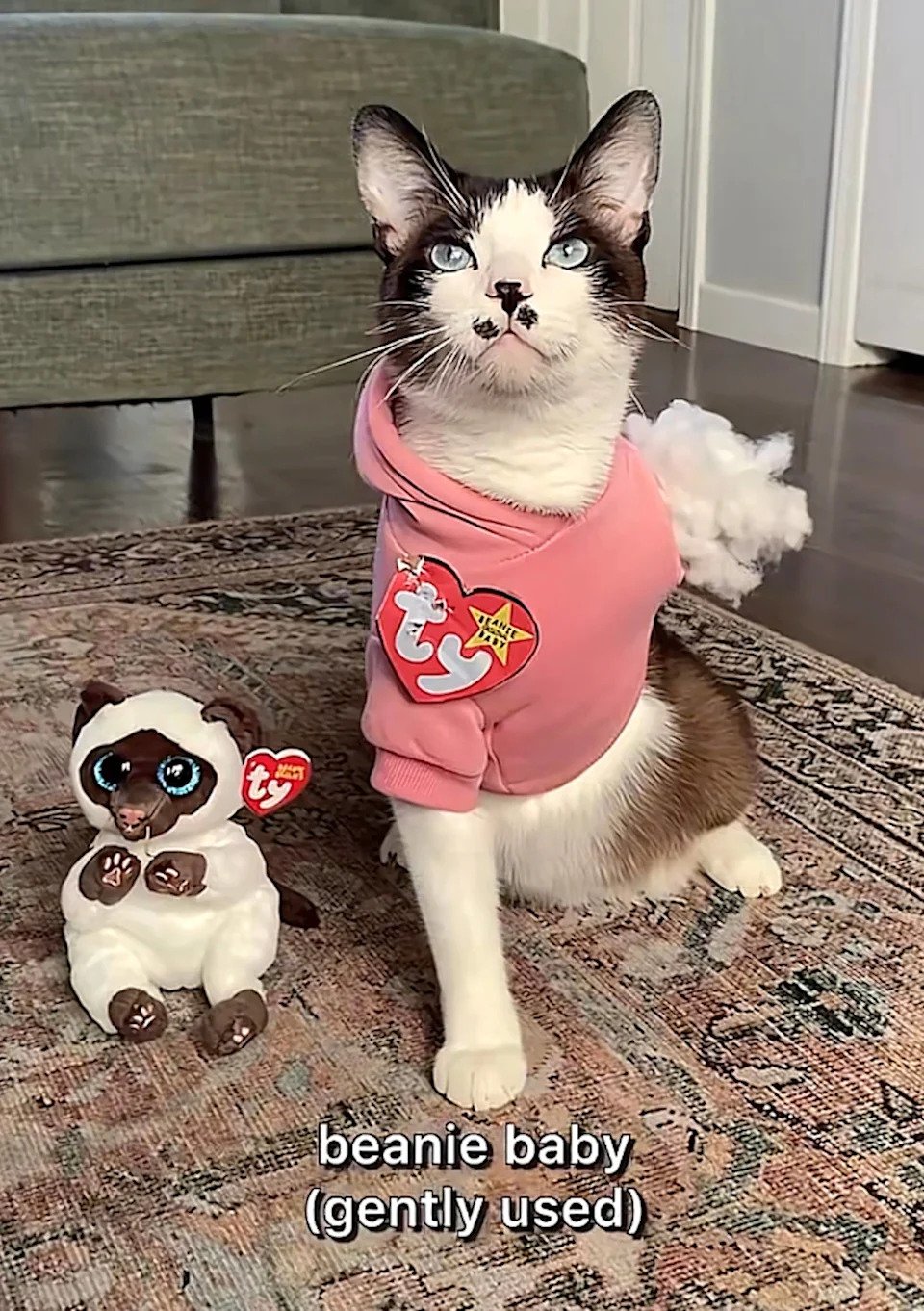
A blue-eyed tripod cat named Carmie has become the internet’s latest Halloween obsession after his owner unveiled four elaborate costumes that incorporate his missing front leg into the joke rather than hiding it. The TikTok account @louie.and.the.sno posted the costume reveal this week, showing the cat modeling a shark attack survivor ensemble complete with tropical shirt and bitten surfboard, a “gently used” Beanie Baby with fake stuffing spilling from a seam, a pirate getup labeled “pirate who’s been through it” with a peg-leg prop, and a literal camera tripod pose that prompted delayed laughter from viewers.
The video had amassed millions of views by Friday morning, with commenters debating which costume deserved the top prize. The Beanie Baby version — heart-shaped tag and matching plush companion included — appeared to hold a narrow lead, though the shark attack survivor and pirate entries each commanded fierce loyalty. One viewer posted a photo of their own tripod bearded dragon in a tiny pirate outfit, declaring the formation of a crew.
Carmie’s costumes reflect a growing trend among pet owners with disabled animals: adaptive humor that transforms physical difference into creative advantage. Rather than dressing a three-legged cat as a generic pumpkin or ghost, the designs lean into the tripod reality. The pirate’s peg leg isn’t a random accessory; it’s a wink at the missing limb. The tripod camera pose turns the cat’s stance into a visual pun. Even the Beanie Baby’s “defect” — stuffing escaping from a seam — mirrors the cat’s own body in a way that feels affectionate rather than mocking.


Veterinary behaviorists have noted that costume tolerance varies widely among cats, and trips to the emergency clinic for costume-related injuries — ingestion of loose parts, restricted breathing, overheating — spike every October. The American Veterinary Medical Association recommends that any pet costume lack dangling pieces, fit loosely around the neck and chest, and be introduced gradually with positive reinforcement. Carmie’s outfits appear to follow these guidelines: lightweight fabrics, no elastic constriction, and short wear times for filming.
The Beanie Baby reference taps into potent millennial nostalgia. The plush toys, produced by Ty Inc. from 1993 onward, became a speculative frenzy in the late 1990s before the bubble burst. A “gently used” tag with protruding stuffing signals a toy loved to the brink of destruction — a status many viewers recognized from childhood. That emotional resonance, combined with the cat’s expressive face, explains much of the viral traction.
Pet Halloween spending in the United States reached $700 million in 2023, according to the National Retail Federation, with costumes accounting for the largest share. But the Carmie phenomenon suggests a shift: owners aren’t just buying off-the-rack outfits. They’re building narratives. The shark attack survivor comes with a backstory — tropical shirt, bitten board, implied drama. The pirate has weathered storms. The tripod camera is a meta-joke about the cat’s own body. Each costume functions as a micro-sketch.
Disability representation in pet social media has expanded significantly since 2020. Accounts featuring blind dogs, deaf cats, wheelchair-using rabbits, and amputee animals regularly draw millions of followers. The tone has moved from inspiration porn — “look how brave they are” — toward normalized humor. Carmie’s owner doesn’t frame the missing leg as tragedy or triumph. It’s simply a fact that enables better jokes.
The TikTok algorithm favors this blend of specificity and relatability. A three-legged cat in a pirate costume is niche enough to stand out but universal enough to share. The platform’s duet and stitch features have already spawned response videos from other tripod pet owners, creating a micro-community around adaptive costume design.
Parade Pets originally published the story on October 9, 2026. As of Friday afternoon, the account had not announced a winner, leaving the internet to continue its debate in the comments.