How to Get a Restaurant-Quality Steak Crust on a Blackstone Griddle
Why 30-second flips and a cornstarch dusting beat the traditional sear-once approach
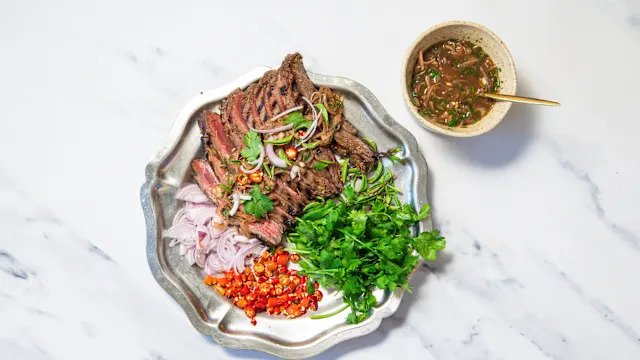
The Blackstone griddle has become a backyard staple for smash burgers and breakfast spreads, but many owners still struggle to translate that flat-top heat into a steakhouse-worthy crust. The problem usually comes down to three variables: surface temperature, moisture management, and flip frequency. Master those, and the Maillard reaction — the chemical browning that creates deep umami flavor and a crisp, dark exterior — does the rest.
Start with a cold griddle and a thick-cut steak at least 1.5 inches thick; thinner cuts overcook before a crust can form. Ribeye, strip, or porterhouse all work, but the fat cap on a ribeye renders into the surface, aiding browning. Pat the meat thoroughly dry, then season generously with kosher salt at least 40 minutes before cooking, or up to 24 hours uncovered on a rack in the refrigerator. That dry-brine window pulls moisture from the surface and seasons the interior. Right before the steak hits the metal, pat it dry again and dust lightly with cornstarch — a tablespoon per steak is plenty. The starch absorbs residual surface water and forms its own micro-crust through starch gelatinization, a technique borrowed from professional wok cooking.
Crank every burner to high and close the hood if your model has one. You need the steel above 500°F, which takes 10 to 15 minutes on most 36-inch units. An infrared thermometer gun removes the guesswork. While the griddle heats, coat the steak in a thin layer of high-smoke-point oil — refined avocado, grapeseed, or canola — and brush the same oil onto the cooking zone. The oil film eliminates air gaps, ensuring full metal-to-meat contact from the first second.


Lay the steak down and start a timer. Flip every 30 to 45 seconds. This high-frequency method, sometimes called “contact searing,” runs counter to the conventional wisdom of leaving meat alone, but on a flat top it prevents the gray band of overcooked meat that forms when one side dwells too long. Each flip lets the top surface shed steam, keeping the contact zone dry for the next sear cycle. Move the steak to a fresh hot spot every other flip to compensate for the localized cooling that occurs under the meat.
When an instant-read probe hits 125°F in the geometric center — about 8 to 12 minutes total for a 1.5-inch ribeye — add two tablespoons of unsalted butter, a smashed garlic clove, and a sprig of thyme or rosemary to the griddle beside the steak. Tilt the griddle slightly with a spatula to pool the foaming butter, then spoon it over the meat continuously for 30 seconds. The milk solids in the butter accelerate browning and deposit nutty flavor into the crust.
Pull the steak at 125°F and rest on a wire rack for a time equal to the cook time — roughly 10 minutes. Carryover heat will nudge the center to 130–135°F, medium-rare, while the crust stays shatteringly crisp because the rack prevents trapped steam from softening it. Slice against the grain and serve immediately.
The same principles apply to cast iron, but the Blackstone’s larger surface lets you manage multiple steaks and side vegetables simultaneously without crowding — the most common cause of steamed, gray meat on smaller pans.