UNRWA Faces $8M Lawsuit as U.S. Pushes to End Its Gaza Role
Israel's revocation of UNRWA's diplomatic immunity enables an unprecedented $8 million terrorism lawsuit as Western donors permanently sever funding.
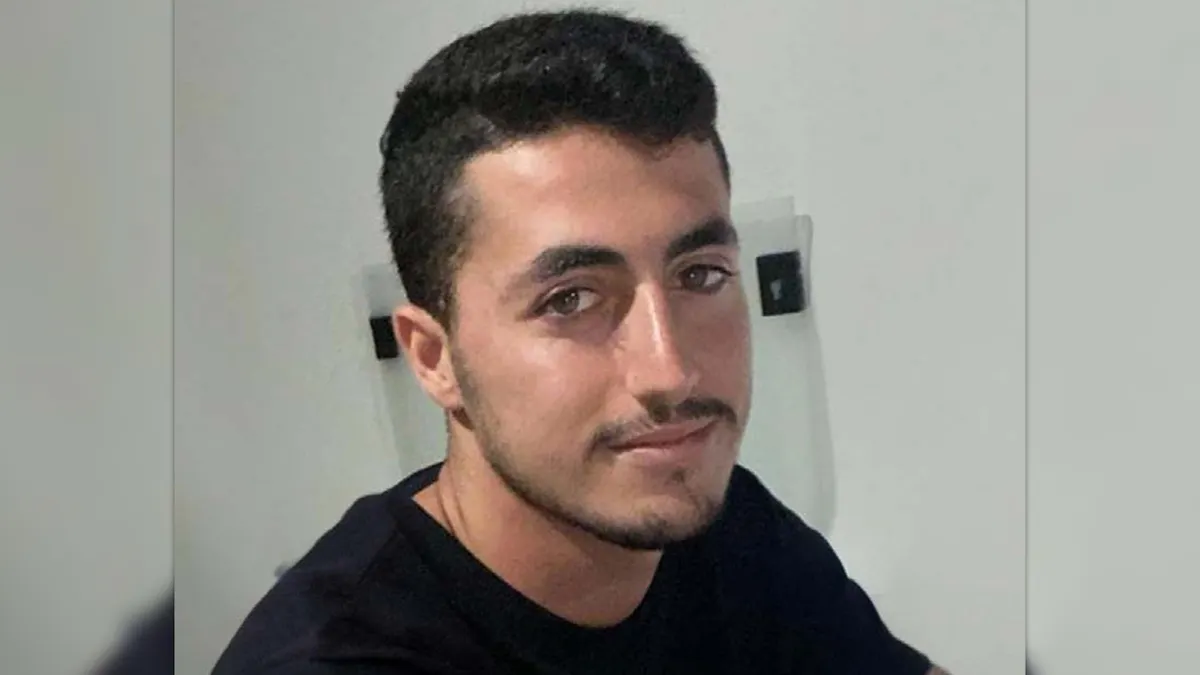
A Jerusalem courtroom has become the latest battleground over the future of the United Nations Relief and Works Agency for Palestine Refugees in the Near East, with an Israeli family seeking nearly $8 million in damages over allegations that agency employees transported a slain hostage’s body into Gaza following the Oct. 7, 2023, attacks.
The civil suit, filed on behalf of the family of 21-year-old Yonatan Samerano, targets UNRWA directly after Israel’s parliament stripped the agency of its diplomatic protections. Samerano was killed outside Kibbutz Be’eri after fleeing the Nova music festival massacre. His remains were held in Gaza for 625 days before being returned during the final phase of hostage releases. According to Nitsana Darshan-Leitner, president of the Shurat HaDin Law Center representing the family, UNRWA workers placed Samerano’s body in an agency vehicle and smuggled it across the border without ever disclosing his location to Israeli authorities.
The litigation tests the limits of a December Knesset law that revoked UNRWA’s immunity within Israeli jurisdiction, enabling the expropriation of its properties in East Jerusalem and opening the door to domestic lawsuits. The family is pursuing punitive damages under Israel’s Compensation for Victims of Terrorism Law. When UNRWA’s deadline to file a defense arrived last week, the agency requested a 45-day extension and has not publicly commented on the proceedings.

United Nations Secretary-General António Guterres maintains that the Israeli legislation violates international law. Through spokesperson Stéphane Dujarric, Guterres reiterated that UNRWA’s immunities derive from the U.N. Charter and the Convention on the Privileges and Immunities of the United Nations, which he argues supersede unilateral domestic actions. Guterres has stated that any personnel proven to have participated in the Oct. 7 attacks must face accountability, noting the agency has acted when provided with specific intelligence by Israel.
This legal clash unfolds against a rapidly shifting landscape for postwar Gaza governance. The Board of Peace, a framework tasked with overseeing the territory’s reconstruction, has formally declared that UNRWA will play no role in Gaza’s future. Yet behind-the-scenes negotiations suggest a more complicated reality. Reports surfaced in late September indicating board members had met multiple times with UNRWA officials. The board quickly denied any policy shift on social media, stating it would only partner with organizations capable of delivering a “deradicalized Strip” and asserting that UNRWA fails that standard.
Washington has aligned firmly with efforts to dismantle the agency’s footprint. Speaking at the United Nations on July 1, U.S. Ambassador Jeff Bartos urged donor nations to redirect funding away from UNRWA and toward the Board of Peace framework, describing it as a path offering Gazans durable change rather than perpetual dependency. A senior U.S. official echoed this stance, characterizing UNRWA as a vehicle for instability and radicalization while expressing confidence that vetted non-governmental organizations and other U.N. entities could assume humanitarian responsibilities following an orderly wind-down.
Financial pressure on the agency has intensified as investigations by the USAID Office of Inspector General and independent monitors continue to surface allegations of Hamas infiltration among UNRWA staff. Finland, Sweden, and the United States have now entirely halted their contributions. This represents a severe contraction for an organization established in 1949 to assist Palestinians displaced during the 1948 Arab-Israeli war. Unlike the broader U.N. refugee agency, UNHCR, which focuses on resettlement and integration globally, UNRWA operates exclusively for Palestinian refugees and uniquely passes refugee status down through generations, currently serving roughly 5.9 million registered individuals across Gaza, the West Bank, Jordan, Lebanon, and Syria.
Guterres defended the agency’s operational necessity during a Sept. 24 ministerial meeting, warning that a political campaign is attempting to undermine UNRWA’s mandate. He noted that nearly 400 agency workers have been killed since October 2023 and that hundreds of facilities remain destroyed or inaccessible.
Darshan-Leitner dismissed these defenses, arguing that UNRWA infrastructure historically served dual purposes for Hamas, including weapons storage and launch sites, thereby endangering civilians. She contended that separating the militant apparatus from the civilian population is impossible if the agency remains embedded in Gaza’s daily life.
UNRWA recently requested additional time from the District Court of Jerusalem to formulate its legal response to the Samerano family’s claims.