ASML Weighs Capacity Expansion as AI Chip Demand Outpaces 2028 Plan
Samsung and TSMC adopt High NA EUV tools as chipmakers begin discussing equipment orders through 2030
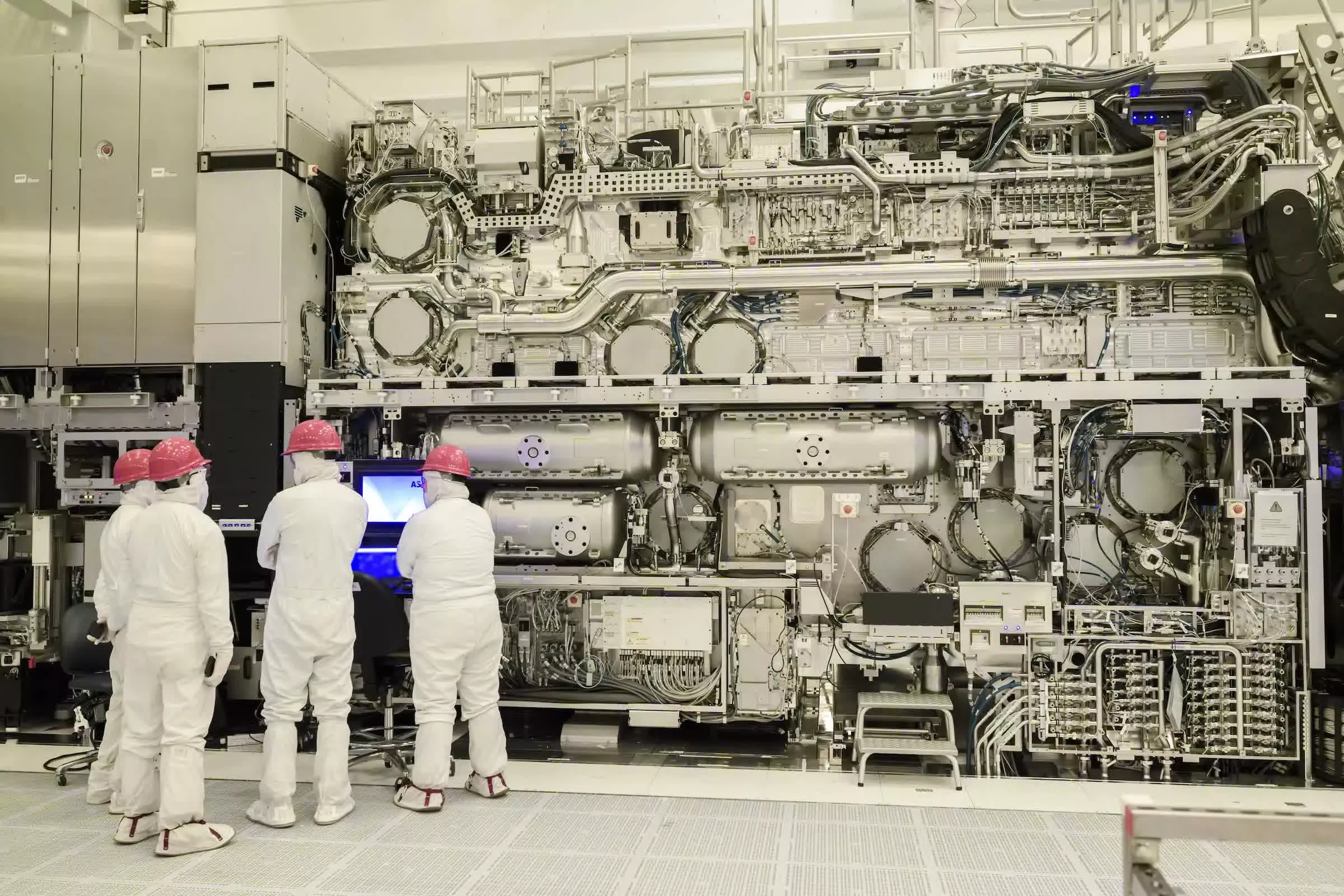
ASML is evaluating whether to push production capacity beyond its already ambitious 2028 targets after determining that current manufacturing plans cannot satisfy customer demand for chipmaking equipment in either 2027 or 2028. The shortfall has prompted some semiconductor manufacturers to initiate discussions about placing orders for delivery in 2029 and 2030, signaling an unprecedented multi-year equipment procurement cycle driven by artificial intelligence infrastructure buildouts.
Chief Executive Christophe Fouquet confirmed that customers are revising their short- and medium-term demand forecasts upward based on expectations that AI capital expenditure will remain elevated longer than previously modeled. While these forward-looking conversations have not yet translated into binding purchase agreements, they represent a significant shift in how chipmakers plan their fabrication roadmaps. Historically, semiconductor companies ordered lithography systems one to two years ahead of installation. The emergence of three- to five-year planning horizons reflects the extraordinary cost and lead times associated with next-generation fabs.
The supply pressure arrives alongside critical validation for ASML’s High Numerical Aperture extreme ultraviolet (High NA EUV) technology. Both Samsung Electronics and Taiwan Semiconductor Manufacturing Co. committed during the third quarter to deploying the next-generation lithography systems in their production processes. Intel became the first company to receive a High NA EUV machine in late 2023, but broader industry adoption had remained uncertain due to the tool’s roughly 350 million euro price tag per unit. Securing commitments from the world’s two largest contract chipmakers removes a major commercial risk for ASML and establishes High NA EUV as the baseline technology for sub-2-nanometer process nodes.

ASML had previously announced plans to increase overall production capacity by 30 percent by 2028. The company is now exploring methods to exceed that threshold, though it has not published revised output targets. Scaling lithography manufacturing involves complex supply chain coordination, particularly for precision optics sourced from Carl Zeiss SMT and specialized laser components. Accelerating that timeline requires securing additional cleanroom space and long-lead-time materials well in advance.
Financial results released for the third quarter demonstrated the immediate strength of ASML’s existing order book. Net profit reached 4.96 billion euros, surpassing the 4.1 billion euros projected by analysts surveyed by LSEG. Total net sales came in at 11.66 billion euros, marginally below the 11.72 billion euro consensus estimate.
For the fourth quarter, management projects net sales between 14.2 billion and 15.2 billion euros, topping the 14.2 billion euro analyst forecast. The company also raised the floor of its full-year revenue guidance for the third time in 2026, narrowing the expected range to 44 billion to 45 billion euros from the previous 43 billion to 45 billion euro band. This sequential tightening of guidance follows an earlier upward revision issued in July, reflecting sustained order intake across both legacy deep ultraviolet systems and advanced EUV platforms.