

BYD Exec Péter Szijjártó Faces Hungary Parliament Probe
Lawmakers scrutinize billions in state aid directed to the Chinese EV maker before the former foreign minister joined the company as an executive.
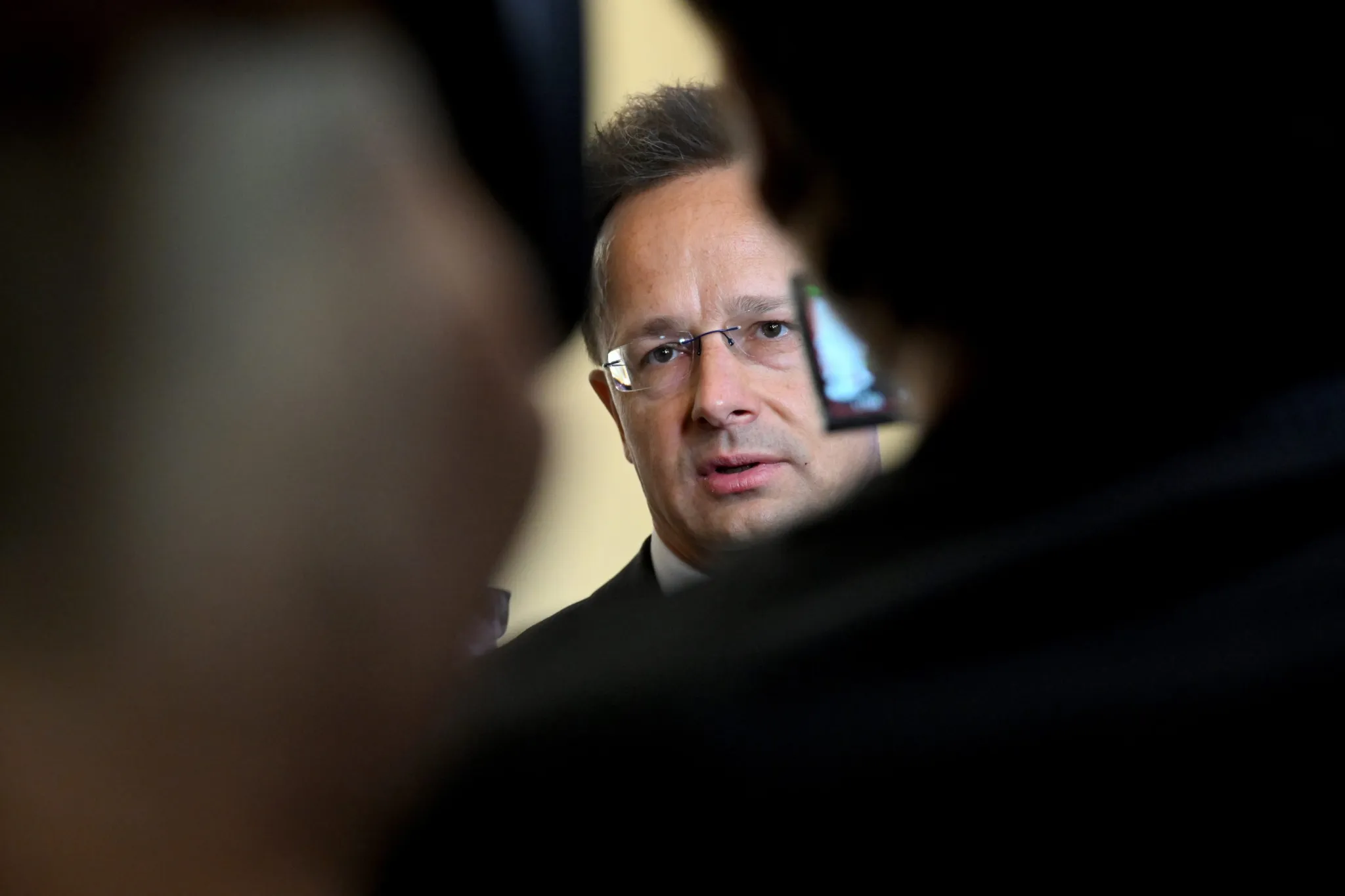
Péter Szijjártó, who spent over a decade steering Hungary’s foreign policy under Viktor Orbán before abruptly joining Chinese automaker BYD as an executive this summer, faced lawmakers behind closed doors Monday over state subsidies and diplomatic favors he directed toward the electric vehicle giant while still in office.
The closed-door session of Hungary’s National Security Committee marks the first formal parliamentary scrutiny of Szijjártó since he resigned his legislative seat in July. His transition from chief diplomat to BYD’s executive responsible for external relations and new business lines has triggered allegations that he leveraged ministerial authority to secure advantages for a corporation that subsequently hired him — a sequence that tests the boundaries of Hungary’s post-government employment rules.
Szijjártó dismissed the controversy upon arriving at the hearing, telling reporters the situation involved “serious misunderstandings.” He defended the 20 billion forints ($63.7 million) in direct government assistance approved for BYD earlier this year, characterizing the sum as standard for industrial investments of comparable scale. He did not address his current corporate role during those remarks.


The financial footprint of BYD’s Hungarian operations extends far beyond the announced subsidy. Prime Minister Péter Magyar told parliament in July that Szijjártó facilitated “hundreds of billions” of forints in total public support, encompassing direct funding, diplomatic interventions, and state-built infrastructure tailored to the company’s needs. Magyar ordered a comprehensive investigation into every decision, negotiation, and state commitment tied to the automaker during Szijjártó’s tenure.
Under European Union state aid regulations, member states must notify the European Commission before granting subsidies that could distort competition within the single market. The bloc’s Foreign Subsidies Regulation, which took full effect in late 2023, grants Brussels additional authority to investigate non-EU companies benefiting from foreign government financial contributions — a framework increasingly relevant as Chinese manufacturers expand across Europe.
BYD’s physical presence in Hungary accelerated rapidly during Szijjártó’s final years as foreign minister. The company selected Szeged, a city near the Serbian border, for its first European passenger car manufacturing plant. In 2025, Szijjártó announced further expansions: a European headquarters and a research and development center located in Budapest.
This aggressive recruitment strategy was not isolated to a single company. Throughout his 12-year tenure, Szijjártó brokered a series of agreements with Chinese battery and automotive firms, positioning Hungary as a primary node in the global lithium-ion supply chain. Orbán’s administration viewed these deals as essential to transforming the country into a dominant EV manufacturing hub bridging Asian capital and European markets.
The economic reality has lagged behind those ambitions. A broader slowdown in European electric vehicle adoption, combined with intense price competition among battery manufacturers, has delayed returns on Hungary’s heavily subsidized industrial bets. Several planned facilities have scaled back hiring or pushed back production timelines amid weak demand.
Domestic concerns have compounded the financial strain. Magyar’s administration, which assumed power following April elections that ended Orbán’s 16-year rule, pledged tighter oversight of the battery sector after reports of workplace accidents and environmental testing revealed contamination levels exceeding legal limits at multiple plants.
Hungary currently lacks a statutory cooling-off period as stringent as those enforced in several Western European nations, where senior officials are routinely barred from lobbying or joining regulated industries for up to three years after leaving office. Szijjártó’s immediate pivot to a leadership role at a firm he actively courted with taxpayer funds has intensified domestic pressure on Magyar’s coalition to draft stricter revolving-door legislation.
The National Security Committee has not released a timeline for publishing findings from Monday’s hearing.









