Stabbed FlyDubai Captain Unlocked Cockpit Door to Save 174 Passengers After Co-Pilot Attack
Wounded Captain Smit Machchhar unlocked the flight deck door so Israeli passengers and Emirati crew could subdue the attacker during the diverted flight to Saudi Arabia.
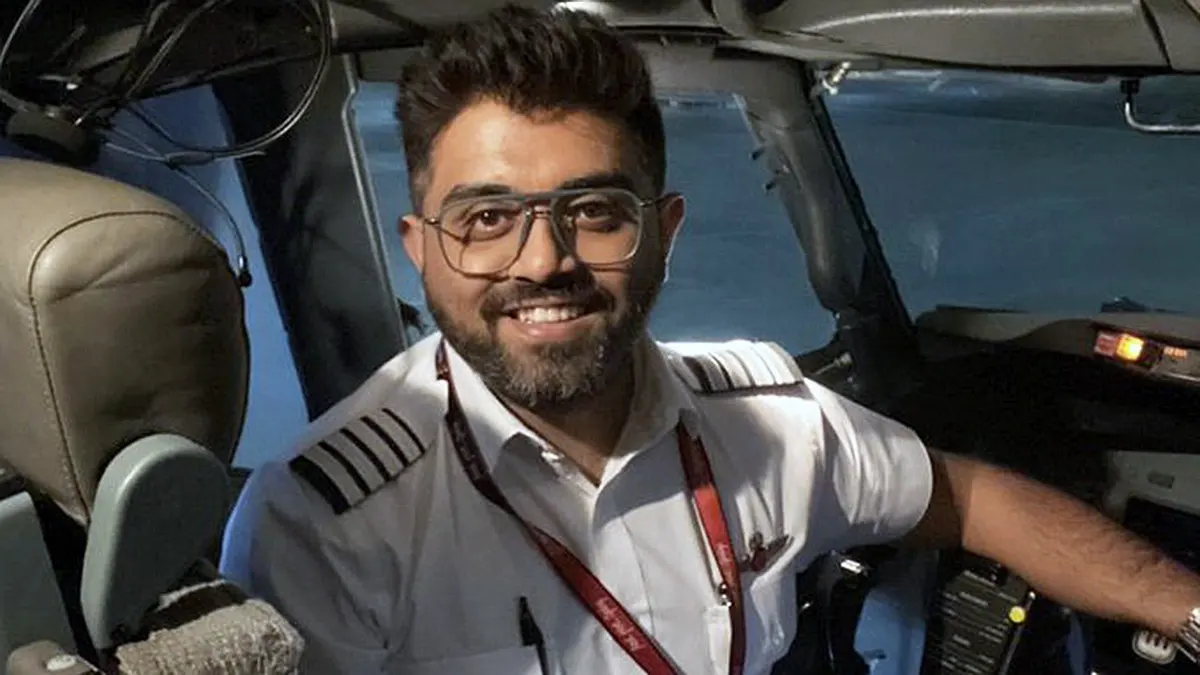
An Indian commercial airline captain, severely wounded by a stab attack from his own co-pilot inside the cockpit, managed to unlock the flight deck door so passengers and crew could overpower the attacker, preventing what Israeli officials are calling an attempted mass-casualty aviation disaster over Saudi Arabia.
Captain Smit Machchhar was piloting Flydubai flight FZ1073 toward Tel Aviv on Wednesday when the aircraft’s first officer turned on him with a blade. Despite sustaining critical injuries, Machchhar reached the cockpit door mechanism to grant access to the cabin. A group of Israeli passengers and Emirati crew members rushed into the flight deck, grappled with the co-pilot, and secured the aircraft, allowing it to divert for an emergency landing in Tabuk, Saudi Arabia.
All 174 people aboard survived. The U.S. State Department confirmed that four American citizens were among the passengers on the Dubai-to-Israel route.

The violent breach of a commercial cockpit revives urgent questions about reinforced flight deck doors, which were mandated globally after the Sept. 11, 2001, terrorist attacks. Those hardened doors are designed specifically to keep hijackers out of the cockpit, but they also trap a flight crew inside if an attacker is already seated at the controls. Aviation security protocols generally rely on two-person cockpit rules or internal locking mechanisms to mitigate insider threats, yet a sudden close-quarters knife attack by a credentialed first officer presents a scenario that structural reinforcements alone cannot prevent. Machchhar’s ability to reach the manual override while bleeding heavily exposed both the vulnerability of internal cockpit threats and the physical limits of post-9/11 aviation security architecture.
Machchhar, who hails from Mumbai, has been with the United Arab Emirates-based low-cost carrier FlyDubai for approximately four years. Before transitioning to the Middle Eastern airline, he spent 11 years flying for SpiceJet, another budget carrier based in India, where he accumulated more than 9,750 flight hours and served as a senior commander and line training captain. His foundational pilot training took place over 18 months beginning in 2008 at Mainland Air, a flight school in Dunedin, New Zealand. He is married and has two children.
Following the emergency landing in Tabuk, Saudi medical teams transported Machchhar to a local hospital. The Indian Embassy in Saudi Arabia reported his condition as stable. Shota Musayev, an Israeli dentist traveling on the flight, provided immediate trauma care to the captain on the ground. Musayev told reporters that Machchhar remained conscious and prayed continuously during the treatment, though his injuries were severe enough that bystanders feared he would not survive.
Indian Prime Minister Narendra Modi publicly praised Machchhar on Thursday, stating the captain fought without fear for his own life and prevented a catastrophe comparable to the 2001 terror attacks. SpiceJet issued a statement on social media platform X honoring its former employee’s “heroic courage” and “selfless actions.”
Israeli officials quickly classified the incident as terrorism rather than a mental health crisis. Israeli Ambassador to the United Nations Danny Danon stated there was no doubt the co-pilot intended to bring down the aircraft, describing the safe landing as a miracle and categorizing the assailant as a radical individual executing a terror attack. U.S. President Donald Trump confirmed he spoke at length with Israeli Prime Minister Benjamin Netanyahu regarding the event, noting early intelligence suggested the co-pilot may have been motivated by extremism or severe psychological instability. Israeli authorities have not yet released the identity or nationality of the detained co-pilot.
FlyDubai, headquartered in Dubai and operating a fleet composed entirely of Boeing 737 aircraft, dispatched a replacement plane to Tabuk shortly after the diversion. The substitute aircraft transported the stranded passengers onward to Ben Gurion International Airport near Tel Aviv, where they arrived later on Wednesday. Magen David Adom paramedics, including responder Aryeh Myers, met the diverted passengers upon arrival in Israel to provide follow-up medical evaluations and psychological support.