

NFL Players Weigh CTE Risks Against Financial Security and Legacy in 2026
Veterans adopt neuroprotective habits and delay youth tackle exposure while accepting career risks for generational wealth

Active NFL players in 2026 are navigating a complex calculus where the threat of chronic traumatic encephalopathy (CTE) is balanced against generational wealth, family legacy, and personal identity. Unlike previous generations who played before the link between football and degenerative brain disease was scientifically established, current athletes are making informed consent decisions that range from rigorous neuroprotective protocols to conscious acceptance of long-term neurological damage as the price of socioeconomic mobility.
The financial reality of the modern league serves as a primary counterweight to health concerns. For many players, particularly those from disadvantaged backgrounds, the potential earnings outweigh the statistical probability of cognitive decline. Arizona Cardinals receiver Michael Wilson articulated this trade-off explicitly, stating that changing his family’s socioeconomic class justifies the risk. Weeks after expressing this sentiment, Wilson secured a three-year, $75 million contract extension, validating the economic rationale that drives participation despite known hazards. This pragmatic approach contrasts with earlier eras when players lacked both the massive compensation packages and the medical literacy regarding subconcussive trauma.
Medical research continues to underscore the severity of the crisis even as players adapt. A study published in the British Medical Journal in 2026 found that at least one in four former NFL players who died between 2016 and 2021 had CTE. Furthermore, suicide rates among former NFL players were found to be 2.6 times higher than those of NBA and MLB athletes during the same period. Despite these findings, the league remains commercially robust, with record revenues and attendance suggesting that player willingness to accept risk has not diminished the sport’s cultural dominance.

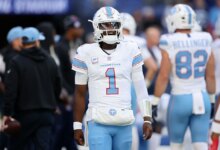
Mitigation strategies have become highly individualized within locker rooms. Minnesota Vikings guard Will Fries employs a comprehensive regimen including omega-3 fatty acids, blue-light blocking glasses, and strict sleep hygiene to protect his brain health. Others rely on technological interventions; New Orleans Saints receiver Chris Olave began using Guardian Caps after sustaining four confirmed concussions, citing his desire to live a normal post-football life as a father. However, experts like Boston University researcher Michael Alosco caution that equipment modifications may not fully address the fundamental violence of the sport, noting that CTE is driven by repetitive subconcussive impacts that helmets cannot entirely eliminate.
A significant generational divide exists regarding youth participation. While most active players support their children playing football eventually, there is near-unanimous opposition to early tackle exposure. Multiple veterans stated they would delay contact sports until their children reach adolescence, preferring flag football for younger ages to reduce cumulative head trauma. This represents a marked shift from their own upbringings, where elementary school tackle leagues were common. Only one player interviewed expressed complete opposition to his son playing football, citing the escalating danger he witnesses professionally.
Retired players who competed before the CTE era offer a stark perspective on current attitudes. Former quarterback Matt Hasselbeck, who announced plans to donate his brain for research, criticized the dismissal of brain injury risks by some younger players. He emphasized that while fear should not dictate play, denial of scientific reality remains dangerous. Conversely, former running back Larry Johnson, who experiences memory lapses and emotional volatility consistent with head trauma, maintains he has no regrets, viewing his sacrifices as integral to his development and success.
The NFL’s institutional response focuses on three pillars: continued research into pathological mechanisms, preventing self-diagnosis through proper evaluation, and reducing preventable head contact. Chief Medical Officer Dr. Allen Sills has emphasized treating manageable symptoms while acknowledging the need for ongoing study. The NFLPA has similarly called for shared responsibility in advancing care and research. Yet, recent tragedies continue to test these commitments; former Dallas Cowboys defensive end Marshawn Kneeland was confirmed to have CTE following his death by suicide in late 2025, and the family of Aldon Smith awaits testing results after his sudden death at age 36 in June 2026.





One Comment