Five U.K. Nationals Bailed After Alleged Plot Against U.S. Bomber Base RAF Fairford Sparks State Proxy Probe
Counterterrorism police are investigating whether the suspects near the U.S. bomber base in Gloucestershire acted as proxies for a foreign government.
British counterterrorism authorities released five men on bail Monday as investigators examine whether a suspected plot targeting a U.S. Air Force installation in England was orchestrated by operatives acting on behalf of a foreign government.
The suspects, identified only as U.K. nationals, were arrested Sunday night near RAF Fairford in Gloucestershire after a local farmer reported seeing masked individuals fleeing into nearby woods when their vehicles were illuminated by her headlights. The woman had called emergency services after encountering three white vans blocking a rural road adjacent to the base perimeter.
Counter Terrorism Policing head Laurence Taylor said the investigation is assessing whether the suspects were “actively committed by proxies or individuals either knowingly or unknowingly working on behalf of a foreign state.” British law permits police to hold terrorism suspects for up to 14 days without charge under the Terrorism Act 2006, meaning the decision to grant bail early suggests authorities are prioritizing intelligence gathering and digital forensics over immediate prosecution.


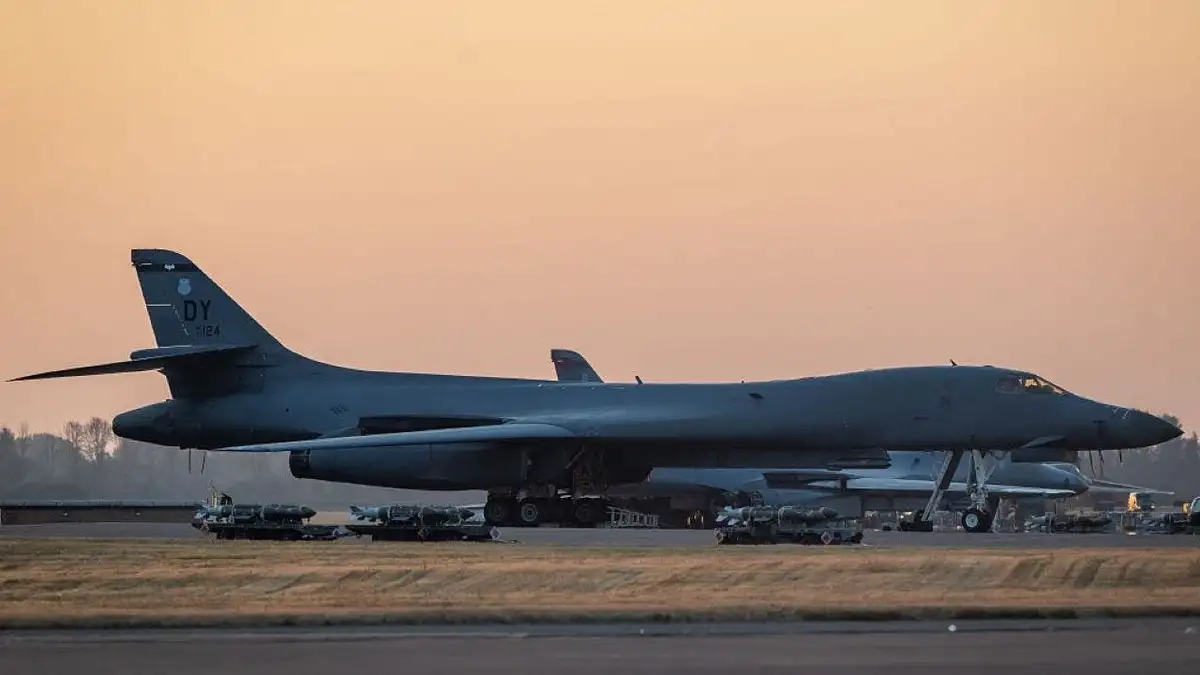
RAF Fairford occupies a unique position in transatlantic defense architecture. Unlike most U.S. military facilities in Britain, which operate under long-term basing agreements at Royal Air Force stations like Lakenheath and Mildenhall, Fairford is designated as a standby airfield maintained for surge operations. The U.S. Air Force activates the Gloucestershire runway primarily for heavy bomber deployments that cannot be accommodated elsewhere in Europe.
That role has placed the base directly in the crosshairs of the escalating U.S.-Iran conflict. B-1B Lancer bombers operating from Fairford have launched defensive strike missions against Iranian military targets in recent months. Iran’s Islamic Revolutionary Guard Corps previously declared the installation a “legitimate target” following those sorties, elevating the threat profile for both American personnel stationed there and the surrounding civilian communities.
U.K. Defense Secretary Wes Streeting acknowledged the farmer’s account while cautioning that she possessed only a “partial picture” of the incident, citing operational security constraints. His refusal to elaborate leaves open the possibility that surveillance systems or other intelligence assets detected activity before or beyond what the witness observed.
The Iranian Embassy in London issued a forceful denial Monday, publishing a statement on X condemning what it called “unfounded and malicious speculations” linking Tehran to the arrests. The embassy framed the allegations as part of an “Iranophobia propaganda” campaign tied to broader hostilities involving the United States and Israel, and threatened legal action against media outlets advancing the connection.
Such denials are standard diplomatic practice when Western governments publicly raise the prospect of state-sponsored proxy activity. European intelligence agencies have repeatedly warned about Iran’s use of criminal networks and unwitting intermediaries to conduct surveillance or attacks on European soil. In 2024, British authorities convicted individuals linked to Iranian intelligence for plotting against dissidents and Jewish organizations in the U.K., establishing a documented pattern of using third-party actors rather than direct state operatives.
Security around U.S. military installations in Britain typically involves layered cooperation between the Ministry of Defence Police, local constabularies, and American security forces. Perimeter vulnerabilities at rural airfields remain a persistent challenge, particularly where public roads run immediately adjacent to fencing designed for Cold War-era threat profiles rather than modern asymmetric risks.
Armed police continue to maintain cordons near the village of Whelford while forensic teams process the area where the white vans were abandoned. The five suspects remain under investigation as counterterrorism officers work to determine their communications history, financial trails, and potential connections to external handlers.