iCaur V27 SUV Targets UK Defender Buyers in Early 2027
Chery's new off-road sub-brand brings a 600-mile range-extender hybrid to Britain to challenge legacy 4x4 pricing.
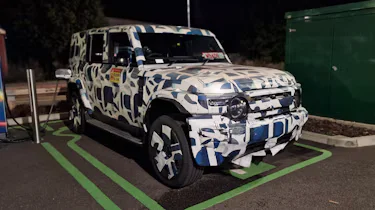
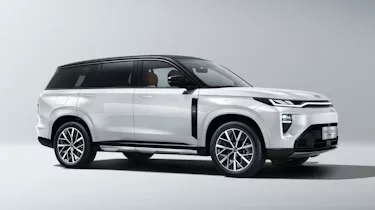
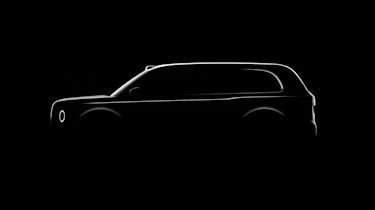
Chery International is preparing to introduce its off-road-focused iCaur brand to the United Kingdom in early 2027, leading the expansion with the V27 — a range-extender plug-in hybrid SUV engineered to undercut legacy 4×4 competitors on price while matching their visual presence.
The V27 positions itself directly against vehicles like the Land Rover Defender and the Ineos Grenadier. Unlike those models, which rely on traditional body-on-frame architecture for heavy-duty off-roading, the V27 uses a monocoque chassis. This unibody construction aligns it closer to mainstream passenger crossovers, prioritizing on-road refinement and structural rigidity over extreme rock-crawling durability. For buyers who want the boxy, utilitarian aesthetic without the compromised highway manners of a ladder-frame truck, the engineering choice signals a clear target demographic.
Powertrain specifications center on an extended-range electric vehicle (EREV) layout. A 154-horsepower 1.5-liter petrol engine functions exclusively as a generator rather than driving the wheels mechanically. It feeds lithium iron phosphate (LFP) battery packs available in two capacities: 20 kWh or 34 kWh. The smaller pack pairs with a single rear-mounted electric motor producing 248 horsepower, yielding approximately 59 miles of electric-only range. Upgrading to the 34 kWh battery unlocks a dual-motor all-wheel-drive configuration generating 449 horsepower and extending the zero-emission range to 93 miles. Both variants exceed 600 miles of total combined range and support DC rapid charging from 20 to 80 percent capacity in 30 minutes.

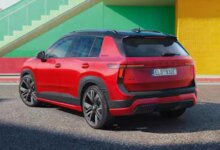
This EREV approach mirrors a powertrain strategy that has gained massive traction in China but remains relatively rare in Europe. Competitors such as BYD have utilized similar series-hybrid architectures in domestic models like the Fang Cheng Bao Bao 5 to eliminate range anxiety while maintaining electric torque delivery. By adopting LFP chemistry, Chery also sidesteps the thermal runaway risks associated with nickel-manganese-cobalt cells, a critical safety consideration for large battery packs subjected to off-road impacts.
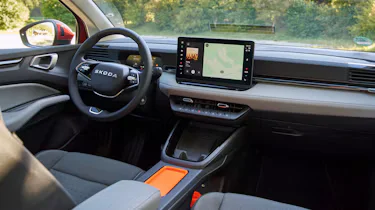
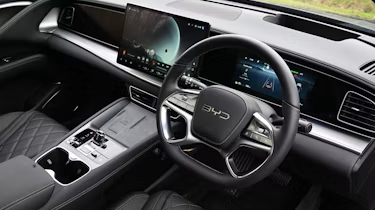
Inside, the cabin mimics the upright dashboard geometry typical of purpose-built utility vehicles. Leatherette upholstery covers the seating surfaces, while a large central touchscreen handles infotainment duties alongside a dedicated digital instrument cluster. Retaining physical metal-effect knobs and switches for core climate and drive functions addresses a persistent complaint among modern SUV buyers frustrated by touch-capacitive controls.
Pricing details remain unconfirmed, though internal positioning places the V27 above the Jaecoo 7 crossover. Chery’s multi-brand strategy relies on distinct sub-labels to segment the market rapidly. While Omoda targets design-conscious urban buyers and Jaecoo focuses on premium mainstream crossovers, iCaur occupies the rugged lifestyle niche. This fragmentation allows the Wuhu-based automaker to saturate specific European segments without cannibalizing its core Chery-badged offerings.
To adapt the platform for British infrastructure and driving dynamics, final calibration will take place at Chery’s research and development facility in Millbrook, Bedfordshire. The Millbrook Proving Ground is one of Europe’s most established independent automotive testing centers, frequently used by global manufacturers to tune suspension damping, steering weight, and electronic stability systems specifically for narrower, more undulating UK roads.
Final homologation data and official trim structures are expected to be released closer to the first-quarter 2027 launch window.