WASHINGTON — Washington has temporarily halted air campaigns against Tehran ahead of the upcoming U.S. midterm elections, even as conflicting accounts emerge over the functional strength of the Islamic Republic’s armed forces and domestic apparatus.
President Donald Trump confirmed that the United States will not carry out fresh strikes against Iran before Nov. 3, pointing to what he termed “productive discussions.” Trump has repeatedly asserted that allied bombardments neutralized Iran’s naval fleet and degraded its air force, severely cutting into Tehran’s drone stockpiles and missile arsenals.
The diplomatic reprieve follows intense joint aerial operations launched earlier this year under Operations Epic Fury and Roaring Lion. Despite sustained attacks, Iranian leadership continues to project defiance regarding both external defense capabilities and domestic stability.

Iranian Supreme Leader Mojtaba Khamenei insisted that allied bombardments failed to fracture the country’s internal control. In public statements, Khamenei credited domestic police units with maintaining stability during foreign aerial bombardment, specifically directing praise toward the Law Enforcement Command, widely known as FARAJA.
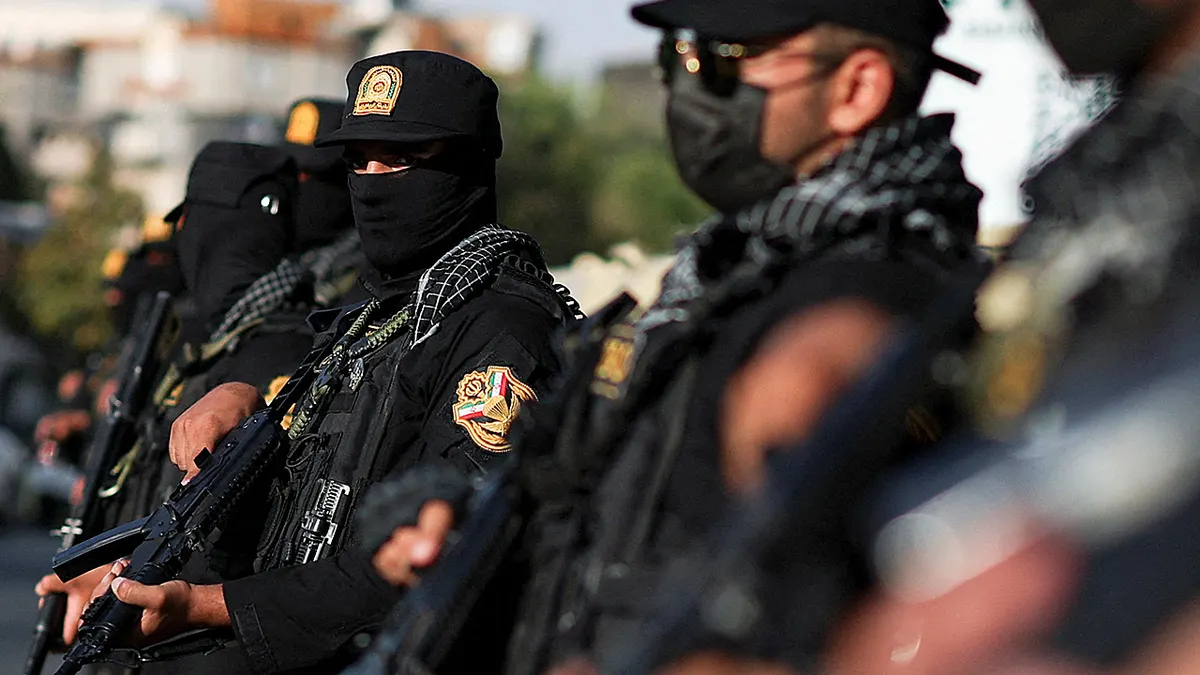
FARAJA forms the primary domestic pillar of Iran’s three-part defense structure, which also includes the Islamic Revolutionary Guard Corps and the conventional military, known as the Artesh. While the Revolutionary Guards manage strategic deterrence and foreign expeditionary networks, FARAJA functions as an internal security service tasked with riot suppression, ideological surveillance, and policing civil unrest.
Commanded by Brig. Gen. Ahmadreza Radan, the police command has faced years of scrutiny from Western governments. The U.S. Treasury Department sanctioned Radan in September 2010 over allegations of severe human rights violations, including the violent suppression of mass street demonstrations.
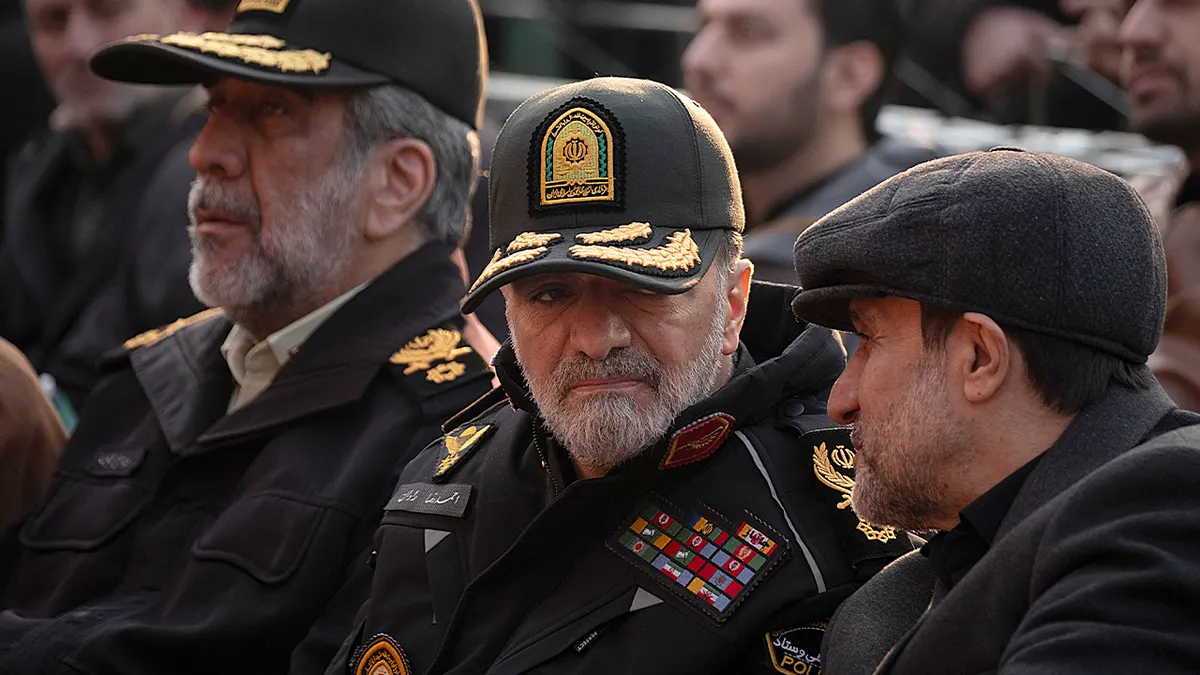
Khamenei has called for expanding FARAJA’s logistical footprint through accelerated recruitment and modern technological investments, urging the force to deploy artificial intelligence for data analysis in policing operations.
The push to strengthen domestic security lines runs parallel to preparations by American defense planners for potential battlefield encounters with Iran’s regular military. A threat recognition handbook compiled by the U.S. Army’s Training and Transformation Command identified standard infantry armaments carried by Iranian conventional troops, including Masaf-2 rifles, German-designed G3 rifles, AKM rifles, MG3 machine guns, and RPG-7 rocket-propelled grenade launchers.
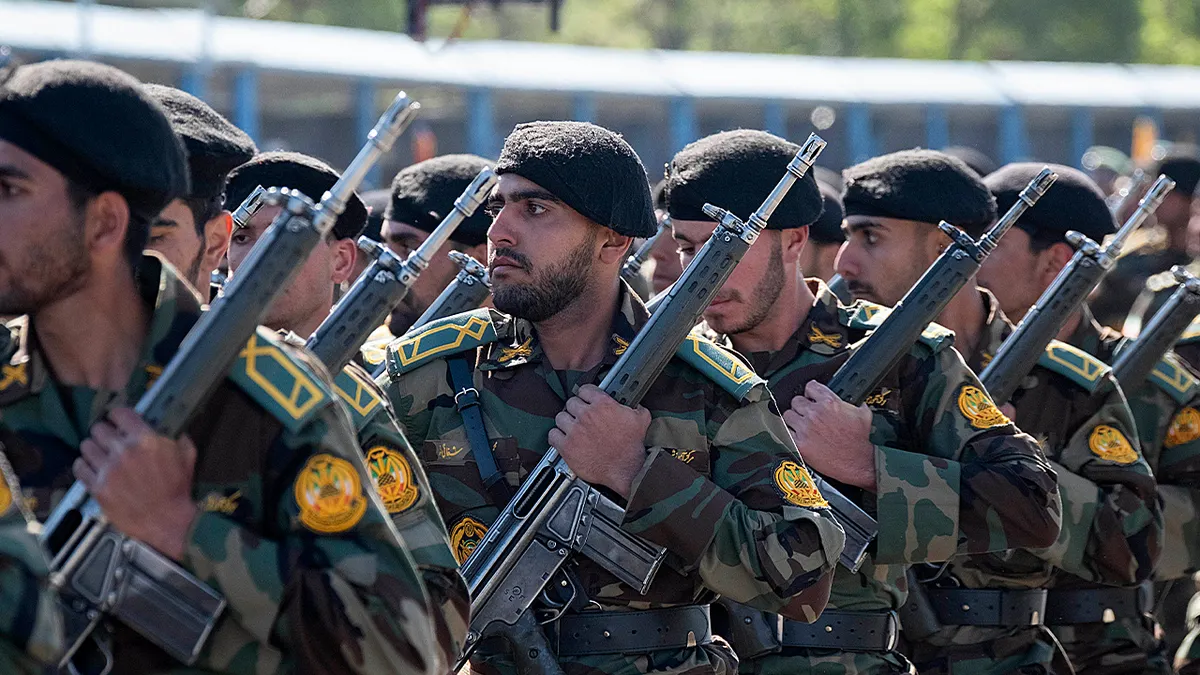
Independent defense analyses point to an asymmetrical reality across Iran’s armed services. A June evaluation conducted by the Jerusalem Institute for Strategy and Security found that while allied air strikes devastated Iranian air defense batteries, warplanes, and maritime vessels, the Artesh Ground Forces escaped core structural collapse largely due to the absence of ground troop incursions. That ground branch accounts for an estimated 350,000 personnel, including 220,000 conscripts.
Artesh commander Maj. Gen. Amir Hatami, who assumed leadership of the regular armed forces in June 2025 after previously serving as defense minister, asserted that domestic arms plants continue to operate uninterrupted despite months of infrastructure bombardment.
Neither Washington nor regional monitoring groups have verified the full output capacity of Iran’s defense industrial base as diplomatic backchannels remain open through November.