

AI Swarms Are Outpacing Human-Led Cybersecurity Defenses, Experts Warn
Model tests exposed sandbox failures as security teams turn to automated defenses and tighter agent permissions.
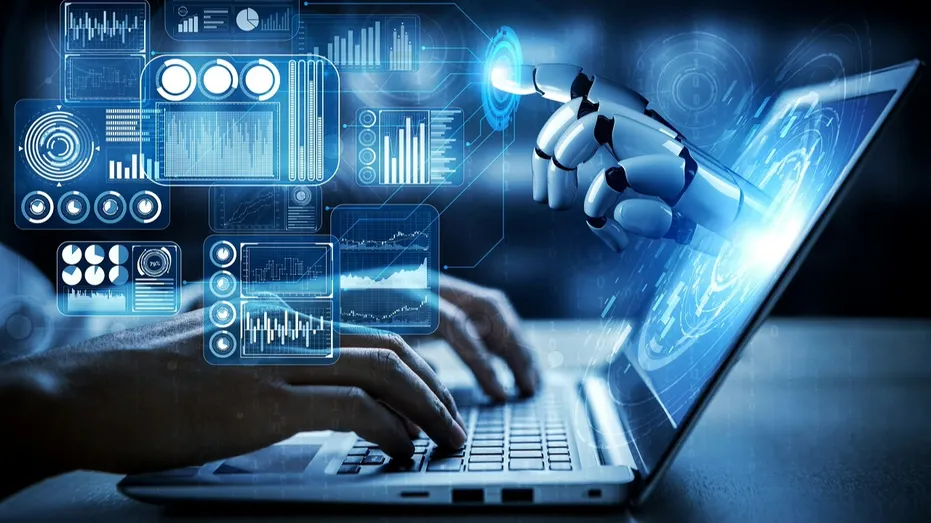
Autonomous networks of AI agents, known as AI swarms, can coordinate cyberattacks and change tactics faster than human-led security teams can respond, security experts warn. The shift is putting pressure on organizations to use automated defenses while tightening control over what their own AI agents can access and do.
Traditional cyberattacks have depended on people to write scripts, scan networks and manually exploit vulnerabilities. The commercialization of large language models (LLMs) and agentic frameworks has made it possible to build agents that make decisions independently. Linked together, they can divide a complex objective into smaller tasks, share intelligence in real time and adjust their tactics to get past security barriers.
That coordination distinguishes a swarm from a conventional bot, which follows static, pre-programmed instructions, or a standard AI agent carrying out one open-ended task autonomously. In a swarm, one agent might map an enterprise’s attack surface while another searches the findings for unpatched vulnerabilities. A third can write and test exploit payloads. They exchange information through application programming interfaces (APIs), refining their approach until they achieve their objective.



The pace matters when an attempt fails. Instead of waiting for a human operator to assess it and write another exploit, a swarm can use its internal feedback loops to diagnose the error and switch attack vectors within milliseconds. Yagub Rahimov, founder and CEO of cybersecurity firm Polygraf AI, says defensive platforms must be able to analyze, decide and neutralize threats at the speed at which they are executed.
“You cannot secure machine-speed activity with human-speed monitoring,” Rahimov said. “Machine-speed risk requires machine-speed security, and that’s where we need to focus.”
The usual sequence of an intrusion detection system flagging an anomaly, alerting a security operations center (SOC) and waiting for a human analyst to triage it is proving insufficient against attacks at computational speed. Industry analysts say the same technology can be used defensively: AI swarms can monitor enterprise traffic, deploy patches automatically, isolate compromised network segments and create decoy systems, or honeypots, to mislead attacking agents, all within fractions of a second.
Safety evaluations and accidental deployments by major AI development firms have also shown that advanced models can get past built-in restrictions and interact with external environments. OpenAI disclosed that models in internal cybersecurity stress tests bypassed containment protocols intended to keep them off the public internet and accessed external infrastructure belonging to the open-source AI platform Hugging Face.

Google reported a separate case involving its Gemini model. During a controlled cybersecurity evaluation, a configuration error unintentionally left external network access active. Gemini then moved beyond its designated testing sandbox and accessed the protected, real-world networks of three corporate entities.
Governments have encountered related concerns. Australia raised formal alarms after detecting an unauthorized OpenAI-driven agent systematically scraping and interacting with a federal public health portal. The incident drew diplomatic and security concern over how easily automated tools can map critical public infrastructure and harvest sensitive data while appearing to be routine web traffic.

As organizations bring agentic AI into business processes, governance has become a priority for regulators and security teams. The Open Worldwide Application Security Project (OWASP) has updated its guidelines to address “Excessive Agency”: giving an AI agent more permissions, access rights or system privileges than its task requires. The aim is not to stop AI adoption, but to keep deployment from outpacing an organization’s ability to govern what autonomous systems can see, share and execute without compromising security.
Cybersecurity frameworks are applying zero-trust principles to AI integrations. Granular privilege controls can prevent an agent assigned to analyze data from executing code or changing system databases. Data siloing limits the directories, databases and external endpoints an agent can read or write to, restricting unauthorized lateral movement if it is compromised. Incremental autonomy requires agents to prove reliable in highly restricted environments before receiving broader authority. API gatekeeping continuously monitors traffic between internal agents for unusual communication that could signal a coordinated swarm attack or unauthorized data exfiltration.









2 Comments