Daikin Ururu Sarara X Targets Airtight Homes With an Ultra-Low-Capacity Compressor
Internal testing found the 4.0 kW model heated a room to 22 degrees Celsius in about 14 minutes.
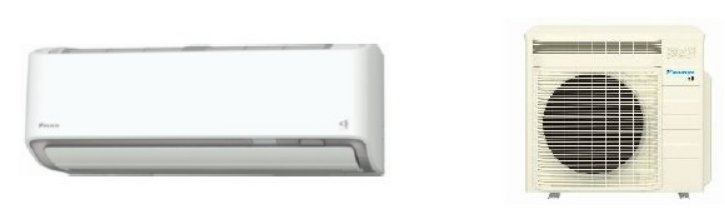
TOKYO — Daikin Industries has redesigned its Ururu Sarara X residential heat pump around a problem posed by highly insulated, airtight homes: conventional systems can deliver more heating or cooling than those homes need to maintain a steady temperature. Its proprietary ultra-low-capacity compressor is designed to run continuously at exceptionally low speeds instead of repeatedly switching on and off.
The change comes as tightening residential energy-efficiency mandates push global heating, ventilation, and air conditioning (HVAC) manufacturers to re-engineer core technology. Governments pursuing decarbonization are mandating highly insulated walls and multi-glazed windows. These thermal envelopes sharply reduce heating and cooling losses, but the resulting low demand can cause oversized heat pumps to satisfy a thermostat quickly and shut down.
That repeated starting and stopping, known as short-cycling, reduces seasonal energy efficiency and accelerates compressor wear. It also undermines humidity control because air-conditioning coils do not stay cold long enough to condense moisture from the air. Daikin, the world’s largest HVAC manufacturer by market share, says continuous low-load operation avoids the energy spikes and mechanical stress of stop-start cycles, allowing builders to meet rigorous energy metrics without sacrificing indoor air quality.

The Ururu Sarara X also has a rapid-heating setting for cold starts. In internal testing by the Osaka-based manufacturer, a 4.0-kilowatt (kW) model raised a test room’s temperature from 10 degrees Celsius (50 degrees Fahrenheit) to 22 degrees Celsius (71.6 degrees Fahrenheit) in approximately 14 minutes with the outdoor temperature at 2 degrees Celsius (35.6 degrees Fahrenheit). Under identical testing parameters, it was four minutes faster than Daikin’s previous-generation system.
Japan is phasing in stricter Zero Energy House (ZEH) standards requiring new residential structures to achieve a net-zero primary energy consumption balance. The standards sit alongside the government’s Green Transformation (GX) Basic Policy, a multi-trillion-yen public-private investment roadmap aimed at net-zero carbon emissions by 2050.
Daikin’s new “Heat Boost Control” protocol activates when the outdoor temperature falls to 2 degrees Celsius or lower, temporarily overriding standard operational limits to increase heating capacity and fan speed. Daikin reported that the stronger airflow expanded the floor area reaching 22 degrees Celsius by a factor of 1.2 compared with its predecessor.
All nine capacity models in the Ururu Sarara X lineup use R-32 (difluoromethane) refrigerant. Its Global Warming Potential (GWP) is 675, roughly one-third that of R-410A, the long-standing industry-standard refrigerant being phased out globally. The shift is in line with the Kigali Amendment to the Montreal Protocol, which mandates a systematic phasedown of high-GWP hydrofluorocarbons (HFCs).
The U.S. HVAC market is undergoing a major transition to low-GWP refrigerants such as R-32 and R-454B under the EPA’s AIM Act. Japan and Europe already have mature R-32 supply chains, which Daikin has leveraged for the rollout. The new models serve rooms of approximately 10 to 43 square meters, or 6 to 26 tatami mats, Japan’s traditional unit of real estate measurement.
For different residential electrical grids, Daikin offers five models rated for single-phase 100-volt connections and five for 200-volt connections; the mid-range 4.0 kW model is available in both configurations. Every indoor unit uses a chassis measuring 798 mm wide, 295 mm high and 370 mm deep. Outdoor condensers range from a 795 mm × 713 mm × 300 mm cabinet on the smallest models to 850 mm × 849 mm × 320 mm on the highest-capacity units.
A low-airflow sleep mode is intended to reduce cold drafts during summer cooling. In that mode, the smaller 2.2 kW and 2.8 kW models operate at no more than 35 decibels (dB(A)), comparable to the ambient noise of a quiet library. The indoor units also provide humidification, dehumidification, mechanical ventilation and air purification. Airtight homes lack natural fresh-air infiltration and require active mechanical ventilation to maintain healthy indoor air quality; Daikin has not yet released comprehensive performance metrics for those auxiliary functions.
Daikin says changing housing envelopes and residential energy policies directly necessitated the capacity recalibration for the 2027 model year. The outgoing Ururu Sarara generation had nominal heating capacities of 2.5 kW to 10.6 kW, with peak outputs of up to 12.4 kW, and nominal cooling capacities of 2.2 kW to 9.0 kW, with peak outputs of up to 9.1 kW.