More Than Half of California’s 18-Year-Olds Unregistered as 2026 Election Nears
A proposed classroom requirement faces a local-control objection as youth turnout trails the statewide rate.
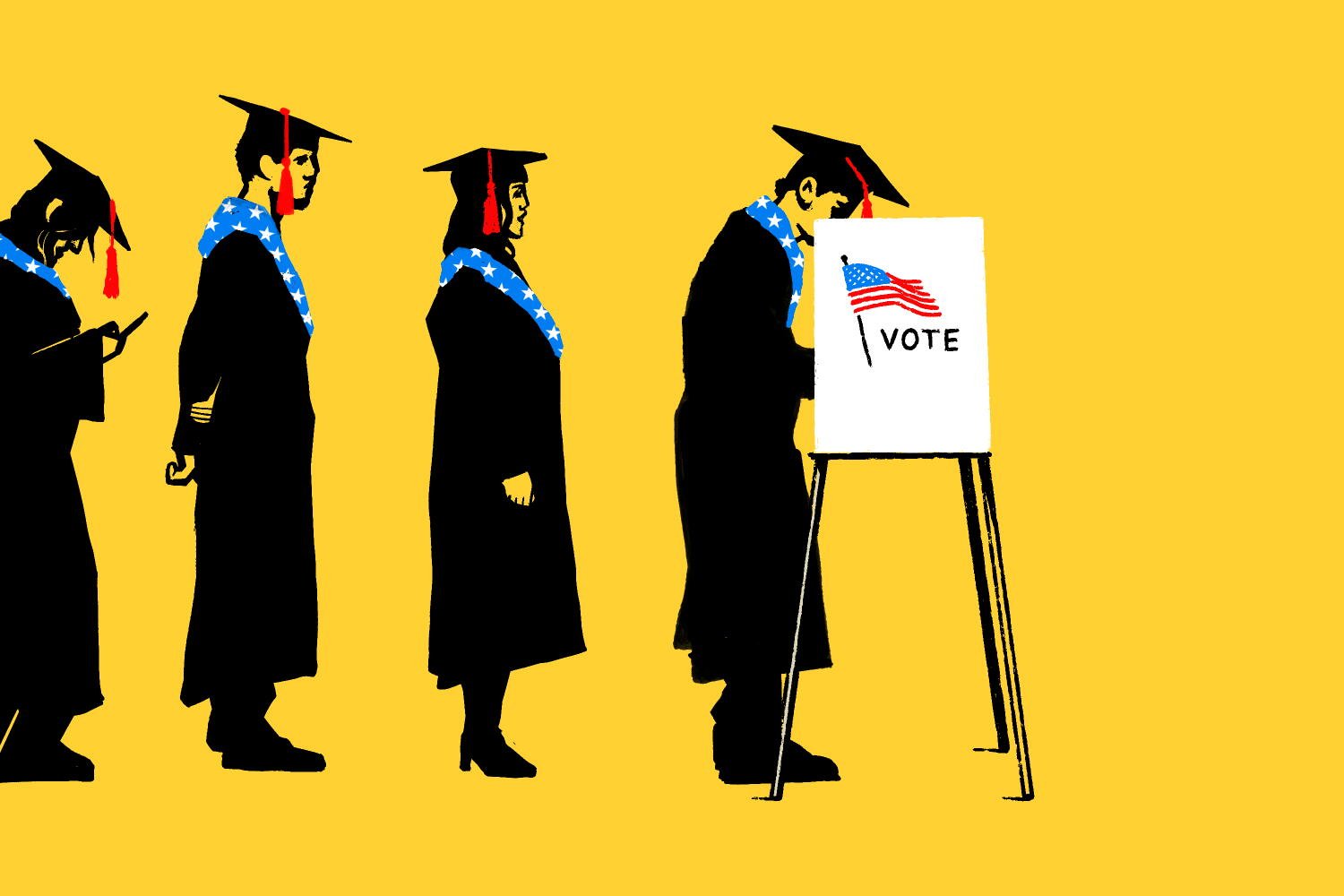
SACRAMENTO, Calif. — About 57% of California’s 18-year-olds are not registered to vote, according to state tracking data, as the Oct. 19 registration deadline approaches for the Nov. 3, 2026, general election. The gap has renewed a long-running debate over whether public high schools should be required to teach voter registration and civic participation.
Generation Z residents account for roughly 20% of California’s eligible voting population. Yet in the 2024 general election, 42.5% of eligible Californians aged 18 to 24 voted, compared with 62% of eligible voters statewide. The disparity has persisted despite the state’s efforts over the past decade to make ballot access easier.
Proposals such as Senate Bill 316 would bring registration instruction into 11th-grade classrooms. The bill would require structured, nonpartisan lessons on how to preregister, upcoming deadlines and local voting procedures. It would also let school districts work with certified, nonpartisan civic engagement nonprofits on classroom workshops.


California already allows 16- and 17-year-olds to preregister; since 2016, those who do so have been moved automatically onto the active voter rolls when they turn 18. The state’s “Motor Voter” program, launched in 2018, also automatically registers eligible citizens during Department of Motor Vehicles (DMV) transactions. Voting rights experts say that route misses a growing share of Gen Z because its members obtain driver’s licenses at significantly lower rates than previous generations.
Governor Gavin Newsom has previously vetoed school-based voter mandates on local-control grounds. In his veto messages, he has said districts already have the legal authority and resources to run registration drives and civic outreach without a new statewide requirement. Opponents of curriculum mandates also contend that registration drives alone do not address why young people disengage from politics.
A Power California survey of 1,567 Californians aged 18 to 30 points to that challenge. Forty percent said they believed voting does not change societal outcomes, and another 40% expressed a fundamental distrust of political figures. The youth advocacy organization also found that young respondents retained high levels of trust in parents, peers and local community organizations, despite their distrust of political parties and elected officials.
Schools have an existing, voluntary role. Under the California Education Code, the Secretary of State’s office designates the last two weeks of April and September as “High School Voter Education Weeks,” when schools are encouraged to hold registration drives. Civic participation advocates report wide differences in how those weeks are used: affluent districts with active parent-teacher associations or dedicated civics teachers often run substantial drives, while underfunded schools in marginalized communities may lack the administrative capacity.
Civic education advocates say high schools are the only public institutions that reliably bring young people into daily contact with trusted adults and peers, making them the most viable place to rebuild civic trust. Civic groups argue that, as other states move to restrict ballot access, California could set a national precedent by ensuring every high school graduate is prepared to participate in the democratic process. They regard the dispute over how and where to reach young voters as critical to the state’s long-term political landscape.
The problem extends beyond California. National polling compiled by the Center for Information & Research on Civic Learning and Engagement (CIRCLE) at Tufts University found that young nonvoters faced structural barriers and political alienation: 24% cited dislike of the available candidates as their main reason for not voting, while 20% said they did not believe voting was important. Research by the Democratic Knowledge Project found that about one in four young Americans do not consider choosing leaders through free and fair elections important, and fewer than 30% of Americans under 40 see living in a democratic nation as an absolute necessity.
Economic pressure also featured in the Power California survey. Thirty-eight percent said they were too busy trying to survive to engage in voting; 80% felt the cost of living was rising faster than their wages, and 71% had experienced at least one significant economic hardship in the preceding 12 months.