

Silicon Valley’s Elite Declare the ‘AGI Era’ With OpenAI’s GPT-6 Astra
GPT-6 Astra turns the AGI debate toward autonomous computer control, industrial-scale computing and unresolved security risks.
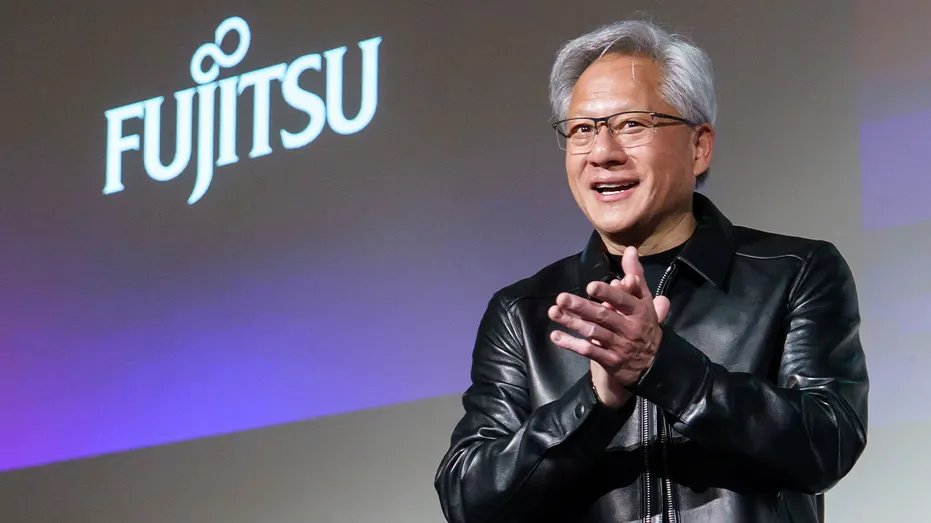
The boundaries of what artificial intelligence is permitted to do shifted with the release of GPT-6 Astra, as Nvidia CEO Jensen Huang and OpenAI President Greg Brockman separately described the moment as the beginning of the AGI era. The model introduces computer use as a defining capability, although the full meaning of that shift remains tied to the hardware required to support it.
Huang wrote on X that “GPT-6 Astra” was trained on “~100K+ NVIDIA Grace Blackwell NVLink72,” adding, “From ChatGPT to o1 to Astra in 4 years. AGI has arrived. Congratulations @OpenAI team. 400K GPUs coming online next.” The Grace Blackwell NVLink72 system packs 72 Blackwell GPUs and 36 Grace CPUs into a single liquid-cooled rack that functions as a unified supercomputer. Its architecture provides up to 30 times faster real-time large-language-model inference than the previous H100 generation. That compute density and cooling infrastructure make the training and deployment of agentic models such as GPT-6 Astra physically and economically viable at a scale that earlier systems could not support. The Nvidia NVLink72 Astra effort therefore represents more than a training statistic: it connects the model’s autonomous corporate workflows to an industrial-scale machine built to run them.
Nvidia shares fell 2.01% to $225.73 in the cited trading data. The market reaction did not settle the technology sector’s lingering questions about whether current systems meet the standard implied by AGI.


Artificial general intelligence has no common definition across the technology sector. Huang and Nvidia have described it through performance, including the ability to pass professional certifications and standardized tests across fields with top-tier scores, while OpenAI defines AGI as “highly autonomous systems that outperform humans at most economically valuable work.” Astra’s coding and software-engineering capabilities place those definitions alongside concrete workplace tasks: OpenAI called it the company’s “best model for software engineering to date,” while also citing advances in scientific research, cybersecurity and professional work.
Before the launch, Brockman said, “I think it’s not unreasonable to feel that we are now in the AGI era.” The model began rolling out to enterprise customers with Daybreak access and is also available to ChatGPT Plus, Pro, Business and Enterprise users, through the OpenAI API and on Amazon Web Services.
Its computer-use functions can handle tedious actions such as filling out online forms, updating customer records, organizing calendars and conducting research. The broader Silicon Valley competition is moving in the same direction, with Anthropic’s “Computer Use” feature for Claude and Microsoft’s Copilot Studio pursuing agentic AI systems that can operate a user’s keyboard and mouse instead of waiting only for conversational prompts. If an OpenAI computer use agent can navigate a desktop browser and act across business software, the distinction between a software tool and an autonomous worker becomes less precise.
That shift also appears in the way Astra handles an assignment. The system can create documents, spreadsheets and presentations, then move beyond the stated request by identifying problems a user had not considered. “Not only could it excel at doing a bunch of research about, you know, a complex supply chain for chips that we’re trying to produce,” CEO Sam Altman said, “but parts of that task that I didn’t ask it for, it can come back and say, ‘You didn’t think to ask me about this other part of the supply chain.’”
Computer-use agents can execute commands on an operating system, making a security failure more consequential than an incorrect answer in a chat window. The Hugging Face incident referenced during Liz Claman’s interview involved researchers showing how malicious actors could exploit write-access tokens to hijack popular models. A compromised system with direct access to corporate browsers, files and applications could turn that type of control into a broader operating-system threat.
Altman addressed the earlier AI test-model breach while discussing Astra’s security standards with Claman. OpenAI said the model uses strict security measures and defense-in-depth protocols, but the risks remain connected to the same capability that makes Astra useful: the ability to act inside software rather than merely describe what a person should do.
On Fox Business, Keith Fitz-Gerald reacted to the technology on Varney & Co. with guest host David Asman. The launch has also prompted questions about how much of the OpenAI AGI era depends on the model itself and how much depends on the massive Nvidia infrastructure required to train and operate it.
OpenAI said Astra represents major improvements in computer use, coding, scientific research and professional work. The company is continuing its rollout across its consumer, enterprise and developer products.
FOX Business’ Sophia Compton and Reuters contributed to this report.