Why William’s Earthshot Prize Just Put 15 Schoolchildren on Its Finalist List
From a clay-pot classroom cooler to a panchayat's new waste rule: the inventions behind the Oct 22 announcement, and what each one actually achieved.

At Jasudben M.L. School in Mumbai, Grade 5 students spent up to a month building an air filter around a bicycle pump. The cartridge was coconut-shell activated carbon, cotton wool and gauze. No electricity. They tested it in a sealed box filled with incense smoke: their monitor read an AQI of 500 at the start and 100 after 100 pump strokes.
The students are now finalists in the Earthshot Prize’s first children’s challenge. On Thursday the organization announced the 15 finalists of its inaugural I CAN Earthshot Challenge, run with the Brazilian philanthropic group Alana and the global youth movement Design for Change. The finalists are school teams of 9- to 17-year-olds from nine Indian states and Delhi. The funnel behind them reached close to one million students across more than 15,000 schools in 24 Indian states, which the organization calls the biggest youth outreach in the prize’s history.
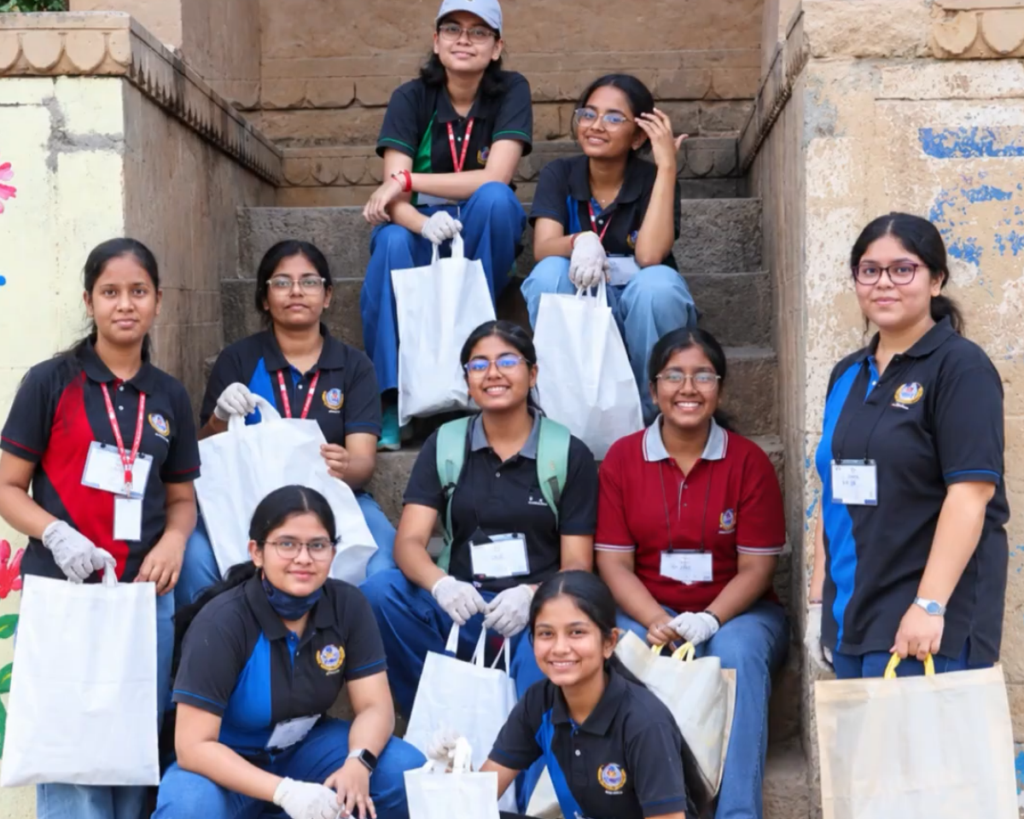
Five winners, one per Earthshot category, will be named at the Children’s Earthshot ceremony in Mumbai on Nov 17. Same night as the main awards. Each winning school team gets $2,000 to develop its solution further. The main event’s five winners each receive £1 million. Jason Knauf, the prize’s chief executive, said in a briefing that the children’s entries showed “the next generation is not waiting for the future to act; it is already building environmental solutions right now.”


The Mumbai night is the sixth edition of the awards, and the first in India. Karan Johar hosts. Alia Bhatt, Rami Malek, Sachin Tendulkar, Simone Ashley and Sonam Kapoor present. Shreya Ghoshal performs for the roughly 5,000 guests. Johar told People last month that William’s passion for the cause was “infectious,” and that “someone of his stature, someone of his power in the world, for him to take on a cause, relentlessly and effortlessly and with so much passion, really makes all the difference.”
But the inventions are the part nobody has listed. Another Mumbai school’s air project took the opposite approach. At National Public School in Bengaluru, students built a passive filter from jute, activated biochar, bamboo silica, zeolite and cotton. It needs no electricity at all. Their smoke-box tests moved AQI readings from 156–160 down to 96–98, and PM2.5 from 98 to between 12 and 30. The filter ran for ten days in a community hall. Four homes and a school now.
In Nagpur, the problem was 800-plus vehicles crawling through a kindergarten’s gates at pickup time. The students at Mother’s Pet Kindergarten answered with FriendPool, a car-sharing rota for parents, and a prototype exhaust-pipe filter they named the Smoffler. They pushed it with placards and daily conversations for more than a month; the school reports fewer vehicles and less visible dust. Their sign, which the prize’s own Instagram carried this week, read: “Let’s be cool and Friend Pool.”
The river beat starts in Nashik. Grade 8 students at Espalier The Heritage School made about 200 biodegradable, oil-free diyas from food-based materials and camphor, ahead of the Kumbh Mela on the Godavari. They submitted 100 to the Kumbh authorities, who appreciated the initiative and accepted the proposal for consideration. In Varanasi, the Sunday Mandali team turned Ganga clean-ups into a weekly movement. More than 150 of their own students plus 500 college volunteers have collected, segregated, weighed and mapped over 800 plastic waste items. The tally includes a Plogathon on Ravidas Ghat. The team says its work has reached 100,000 people. Over in Balrampur, students restoring a rubbish-choked disused well paused to relocate the turtles living in it to the nearby river, then built a working counterweight lid from plywood and bamboo.
At a panchayat school in Ammaiyappan, Tamil Nadu, students replaced polythene bin bags with ones folded from old newspapers, jute handles and a moisture-resistant coating made from discarded crayons, and built an 8-by-2-by-3-foot compost pit that turned segregated organic waste into manure within a month. Within two weeks the work had revived a previously inactive community composting centre. Then the panchayat acted: separately segregated waste would be required for collection from 1 October. Elsewhere in the category, students in Gurugram collected roughly 5,990 kg of paper for their Greenswap exchange, and an eight-student team in Assam lashed more than 300 discarded plastic bottles into a floating platform meant to carry emergency supplies through floods.
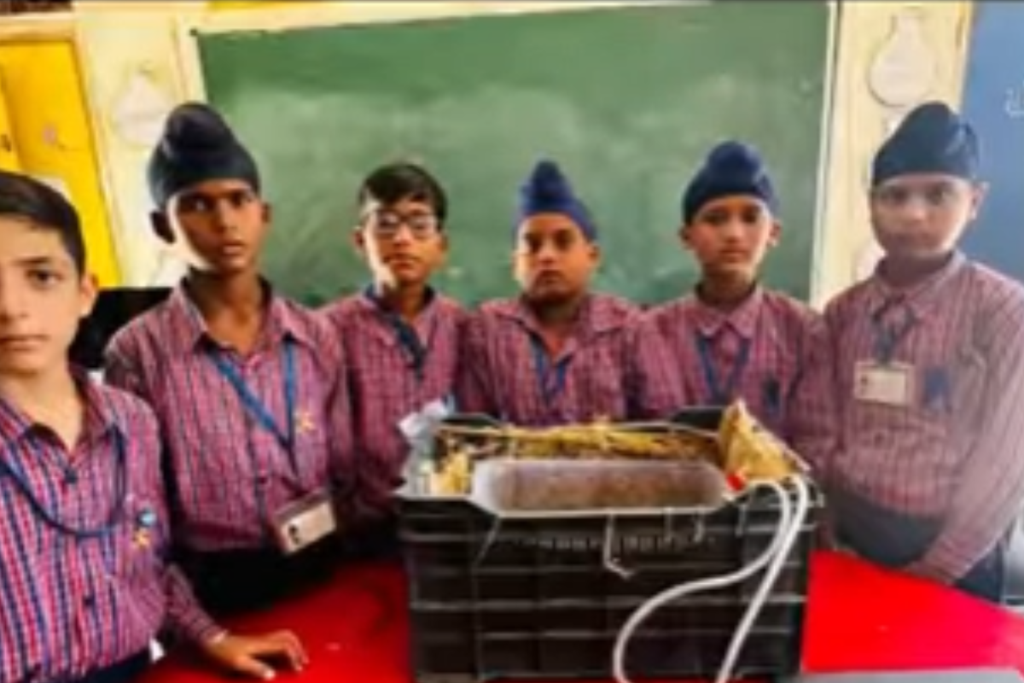
At Bluebells School International in New Delhi, students raised their own funds and worked beyond school hours to build a clay-pot evaporative cooler for classrooms used by about 300 pupils. In Punjab, a low-cost crate of wood-wool pads and a small water pump now keeps roadside vendors’ vegetables cooler through extreme heat. The vendors approved. In Munnar, Kerala, the Solar Bloom pot waters plants only when its soil-moisture sensor says the soil is dry, running the pump off two leaf-shaped solar panels.
It is understood William discussed the children’s project with his own children. George, Charlotte and Louis: 13, 11 and 8. He appears tonight on The Graham Norton Show, pre-recorded with Cate Blanchett and Robert Irwin, as part of the countdown to the Mumbai awards.
The Grade 5s’ sealed-box test, the one that took their AQI reading from 500 to 100, was finished before any classroom trial.