Why Premier League Players Wear Tiny Shin Pads
Elite players trade protection for speed, but a devastating youth injury is forcing amateur leagues to ban the undersized gear.
Lewis Koumas walked onto the pitch for his first full Premier League start with Liverpool against Manchester City on Sunday wearing shin guards barely larger than a credit card. The teenager’s low-slung socks exposed the minimalist protective gear, reigniting a debate that has quietly divided English football over the past two seasons.
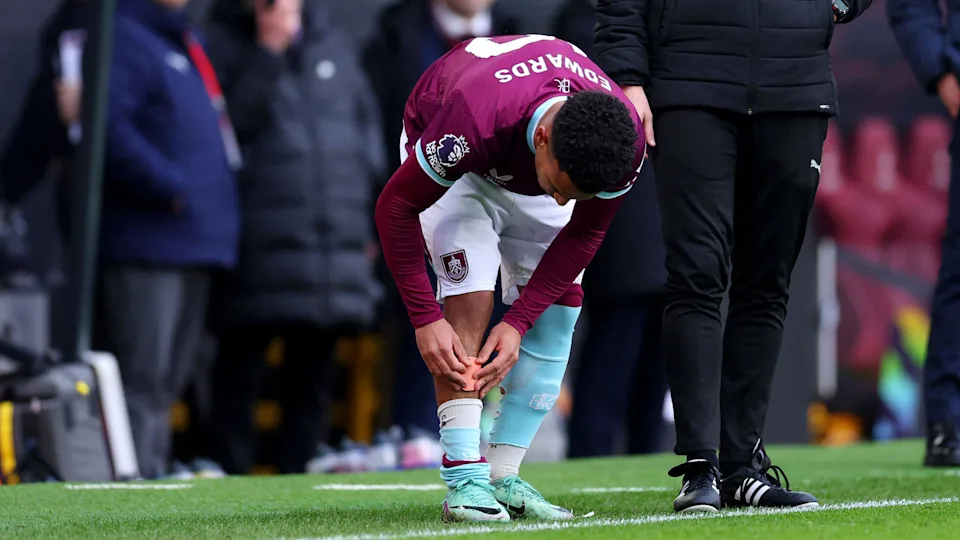
The micro-pad trend is not an anomaly or a wardrobe malfunction. It represents a deliberate equipment choice increasingly favored by younger professionals who prioritize unencumbered movement over traditional impact protection. Marcus Edwards drew widespread attention last season while playing for Burnley against West Ham when cameras captured him wearing similarly undersized guards. Two years prior, Brighton teenager Harry Howell sparked viral comparisons when photographed celebrating alongside veteran James Milner, whose standard-sized shin pads dwarfed Howell’s miniature pair.
Under Law 4.2 of the International Football Association Board (IFAB), which governs the rules of soccer globally, shin pads are mandatory. However, the regulations only require that they be made of suitable material, covered entirely by the socks, and provide “reasonable protection.” IFAB deliberately avoids defining exact dimensions, leaving the assessment of what constitutes appropriate coverage to the individual player. Match officials are instructed merely to verify that some form of guard is present before kickoff, not to measure its surface area.


Professional players gravitate toward smaller guards primarily for biomechanical reasons. Modern elite boots are engineered to weigh as little as six ounces, and bulky plastic inserts disrupt the lightweight feel athletes demand. Smaller pads reduce friction inside the sock, allow for greater ankle articulation during rapid directional changes, and eliminate the shifting that can occur with larger guards during a 90-minute match. Many top-tier players also wear carbon-fiber custom-molded micro pads rather than off-the-shelf plastic, trading broad surface coverage for targeted, high-density protection directly over the tibia.
Club medical departments oversee these decisions. While the final choice rests with the athlete, professional teams conduct risk assessments balancing player comfort preferences against historical injury data. The environment of elite football — featuring pristine pitches, highly controlled tackling techniques enforced by Video Assistant Referee (VAR) scrutiny, and immediate access to trauma care — creates conditions where players feel confident minimizing their armor.
That calculus collapses at the grassroots level, where the consequences of inadequate protection have proven severe. In August 2024, Penistone Church youth player Alfie Collins suffered a double fracture of his tibia and fibula during a tackle. The teenager was wearing mini pads no larger than a credit card, mimicking the style popularized by professionals he watched on television. Following the incident, his club implemented a ban on undersized guards for its youth squads.
The English Football Association has since warned that micro pads increase injury risks outside the professional game. Amateur and youth matches lack the VAR oversight that deters reckless challenges in the Premier League, and lower-league pitches often feature uneven surfaces that contribute to mistimed tackles. Several grassroots leagues across England have independently adopted minimum-size requirements for shin guards, effectively banning the credit-card style permitted under IFAB’s global laws.
As of October 2026, IFAB has confirmed it holds no plans to amend Law 4.2 to mandate specific minimum dimensions for professional matches, maintaining that safety responsibility ultimately lies with the players and their clubs.