Why Nick Sirianni’s Eagles Kickoff Call Wasn’t the Blunder It Seemed
Modern NFL touchback placement and record-setting kicker range transformed the math behind Philadelphia's final eight seconds in London.
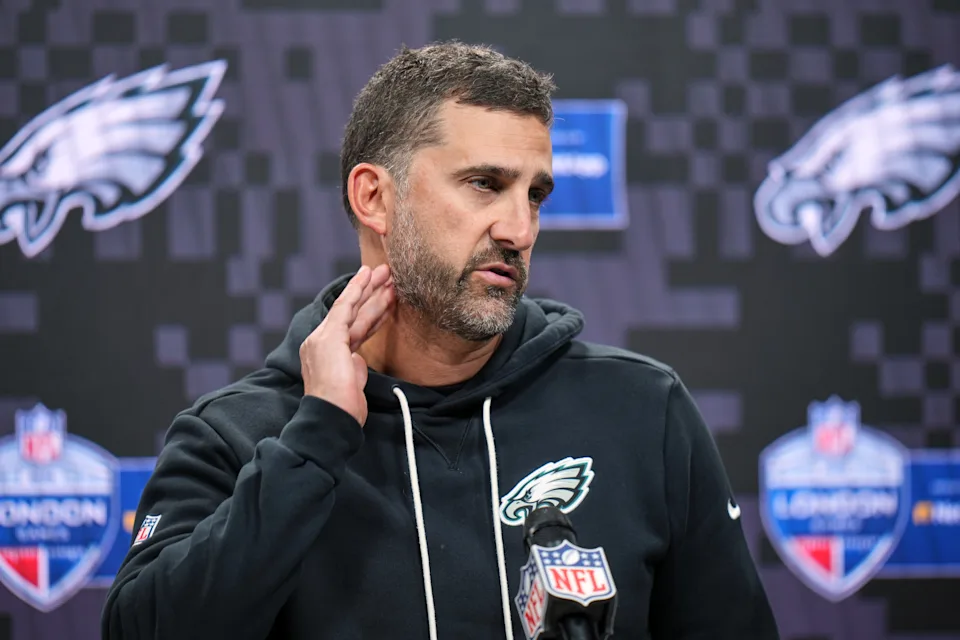
The Philadelphia Eagles’ 19-17 loss to the Jacksonville Jaguars in London ended on a zero-second field goal, but the play that truly decided the outcome occurred eight seconds earlier. Head coach Nick Sirianni chose to kick off normally rather than booting the ball out of bounds while holding a one-point lead. The decision drew immediate condemnation after returner Ameer Abdullah took the kickoff back 53 yards to the Philadelphia 39-yard line, setting up Cam Little’s game-winning kick.
Sirianni accepted full responsibility after the final whistle, telling reporters he cost his team the game. Yet an examination of the NFL’s current special teams rules and kicking metrics reveals his choice was driven by structural realities that make traditional end-of-game clock management obsolete.
Under the dynamic kickoff format implemented in 2024, any attempt to eliminate a return by kicking out of bounds or missing the designated landing zone — which stretches from the goal line to the receiving team’s 20-yard line — results in the ball being spotted at the receiving team’s 40-yard line. Even a perfectly executed touchback now places the offense at the 35-yard line, a rule adjustment finalized for the 2025 season. Kicking away from Abdullah would have handed Jacksonville possession at the 35 with eight seconds remaining, requiring only a single sideline completion to move into comfortable field goal range.


By directing the ball into the landing zone, Sirianni forced Jacksonville to use those eight seconds executing a return. While Abdullah broke through for an exceptional 53-yard gain, league data shows such outcomes are statistical anomalies. Through the 2026 season, NFL teams have returned 659 kickoffs for an average of 26 yards, according to Pro Football Reference. Only 32 returns — roughly 4.8 percent — have exceeded 40 yards. Jacksonville’s own season average sits at 27.2 yards per return. An average result would have placed the Jaguars near their own 37-yard line while draining critical seconds off the clock, leaving time only for a desperation lateral sequence rather than a controlled passing play.
The math governing late-game field goals has shifted dramatically alongside the kickoff rules. Five of the eight longest field goals in NFL history — all measuring 64 yards or more — have been recorded in 2025 or 2026. Little himself holds the league record at 68 yards, a distance achieved from his own side of midfield. With a touchback starting at the 35, a kicker of Little’s caliber needs only 15 yards of offensive movement to reach a manageable distance. For context, a football placed directly on the 50-yard line constitutes a 67-yard attempt when accounting for the snap, hold, and end zone depth.
This exact scenario materialized less than three weeks prior. On Sept. 27, the Dallas Cowboys tied a game against the Baltimore Ravens with 10 seconds remaining. Brandon Aubrey kicked a touchback, giving Baltimore the ball at the 35 with seven seconds left. Lamar Jackson immediately connected with Zay Flowers for a 27-yard gain, and Tyler Loop drilled the ensuing game-winning field goal. Baltimore held a timeout in that sequence, providing a slight tactical advantage Jacksonville lacked in London, but the underlying geometry remained identical.
The NFL engineered these modifications specifically to generate high-leverage moments at the end of close games, replacing the era where squib kicks and intentional penalties effectively neutralized return units. Coaches must now weigh coverage unit reliability against secondary pass defense in compressed windows.
Sirianni trusted his coverage team over his defensive backfield. Abdullah’s explosive return proved that trust misplaced on this specific Sunday, but the strategic framework behind the call aligns with the probabilities dictated by the modern rulebook. The Eagles entered their Week 7 preparation period facing the New York Giants, carrying a 3-3 record following the London defeat.