Why Louis Vuitton’s 130-Year-Old Monogram Still Owns Modern Fashion
How one 130-year-old symbol outlasted fashion’s minimalist turn

In 1896, Georges Vuitton designed the interlocking “LV” motif, four years after his father’s death. Now, as Louis Vuitton celebrates the 130th anniversary of its signature logo, the symbol continues to carry commercial and cultural power across the fashion industry.

The house was founded in Paris in 1854, when its luxury trunk-making business faced the practical problem of protecting high-end travel goods from imitators. Georges Vuitton responded with a distinctive mark that could separate the brand’s craftsmanship from its competitors.


His design drew on the late-Victorian fascination with Japanese aesthetics, or Japonisme. Traditional Japanese family crests, known as kamon, influenced the geometric initials, quatrefoil embellishments, and stylized flowers incorporated into the emblem.
Monograms had already served institutions and individuals long before the Louis Vuitton motif appeared. As early as 300 BC, Greek city-states stamped coins with early monograms to identify their origin and validate currency authenticity.
Originally hand-painted onto heavy canvas trunks, the Louis Vuitton monogram became associated with early luxury travel. Its visual language later remained central to collections under creative figures such as Pharrell Williams, appearing on puffer jackets, sunglasses, and leather goods.
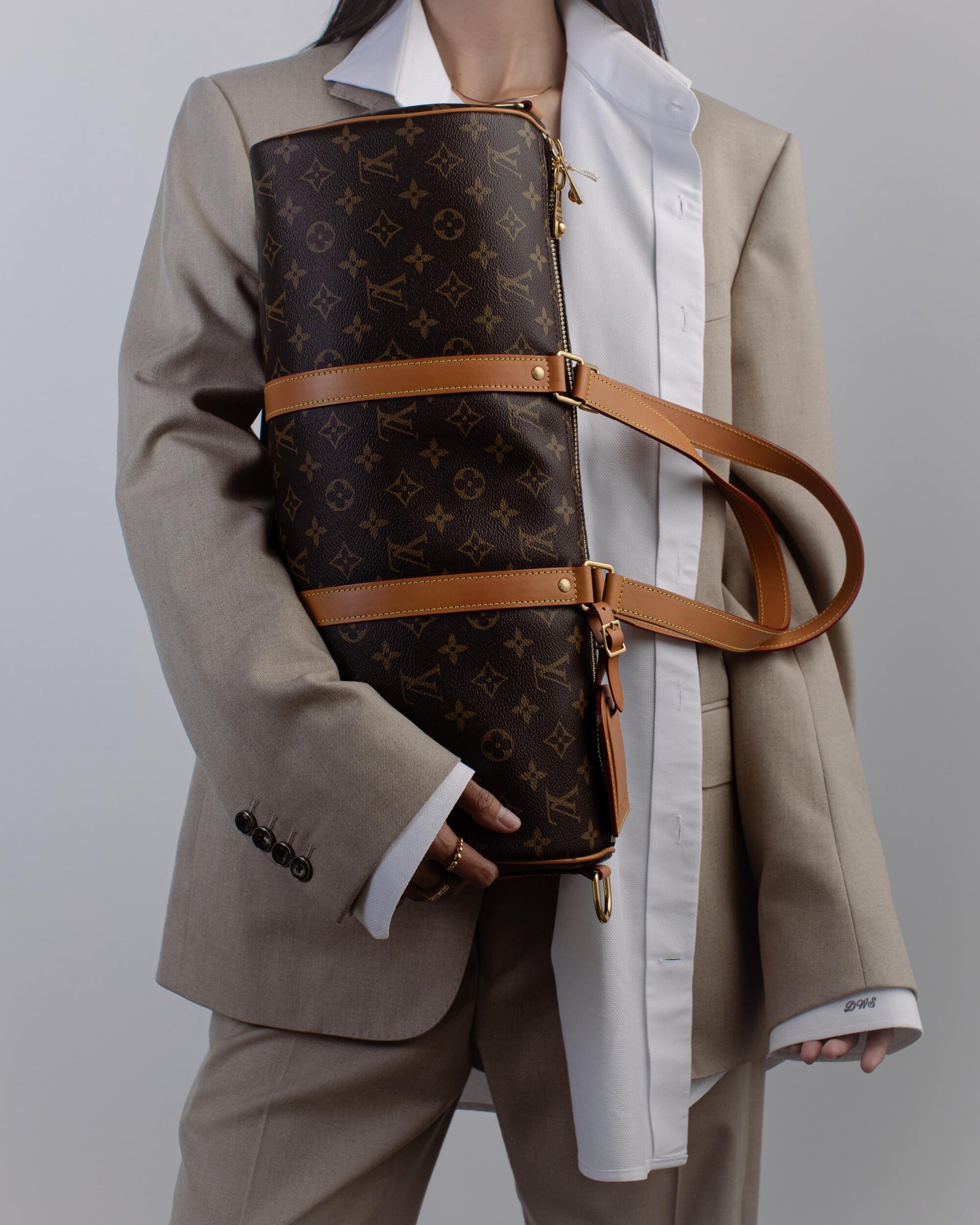
By the Middle Ages, monarchs including Charlemagne used complex monogram signatures on official royal decrees and state documents. During the Victorian era, industrial middle- and upper-class households in Europe and North America adopted initials for personal use.
They embroidered those marks onto household linens, stationery, silver tableware, and bespoke garments. The practice signaled social status, success, and domestic order, while the Louis Vuitton emblem gave a luxury travel object its own recognizable identity.
In 1997, American designer Marc Jacobs became the house’s creative director. He was charged with translating the historic luggage brand into a global ready-to-wear powerhouse, and he used the monogram as the foundation for that expansion.
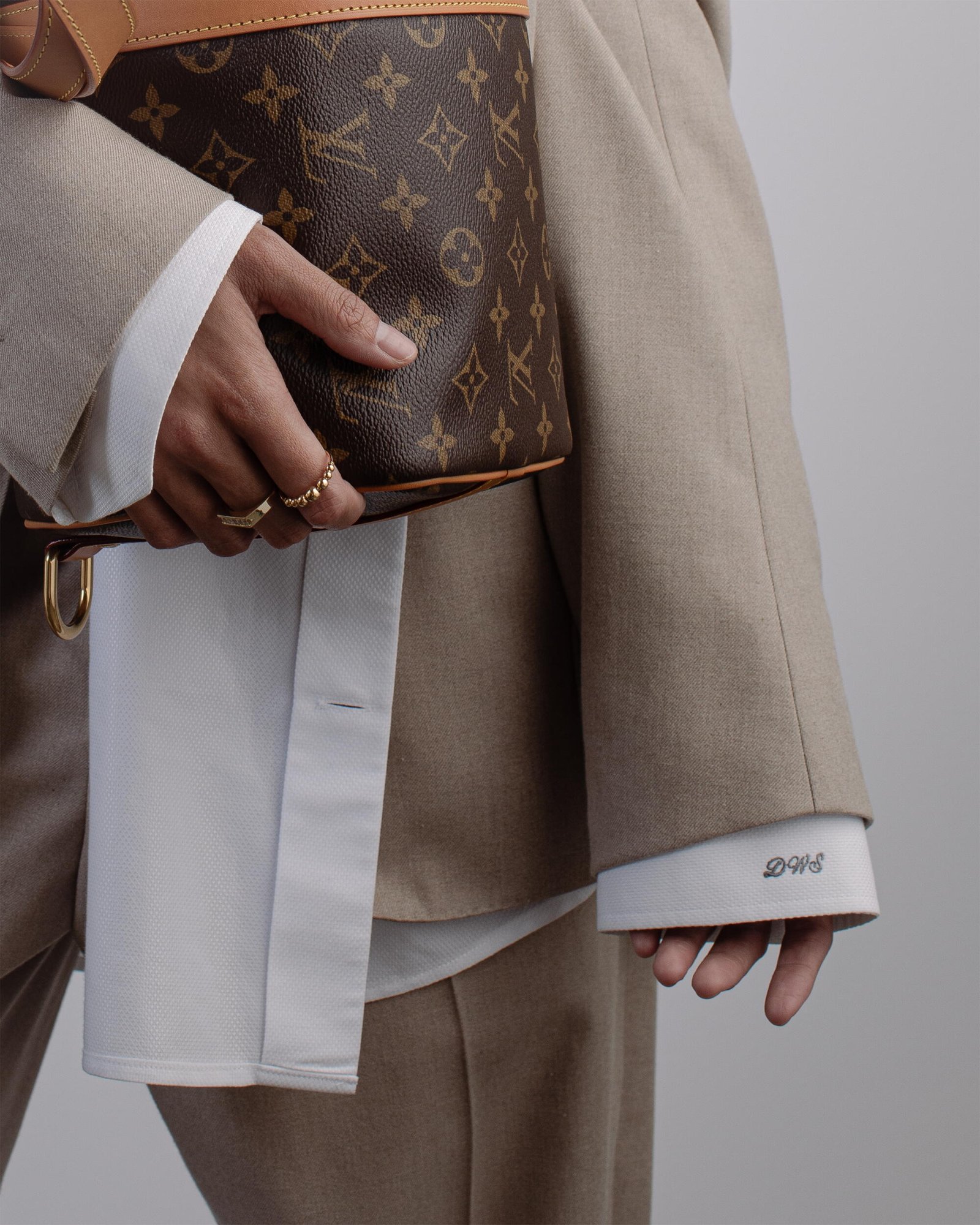
Jacobs collaborated with contemporary artists Stephen Sprouse and Takashi Murakami, who altered, graffitied, and recolored the emblem. Those artistic subversions did not dilute its value; they cemented the monogram’s status in modern pop culture.
A different form of marking begins in childhood. Labeling clothing, school bags, and personal belongings introduces children to ownership and individual boundaries, while personalized objects later develop into expressions of personal identity.
That progression can include a bespoke Art Lewin button-down shirt, customized Derek Rose sleepwear, or monogrammed luggage. In an increasingly digital era shaped by virtual communication, algorithmic social media feeds, and artificial intelligence, the tactile quality of such objects has taken on renewed significance.
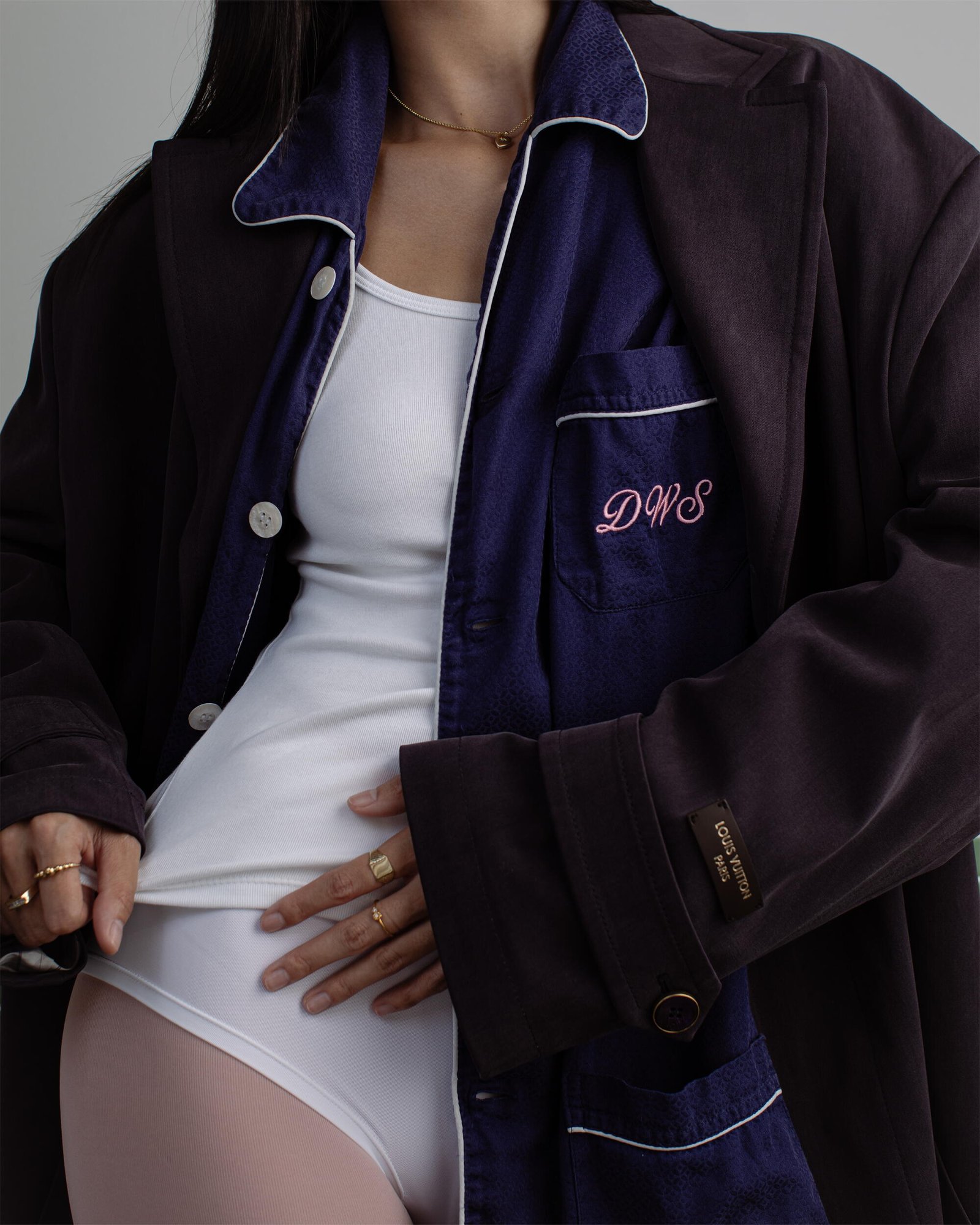
Luxury companies confronted a different question during the late 2010s, when a wave of “debranding” moved through the sector. Saint Laurent, Balenciaga, Balmain, and Burberry replaced heritage, serif-based logos with uniform sans-serif typography designed for digital screens.

The changes were intended to modernize those brands for a mobile-first consumer base, but they often produced visual homogenization. Louis Vuitton, alongside other heritage houses, retained its historical mark instead of abandoning it.
Digital platforms provide customizable avatars and profile spaces, yet those spaces remain fleeting and vulnerable to digital noise. A monogram permanently embroidered onto fabric or stamped into leather asserts physical presence and individuality.
Personalized marking turns an mass-produced consumer product into a singular, historical item connected to a specific person. The personal monogram serves a purpose similar to that of a corporate heritage brand: preserving legacy.
For consumers who invest in bespoke tailoring and personalized accessories, marked items can move beyond utility and become heirloom objects. Initials belonging to a parent or grandparent can turn a simple shirt or travel bag into a physical repository of memory, keeping an individual’s identity tangible for future generations.
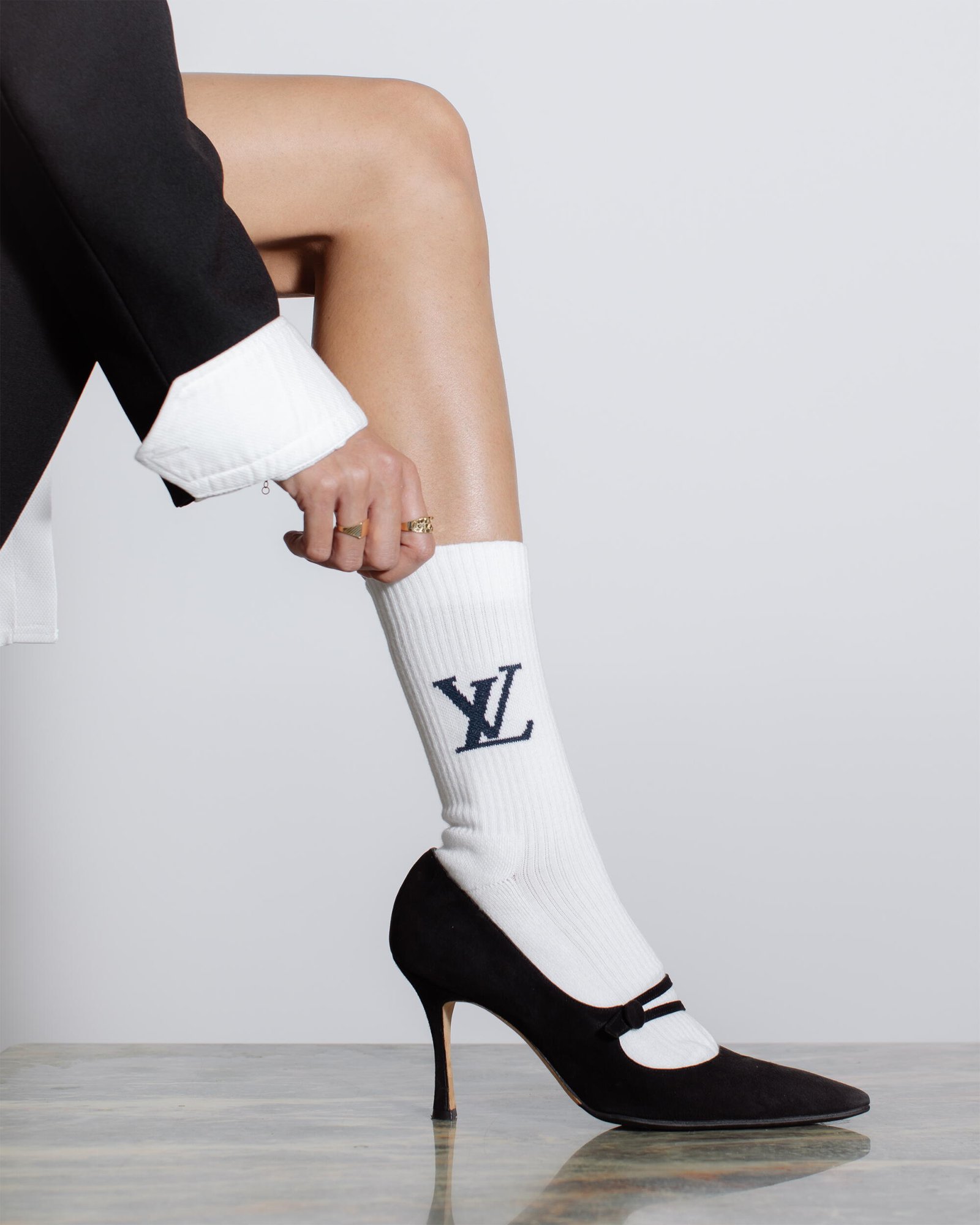
Louis Vuitton has maintained its historic visual identity through global economic shifts, counterfeit epidemics, and rapid leadership transitions, while many rival European fashion houses pursued minimalist typefaces. The century-old symbol remains tied to personal legacy, ownership, and tangible identity.