Why Congress Has Passed Its Full Spending Plan on Time Only Four Times
The federal budget system was built for oversight, but Congress now routinely governs through temporary funding measures
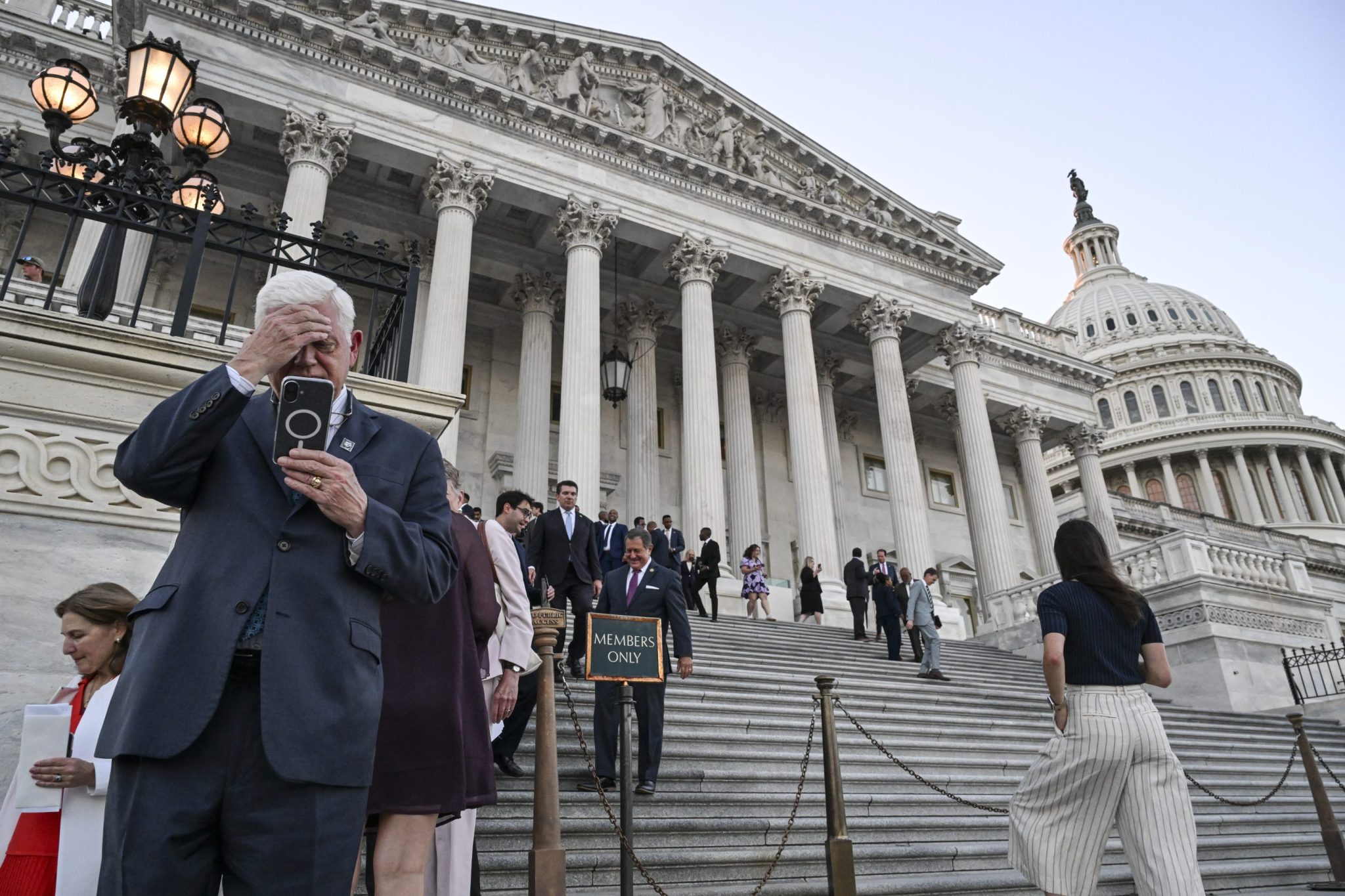
WASHINGTON — In August 2023, Fitch Ratings downgraded the United States’ long-term foreign-currency issuer default rating from AAA to AA+, citing a “steady deterioration in standards of governance over the last 20 years” and repeated “last-minute debt limit negotiations and resolutions.” Standard & Poor’s issued a similar downgrade in 2011, also pointing to political brinkmanship and the lack of a cohesive fiscal plan.
The federal budget process was created a half-century ago to ensure systematic oversight of public spending. Yet an analysis of legislative history shows that Congress has successfully passed all of its required annual spending bills on time in only four fiscal years since the modern framework was enacted: Fiscal Years 1977, 1989, 1995, and 1997.
The system rests on the Congressional Budget and Impoundment Control Act of 1974, signed into law by President Richard Nixon on July 12, 1974. The legislation sought to reclaim Congress’s constitutional “power of the purse” from the executive branch. It created the House and Senate Budget Committees and established the nonpartisan Congressional Budget Office (CBO) to provide independent economic analyses.


The law also shifted the start of the federal fiscal year from July 1 to October 1, giving lawmakers three additional months to debate and pass funding bills. Under the framework, the formal process is designed to begin with the President’s budget proposal in early February. Congress is then supposed to pass a concurrent budget resolution by April 15, with both chambers setting overall spending caps.
Those caps are subdivided among 12 subcommittees responsible for drafting specific appropriations bills covering national defense, education, transportation, and other areas. In practice, the deadlines are routinely missed, and the formal budget resolution is frequently bypassed entirely.
Congress met the deadline in 1976, ahead of Fiscal Year 1977, shortly after the new law was implemented. Lawmakers did so again in 1988 for Fiscal Year 1989, during the final year of the Reagan administration. The two remaining instances came in 1994 and 1996, amid intense political pressure and highly publicized budget standoffs between a Democratic White House led by President Bill Clinton and a newly empowered Republican majority in Congress.
Since 1997, Congress has failed to pass all of its regular appropriations bills on time. Instead, it has relied on a patchwork of Continuing Resolutions (CRs) and massive “omnibus” spending packages. CRs temporarily extend funding at current levels to prevent government shutdowns, while omnibus bills combine multiple distinct spending packages into a single, massive piece of legislation often negotiated by congressional leadership and voted on with minimal time for review.
Historical data from the Congressional Research Service shows that Congress has passed at least one CR in nearly every fiscal year since 1977, often using multiple successive extensions to keep federal agencies open. Under a CR, federal agencies are generally prohibited from starting new programs or entering into multiyear contracts, disrupting long-term planning for national defense, infrastructure projects, and research initiatives.
Steve H. Hanke, a professor of applied economics at Johns Hopkins University, and David M. Walker, the former Comptroller General of the United States and head of the Government Accountability Office (GAO) from 1998 to 2008, have raised concerns about the broader implications of this budgetary pattern. Walker now serves as Chairman of the Board of Directors at the Federal Fiscal Sustainability Foundation, while Hanke serves on the same board.
Walker and Hanke emphasize that the breakdown of regular legislative order directly correlates with long-term fiscal instability. They argue that without a return to structured, transparent budgeting, addressing long-term fiscal challenges—such as the projected insolvency of trust funds like Social Security—becomes politically unfeasible.