Golden Retriever Pip Raises Ducklings on Family Farm
Early cross-species exposure during puppyhood drives the retriever's ongoing maternal bond with multiple generations of farm ducks.
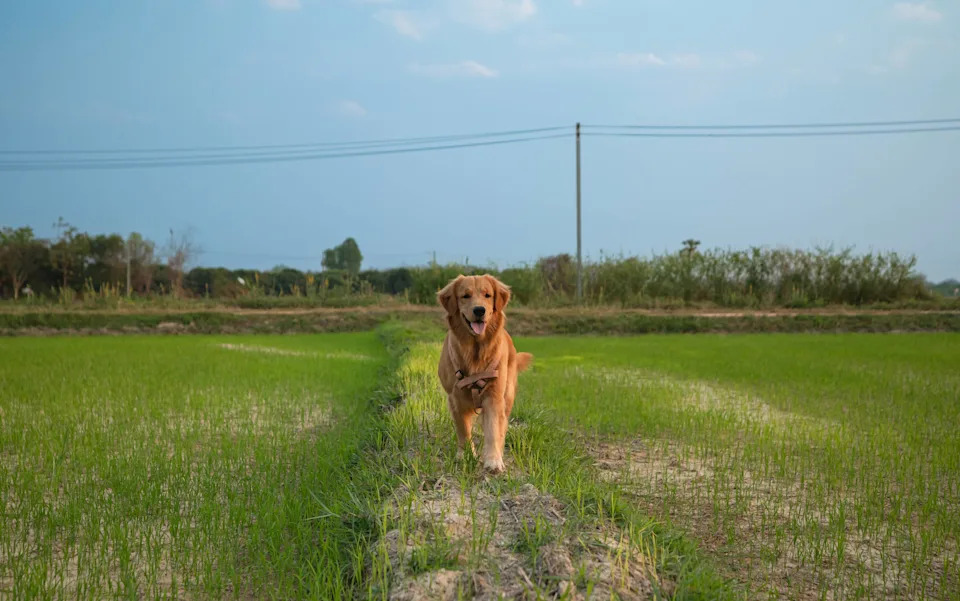
A Golden Retriever named Pip has spent her entire life raising successive generations of ducklings on a family farm, demonstrating how early cross-species exposure can shape a dog’s behavior long past puppyhood.
The ducklings hatched when Pip was still a puppy. Because domestic ducks reach full maturity in roughly two to three months depending on the breed, the original birds she bonded with have long since grown into adults. Pip continues to care for new hatchings on the property, effectively functioning as a surrogate mother across multiple duck lifecycles rather than forming a temporary attachment to a single brood.
Her older brother, Poe, shares the farm and the flock but displays a markedly different temperament. While both dogs interact daily with the waterfowl, Pip anchors the caregiving routine while Poe operates more as a companion animal within the same environment.


This arrangement falls outside the historical design of the Golden Retriever. Developed in the Scottish Highlands during the mid-19th century by Dudley Marjoribanks, the first Lord Tweedmouth, the breed was engineered specifically to retrieve downed waterfowl during hunting expeditions. Their signature trait is a “soft mouth” — the ability to carry game without puncturing it. Unlike Border Collies or Australian Shepherds, which possess an innate herding drive triggered by movement, Golden Retrievers lack predatory drift toward livestock. That absence of chase instinct makes them less likely to stress poultry, but they also lack the guarding instincts found in traditional livestock protection breeds such as Great Pyrenees or Anatolian Shepherds.
For small-scale backyard farms rather than commercial agricultural operations, this behavioral profile often proves advantageous. Animal behaviorists note that cross-species bonding in dogs relies heavily on socialization windows. Puppies exposed to other species between three and twelve weeks of age typically categorize those animals as part of their social group rather than as prey or threats. When a dog like Pip encounters ducklings during that critical developmental period, the resulting maternal behavior can persist indefinitely.
Owners integrating retrievers into environments with chickens, goats, or ducks generally see the most stable outcomes when either the dog or the livestock are introduced at a young age. An adult Golden Retriever with no prior exposure to poultry may react unpredictably, not out of aggression, but from unfamiliarity. Conversely, working farms requiring active predator deterrence or flock movement still rely on purpose-bred herding and guardian dogs to manage livestock logistics.
Pip and Poe remain active on the farm as of October 2026, continuing their daily routines with the current generation of ducks.